General Service Announcement

General Service Announcement

“This is a general service Announcements reminding everybody that the best treatment for dementors is CHOCOLATE…in light of the sad events in Boston, in my professional and pastoral opinion I recommend CHOCOLATE for everybody” (Should you be someone who is unable to do chocolate, Cookies may be substituted). Chocolate may not fix our sadness, but it reminds us of the good that does exist in the world and encourages to act out of love not fear.

PS Check out today’s Lectionary Reading from the Bible–remember the opposite of love is not hate but fear, hate grows out of fear
“There is no fear in love, but perfect love casts out fear; for fear has to do with punishment, and whoever fears has not reached perfection in love. We love because he first loved us. The commandment we have from him is this: those who love God must love their brothers and sisters also.”
1st John

Sermons are Art

Sermons are Art

Sermons are art, sometimes they rock, and sometimes they don’t. Its less of a quotient of how many hours you put in, and tends to be where you are emotionally, are you feeling creative, is your imagination engaged, can you connect to your audience, is it relevant and yet provoking.

I’ve always said, I wish every sermon was a masterpiece, but since its art, it doesn’t work that way. There are practices and disciplines that help you to be a better artist, but never any guarantees.

This brings me to Presbyterian Today their articles about arts in the church (Shout out to Katie Douglass who pursued arts even while she did her doctorate at PTS)

Arts and Church Art as worship and considering popular culture (ie arts) and religion (cough, cough Science Fiction/Fantasy and Religion anyone? Read about Faith and Dr Who & Star Trek here)

and  Whether Sermons are becoming Obsolete…(well depends what you mean by sermons)

If we aren’t approaching Sermons as an art, but instead only as a form of communication or education,  then we are not encouraging creation, we are merely communicating about it. And I really think that is missing God’s point. If its art, then the format is far more open then are first and second definitions of sermon imply!!!!

Tower of Babel: A Parenting Parable

One Sunday Morning I was preaching on the Tower of Babel.

That morning Franklin, my 4 year old, really wanted the flashlight. We had the flashlight on the top of a bureau so the children wouldn’t turn it on and leave it on without our knowledge.

I told Franklin to wait for me to brush my hair–and then I would be able to get him the flashlight.

I come out of the bathroom and find Franklin halfway up the stairs with a stool/chair that is bigger than he is…

I took away the stool and started to laugh….”You thought it was easier to carry a stool all the way up the stairs and to climb on it and get the flashlight…that would be easier for me than waiting”

Isn’t this the story of Babel? Its easier to build a tower to God than to wait for God’s action. Isn’t this why we try to do everything for ourselves? We talk among ourselves, agree among ourselves and work for ourselves forgetting the all knowing, all caring perspective of God…that’s why God separates us out–not because we work together, but because if we do no more than preach to the choir.

If we do not have variety, we do not have the richness of God. So God separated us, God gave us more perspectives so we could see the fullness of the human condition–so we could hear the same story over and over again in different languages

Ex: Cinderella: French: Cendrillon, ou La petite Pantoufle de Verre, Italian: Cenerentola, German: Aschenputtel, Vietnamese version Tấm Cám, Korean version, too, named “Kongjwi and Patjwi

These versions give us meaning so that the nuances change, the characters differ, and the vastness and depth of God and his love, the meaning of the human condition can be peeked at 🙂

So–Can we do it, can we wait for God? Can we take in all the nuances of humanity and still accept each other as God’s children, or do we need to climb the stairs with a stool, do we need to depend on ourselves to reach God, or can we depend on God to reach us…

Genesis 11

New International Version (NIV)

The Tower of Babel

11 Now the whole world had one language and a common speech. As people moved eastward,[a] they found a plain in Shinar[b] and settled there.

They said to each other, “Come, let’s make bricks and bake them thoroughly.” They used brick instead of stone, and tar for mortar. Then they said, “Come, let us build ourselves a city, with a tower that reaches to the heavens, so that we may make a name for ourselves; otherwise we will be scattered over the face of the whole earth.”

But the Lord came down to see the city and the tower the people were building. The Lord said, “If as one people speaking the same language they have begun to do this, then nothing they plan to do will be impossible for them. Come, let us go down and confuse their language so they will not understand each other.”

So the Lord scattered them from there over all the earth, and they stopped building the city. That is why it was called Babel[c]—because there the Lord confused the language of the whole world. From there the Lord scattered them over the face of the whole earth.


File:Pieter Bruegel the Elder - The Tower of Babel (Vienna) - Google Art Project - edited.jpg

Parables are Godly Fairy Tales

Ok,

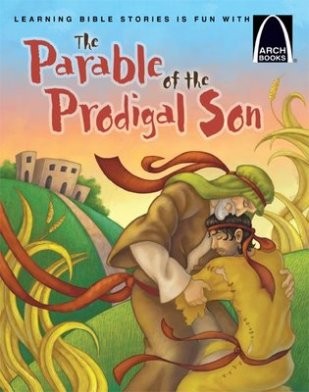
Don’t take this the wrong way. But if Fairy Tales compile to give us an understanding (picture/idea/grasp) of the human condition. Then parables give us a God’s eye view of the human condition. Noting not only life as it is, but also, at the same time, life’s potentials…[think Prodigal Son]
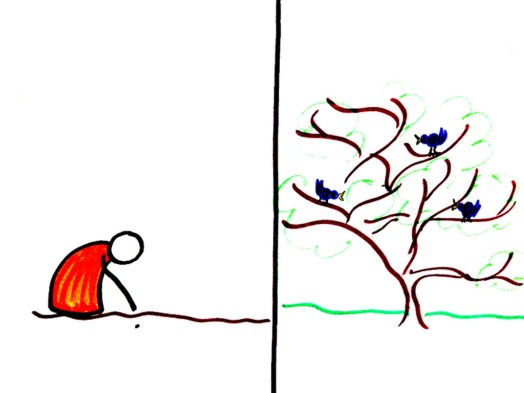
Compiled together, the parables–The Mustard Seed, The Widow’s Mite, The Lost Sheep, The Seven Bridesmaids.

Reading these stories over and over provide windows to the self–clarifying the relationships in our lives. It plants the seeds of knowledge, it gives us the broad scope of life, while allowing us to fill in the details of our own lives.

This is why I read fairy tales theologically, parables practically and reread as much as possible….

An Open Letter to the Church from My Generation

College Student’s Wisdom about the church today

dannikanash's avatar"I Said I Don't Know."--and Other Answers to Hard Questions

Church,

I got to go to the Macklemore concert on Friday night. If you want to hear about how that went, ask me, seriously, I want to talk about it until I die. The whole thing was great; but the best part was when Macklemore sang “Same Love.” Augustana’s gym was filled to the ceiling with 5,000 people, mostly aged 18-25, and decked out in thrift store gear (American flag bro-tanks, neon Nikes, MC Hammer pants. My Cowboy boyfriend wore Cowboy boots…not ironically….). The arena was brimming with excitement and adrenaline during every song, but when he started to play “Same Love,” the place about collapsed. Why? While the song is popular everywhere, no one, maybe not even Macklemore, feels its true tension like we do in Sioux Falls, South Dakota. If you’re not familiar, here’s the song:

Stop–did you watch it? Watch it.

Before the song, Macklemore spoke really…

View original post 976 more words

“I believe that…

“I believe that the divisions between these aspects of Christ’s person and life are artificial. All three Christological aspects (incarnation, crucifixion, resurrection) are a part of the answer to human brokenness. As incarnate, Christ demonstrated that human bodies and experiences are not inimical to intimate relationship with God. As crucified, Christ showed that God understands and participates in human pain, suffering and even in mortality. As resurrected, Christ manifested God’s power over that pain, suffering and death. To share in the Lord’s Supper is to share with Christ Jesus in all these aspects of his person and life.” –Dr. Barb Hedges-Goettl PCUSA Pastor

Communion, the real deal

I am the bread of life. He who comes to me will never be hungry; he who believes in me will never thirst” and “I am the vine, you are the branches. Cut off from me you can do nothing,” both of which emphasize the relationship between believers and Christ without specifically including Christ’s body.[1]


his body as a living sacrifice and his use of common things, including bread and wine, to bless and heal, reconcile, and bind people together, and also to exhibit “the grace, power, and presence of the Kingdom of God.”


My Favorite Pastors in TV & Film

I always thought that about shepherd, plus do you notice how often tv ministers are women (very rare). Love this list…didn’t include Father Ted though 😉

J. Barrett Lee's avatarHopping Hadrian's Wall

Too often, clergy in fictional media are portrayed as either demonic, judgmental hypocrites or sincere, mostly nice, but still basically useless.  Hardly ever are we played as real, full human beings in our own right, complete with hopes and flaws.  Here are a few that shatter such misconceptions:

Shepherd-Book-WP-firefly-3087444-1152-864Shepherd BookFirefly, Serenity

Book: River, you don’t fix the Bible.
River: It’s broken. It doesn’t make sense.
Book: It’s not about making sense. It’s about believing in something, and letting that belief be real enough to change your life. It’s about faith. You don’t fix faith, River. It fixes you.

Dr. ChenFrank Lee Bukowski (a.k.a. Dr. Chen) – Eli Stone

Not technically a member of the clergy, but I included him anyway because Eli’s acupuncturist doubles as his spiritual advisor.

Eli Stone: But I don’t believe in God.
Dr. Frank Chen: Sure you do. You…

View original post 398 more words