Partnerships

One thing that frustrates me about church is when people grudgingly take on tasks.

I don’t know, for me its more fun to be involved and DO things, don’t you want to be a part of whatever is happening?

This week I got the chance to talk to a wonderful lady. Together we planned an arts project in 2 parts: 1 a Family Friendly Art Show 2. A Kids Theater Program (that is very accessible monetarily and hopefully schedulewise).

It was a good hour.

Don’t get me wrong, there will be prep involved, but mostly it just took a spark, an idea.

There will be setup and hosting and taking down.

There will be more planning for part 2

But the way I look at it; it will be LOADS of fun, as most ministry is.

So I’m confused…..do we really begrudge the time & energy that is spent in ministry….or are we just afraid that we are going to have to do it alone!

And for me it took a partnership. So often people don’t want to lead in the church, because they feel like they have to do it alone.

Good News! We don’t have to. God is with us, we are never alone, and God sent us partners! From the gecko, God realized that we work better in Tandem.

The Mystery of Ministry

“Why would you want to work only 1 day a week, and that’s a half day” –my mother…obviously before she was a pastor, trying to understand why my father was considering the ministry….

Similarly, my friend’s boss once said she wish she could have an easy job, like me…my friend laughed and said that I do all that a CEO does, but with volunteers instead of employees (and morals, although she didn’t tell her boss that)…..

I sometimes think being a pastor is more mysterious than Astrology in Harry Potter

unfog unfogging_the_future__2__by_i_never_stop-d5diz7i

These weeks have been very busy for me, between budget meetings, an emergency with a very troubled family involving the welfare of their children and a funeral…I’ve had to hit the ground running.

The truth about ministry is that it seems very mysterious because not many people know what you do in a week. We are like glaciers. For glaciers usually only 10% of them are visible…and I think only about %10 (that would mean 4 to 5 hrs) of the work of ministry is visible

For one, there is sermon writing…how do you do it? I personally consider it an art, which means that everyone approaches it differently (warning: results are not guaranteed) That alone can take 5-15hrs…Personally I tend to build up from the bulletin. Writing prayers, picking hymns in the context of the scripture help to lead me to the right space (usually)

There’s the office stuff: Paperwork for Presbytery, Newsletters, checking with the secretary (what  a blessing that I have one) to see when things will be printed, coordinating sending out things from sympathy cards and flowers to whatever other mailings are necessary (Stewardship materials anyone?)

Then there’s event planning: figuring out the timeline, alerting the appropriate leaders and medias, making sure the time is well advertised and convenient for most

There’s Pastoral Counseling, which often happens spur of the moment, and is so necessary for people’s care

Praying, as often as you can, and trying to include all relevant people in your prayers

Then there is the ministry of presence: which is the time you spend in the office or hanging out not looking busy so people can approach you…

Keeping in contact with those who have dropped out of the loop for whatever reason, and trying to remember to keep the church’s end of the relationship up either personally or (better yet) thru the deacons or hospitality people

Visiting those who are homebound or need home visits as often as possible and trying to build up lay leaders so they can do the same.

Keeping Connectiveness through the congregation by building in real fellowship moments that allow the congregation to draw together and experience God

Running the governmental board, maintaining Christ’s peace and addressing problems as quickly and directly as possible…looking beyond the people in the room towards God’s purpose for whatever is taking place…and then leading other people to that same vision…

Overseeing and checking in with the staff, trying to maintain harmony, set good boundaries and maintain open communication to nip problems in the bud

Advertising, Information and Communicating in as many levels as you can verbally, thru publishing (bulletin, newsletter, etc), thru the internet, to the church, to the community, to those who come, to those who don’t come, to the elderly, to the busy, to the families, to the staff.

Creating/Maintaining or Overseeing Christian Education for the littlest thru the adults

Being available for those Pastoral Care moments of sickness, deaths, births, marriages, major celebrations, moments of personal crises.

Attend big moments for church members (graduations, weddings, funerals, etc), even if they are not directed by the pastor, attending such events is important (and mostly fun) and a part of the job that is often not understood to be work, but are because you go as the “church’s” representative.

Maintaining your own Spiritual practice so you don’t dry up from lack of spiritual nourishment

Building Clergy Connections thru lunches, spiritual friendships, governmental meetings and other proscribed activities (mentoring, peer groups, continuing ed. etc)

Don’t forget the preaching–which is mostly what everyone sees

In addition to this there is overseeing and working on a viable mission (hopefully every church has one)..you know the thing  your church does that is really unique and therefore special, so you work really really hard not only to maintain this but to grow it.

To push the church, the staff, the governmental board, the neighborhood to be more Open: Open to new ideas, Open to new (and different) people and cultures, Open to experimenting, Open to failure, Open to unexpected successes, Open to honest assessments, Open to the movements of the Holy Spirit.

Mostly, pastors are there to facilitate, coordinate and teach about our relationships with God and eachother. Sometimes that means stimulating though about this….oftentimes it means spurring people into action. Its not an exact science, but it is an important task…

This is a fairly generalized list of what my job is, it is by no means a job description, but maybe it helps to clarify who pastors are and some of what they do.

Comic from “The Naked Pastor”

Church Event Guide/What I’ve learned in the last 4 years: Don’t do anything for free

Recently there was an article concerning the …..lets say staidness of overly churched culture….

How do you get a church to event plan beyond the church culture? Here are some guidelines to consider

Rule number One: Don’t do anything for free….it creates a debt mentality that is unhealthy for the congregation and the attendee

Church: Let’s throw this free event, then people will love us and come to church….

Potential Attendee: Free? Really, I bet that church just wants my soul, no way I’m going to that…

Church: We had a free event…why didn’t anyone come (or) People came to our free event, why aren’t they coming to church

Rule Number Two: If you throw an event, have a reason behind it (other than attracting people to the church…ideally have at least TWO solid reasons

ex: Let’s have a farmer’s market 1. it will support our local community and help reaquaint with the neighborhood 2. It will help our local economy–these are our reasons, we are sharing them with the farmers and the customers

ex 2: Let’s put on a play of Charlie Brown Christmas as a food drive because 1) that’s what Christmas is all about 2) we don’t want it to be free 3) because its for children, and if someone cries they can be taken out without money lost

I have found if you have 2 solid reasons, more and more reasons to have the event start to build…..eventually we realized a. there is no farmer’s market in our corner of the city b.people are meeting each other at our farmer’s market and becoming more communal c. its easier to come to the parking lot than the sanctuary (see the ps for more info) d. Won’t you be our Neighbor? we found a motto that described that we wanted everyone in the neighborhood to come to the farmer’s market, and that this reason should drive everything we do

Charlie Brown Christmas 1) its accessible to children of all ages (yay for a mental center coming to see it) 2) one of our actor’s father with alzheimer’s could wander around and enjoy the show 3) people don’t feel bad when their kids make noise because we welcomed the children and they didn’t have to pay “good money” for it. 4) People love to donate food, we got wayyyyy more than the number of people who attended 5) It’s multigenerational, children are seeing what their parents and grandparents grew up with so everyone enjoys it 6) It tells the good news but is not too preachy–many people who are spiritual-but-not-religious felt comfortable with coming to see Charlie Brown

Rule Number Three: No ulterior motives….Try, try, try not to have ulterior motives for putting on Events, because when you do, You hamper God!

You box the event into being successful based on a bunch of random info that you think is important, instead of running the event and then discovering what was important afterwards.

Discuss What Worked Rule Number 4: This is the one piece of advice that I MUST stress, talk about the BEST part of the events, discuss what worked, look on the brightest side, ok not many people came, did you get ANYONE new (?) that’s progress, did you learn anything about advertising (?) that’s progress, did the group do a lot to work together and enjoy certain parts of the process (?) that’s progress. Progress is incremental, you do not build a success story out of one event, but many

Rule number 5 You do not build a success story out of one event but many (see above).
Rule number 6 Try to do repeatable events. I find it take 12 meetings (rule of thumb) to know if something has failed. I repeat, an even CANNOT have failed until you’ve tried it multiple times: whether that be a Bible study or a playgroup or a concert series. That means if you meet once a week it takes 3months, if you meet once a month it will be a year. If you have an event every season then its 3years before you can write it off as a failure. (recommendation: if you have monthly events that are not really connected but seem to be a “thing” that are happening, start measuring those as a grouping, because you are advertising regularly.
(Rule number I’ve lost track, because it doesn’t matter how many rules there are) If you must count (altho I try not to) include your workers as attendees! They are there, they are making time and effort because they think this event is important, and you value your current members/community as much as your potential community (well that is the theory you should be practicing right?), include them
Another Rule Reinvest from the event: For our farmer’s market all our farmer’s fees went into advertising the market, we didn’t make a penny. For our Charlie Brown Play we turned it into a food drive to further teach the message of the play. Don’t do it for the church, do the event for the MISSION of the church
Final Rule: advertise, advertise, advertise: Get people to hand our pamphlets, send out invites, be sure to do that internet thing pick ONE UNIFIED IMAGE for the event and post it everywhere. It takes 3 times of seeing something to register. Put up NEW SIGNS for every event, it makes you look active, it shows your paying attention, it shows your reaching out and you care.
PS try to have events outside the church building (I know, I know that monstrousity costs a lot of money to maintain), but its a lot easier for a stranger to go to neutral ground then to come to your turf where you make the rules ex: its easier to come to the parking lot than the sanctuary, the fellowship hall feels less forboding than the chapel area and the NURSERY is a very friendly place if you make it feel welcoming. Also TRY To make things clear (where to enter, where to park, etc) you don’t want to make your people feel stupid before they even arrive<—my church is still struggling with this, but it makes a clear in-crowd, out-crowd thing…you don’t want that!

What Young People want in church

What Young People want in church

YES, YES, YES

“So here are some of my thoughts about this.  Please chime in as you feel so moved.

1. Young people want innovative things in church. 
Now, this is going to seem to stand in direct opposition to what I said above, but bear with me.  Far too often faith communities latch onto the word “innovative” and think it means media in worship services, contemporary bands, and so on and so forth.  This is wrong.  This was maybe innovative 20-30 years ago.  Maybe not even then.  When I say innovative, I mean different from ordinary life.  I have a smart phone and a laptop that are with me constantly.  I am constantly connected and surrounded by a multimedia, multi-sensory experience.  In the church that I attend, I want something different.  We actually want to be fully present and have an experience of the divine.  We are not looking for entertainment.  Which leads me to my next point…

2. Young people want church to be part of the world
Congregations have gotten into a nasty habit of trying to appeal to young people, or furthermore any new people, by trying to make their churches as much like the “outside world” as possible.  This rests on at least two problematic assumptions.  First, that the church is separate from the world and, second, that we want to be isolated from it.  This is not true.  Just because your congregation has a coffee cart in the narthex, doesn’t make me think you are cool and certainty doesn’t make me want to come attend worship.  We want churches that are in touch with their neighborhoods and our country and our world.  This is not limited to once-yearly Habitat for Humanity builds or mission trips (that is another post entirely) to Mexico once every couple years or collecting food for the food pantry.  No, young people want their congregations to share life with their communities.  The good, the bad, and the ugly, which leads to…

3. Young people want church to be a place where they can be real
Coming of age as a young adult right now is a lonely and terrifying proposition.  We are disproportionately unemployed.  We are the first generation who are “worse off” than our parents.  We are drowning in debt.  We are putting off getting married and having children and owning homes.  We will likely never realize the American dream as it has been known in the past.  We are being bombarded with demands to “hold it together” and maintain a certain image because networking is important and we “never know what contact will help us get a job”.  There are very few places where we can be truly who we are.  Where we can share our pain and disappointments and joys and fears. Church can be that place.  But most of all, we want to be heard in all of who we are, which brings me to…

4. Young people are tired of having assumptions made about them
“Young people” are often seen as a commodity.  And furthermore, seen as THE commodity that will save the church.  A church is seen as thriving if it has young adults and we sometimes feel only like numbers and a bullet point in the strategic plan.  We are talked about and around and all sorts of people have ideas about what we want and what we need, most of which is wrong.  There is a pretty easy way forward.  People could ASK us what is important to us, which leads to…


5. Young people want to feel valued in the church

We want to have opportunities to serve and learn in faith communities.  But it is not as simple as keeping the existing structure of volunteer positions and leadership structure and plugging in young adults.  How about getting to know us and identifying and nurturing our gifts?  This is an entirely opposite approach than currently exists and it is scary.  If you want us to lead, you might have to step out of the way to make room for us. Which leads me to…

6. Young people aren’t interested in maintaining the status quo in church
The Derek Penwell article, What if the kids don’t want our church?, has been floating around for awhile  and I have even written about it on this blog before.  This is painful but I am just going to say it, we don’t really want your church.  This is not a value judgment.  It just is.  The Baby Boomer generation is perhaps the first in American history that has had such a wide swath of products and experiences targeted especially towards them.  They received this well.  And this huge and gifted generation has assumed that everyone else wants the same thing that they do.  We do not.  We want the same opportunities that you all have received to re-imagine and re-shape what church can be.  Which opens the discussion of…


7. Young people value authenticity
Authenticity gets thrown around as a marketing tool, particularly in churches.  Young adults have a finely tuned ability to smell inauthenticity and nothing is more pathetic than a carefully crafted facade of being “authentic.”  We want congregations to recognize their own gifts and identity and live into that. Not every congregation can stand for everything and not every congregation is going to be able to be a place where young adults find a church home.  But that is okay, because we need to leave room for the Holy Spirit to do what she will and form and reform our congregations and our leaders which leads me to my final points…

8. We are open to where the Spirit is leading us and we want our churches to recognize that
Those of us who are a part of faith communities are incredibly faithful.  Our religious practices look different.  We want to discuss theology in bars with our friends.  We want to experience worship, not just attend it.  We want to sing hymns loudly and badly in pubs with our congregations.  When we start becoming engaged in congregations, it might look different than our parents and grandparents, but it is no less valid.  

9. Those of us who sense a call to serve want to be raised up as clergy in the church
We are young.  We are faithful.  We are LGBTQ.  We have tattoos.  We sometimes swear.  We have made mistakes.  We will continue to do so.  We are no different from you, yet we are so different from you. We need to be mentored by you, but we also need for you to allow us to fly and to be moved by the Holy Spirit.  

10. We want to hear when we need to step back and let a new generation lead
We won’t be young forever.  Even though we are often the youngest in congregations, we will continue to age.  And if our church communities are doing what they hope we will, we won’t be the youngest.  And we need to learn when to get out of the way for something new to happen as well.  At that point, we will need you to help us know how to gracefully step aside.  “

Why millennials are leaving the church

YES!*  (maybe the problem is THEOLOGICAL) Point and Case Example https://katyandtheword.wordpress.com/2013/07/28/an-absolutely-r/

Picture a pasto…

Picture a pastor–chances are you didn’t picture someone like me…now picture church–nope that’s not how I do that either… 🙂

You keep saying that word, I don’t think it means what you think it is 

General Service Announcement

General Service Announcement

“This is a general service Announcements reminding everybody that the best treatment for dementors is CHOCOLATE…in light of the sad events in Boston, in my professional and pastoral opinion I recommend CHOCOLATE for everybody” (Should you be someone who is unable to do chocolate, Cookies may be substituted). Chocolate may not fix our sadness, but it reminds us of the good that does exist in the world and encourages to act out of love not fear.

PS Check out today’s Lectionary Reading from the Bible–remember the opposite of love is not hate but fear, hate grows out of fear
“There is no fear in love, but perfect love casts out fear; for fear has to do with punishment, and whoever fears has not reached perfection in love. We love because he first loved us. The commandment we have from him is this: those who love God must love their brothers and sisters also.”
1st John

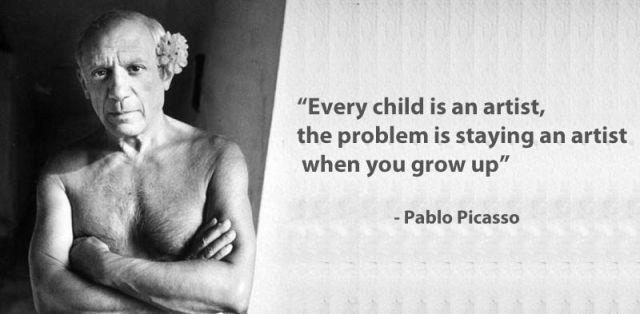
Sermons are Art

Sermons are Art

Sermons are art, sometimes they rock, and sometimes they don’t. Its less of a quotient of how many hours you put in, and tends to be where you are emotionally, are you feeling creative, is your imagination engaged, can you connect to your audience, is it relevant and yet provoking.

I’ve always said, I wish every sermon was a masterpiece, but since its art, it doesn’t work that way. There are practices and disciplines that help you to be a better artist, but never any guarantees.

This brings me to Presbyterian Today their articles about arts in the church (Shout out to Katie Douglass who pursued arts even while she did her doctorate at PTS)

Arts and Church Art as worship and considering popular culture (ie arts) and religion (cough, cough Science Fiction/Fantasy and Religion anyone? Read about Faith and Dr Who & Star Trek here)

and  Whether Sermons are becoming Obsolete…(well depends what you mean by sermons)

If we aren’t approaching Sermons as an art, but instead only as a form of communication or education,  then we are not encouraging creation, we are merely communicating about it. And I really think that is missing God’s point. If its art, then the format is far more open then are first and second definitions of sermon imply!!!!