Did Scrabble and Ate a Brownie, Haha! Don’t worry Sermon, I’ll find you–I’m sure your cleverly tucked between a national tragedy and 2,000+yr old words about Resurrection and Angels praising God….
Katy’s Wednesday Nights are so exciting

Did Scrabble and Ate a Brownie, Haha! Don’t worry Sermon, I’ll find you–I’m sure your cleverly tucked between a national tragedy and 2,000+yr old words about Resurrection and Angels praising God….
Katy’s Wednesday Nights are so exciting
 I love being busy, when the scale comes out between underachiever or overproducer–I am definitely on the overproductive side of life. This gives my ministry a sort of…let’s call it…hurried air. When I go on visits, or run meetings, or preach a sermon: my guess is I come off as rushed.
Why do I do this? I guess I have something to prove–I want to show myself as capable and responsible, able to “get stuff done” unfortunatley I probably miss things in the rush. I am full of energy, but people don’t feel like I can “sit with them and their problems.”
Energy–a gift and curse


“This is a general service Announcements reminding everybody that the best treatment for dementors is CHOCOLATE…in light of the sad events in Boston, in my professional and pastoral opinion I recommend CHOCOLATE for everybody” (Should you be someone who is unable to do chocolate, Cookies may be substituted). Chocolate may not fix our sadness, but it reminds us of the good that does exist in the world and encourages to act out of love not fear.
PS Check out today’s Lectionary Reading from the Bible–remember the opposite of love is not hate but fear, hate grows out of fear
“There is no fear in love, but perfect love casts out fear; for fear has to do with punishment, and whoever fears has not reached perfection in love. We love because he first loved us. The commandment we have from him is this: those who love God must love their brothers and sisters also.”
1st John
Returning again to Mr. Rogers words in times of tragedy…let us use this anger and energy to become helpers!
“When I was a boy and I would see scary things in the news, my mother would say to me, ‘Look for the helpers. You will always find people who are helping.’ To this day, especially in times of ‘disaster,’ I remember my mother’s words, and I am always comforted by realizing that there are still so many helpers – so many caring people in this world.” — Mister Rogers
Hopefully we too can be part of the helpers
 What can I say? Today has just turned into a Mister Rogers kind of day.
Here are his best-known words of wisdom for getting through days like today:
“When I was a boy and I would see scary things in the news, my mother would say to me, ‘Look for the helpers. You will always find people who are helping.’ To this day, especially in times of ‘disaster,’ I remember my mother’s words, and I am always comforted by realizing that there are still so many helpers – so many caring people in this world.”
-Rev. Fred Rogers
He also had this advice for parents:
[youtube:https://www.youtube.com/watch?v=LZbXM3Kzd7o%5D
Finally, here is an article with some practical advice for you in responding to this current atrocity:
May God be with you tonight.
“United States, Australia, Poland, New Zealand, Germany, Canada, Finland, Sweden, Austria, Switzerland, Ireland, United Kingdom” Thanks to my world of readers–this is today’s readership alone 🙂
LOVE T
Marina is sent away to live with her godparents as a baby–she doesn’t really know why, but she does know that when her parents die and she is forced to live with her aunt, something is wrong.
Review: I liked this book even more than the first one. . I think part of this may be because Lackey was able to further develop the world of elemental magic. It also may be because the love interest was still a minor note in the story but somehow it seemed to be more appropriately placed (I think the first one vacillated between wanting to give a fuller account of the romance and yet not giving me enough to stay interested).
Very enjoyable read, again with strong heroine and an interesting world.
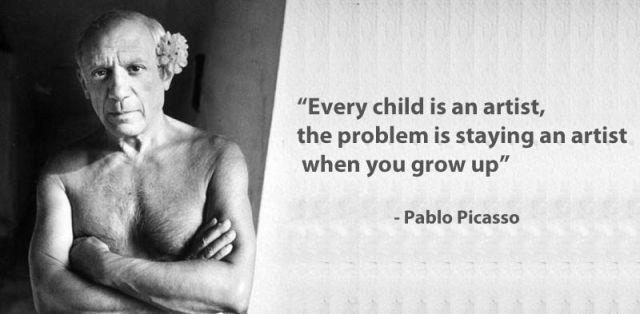
Sermons are art, sometimes they rock, and sometimes they don’t. Its less of a quotient of how many hours you put in, and tends to be where you are emotionally, are you feeling creative, is your imagination engaged, can you connect to your audience, is it relevant and yet provoking.
I’ve always said, I wish every sermon was a masterpiece, but since its art, it doesn’t work that way. There are practices and disciplines that help you to be a better artist, but never any guarantees.
This brings me to Presbyterian Today their articles about arts in the church (Shout out to Katie Douglass who pursued arts even while she did her doctorate at PTS)
Arts and Church  and considering popular culture (ie arts) and religion (cough, cough Science Fiction/Fantasy and Religion anyone? Read about Faith and Dr Who & Star Trek here)
and Whether Sermons are becoming Obsolete…(well depends what you mean by sermons)
If we aren’t approaching Sermons as an art, but instead only as a form of communication or education, then we are not encouraging creation, we are merely communicating about it. And I really think that is missing God’s point. If its art, then the format is far more open then are first and second definitions of sermon imply!!!!
John 21:1-19 is about Jesus’s Abudent Grace–You might think that its about Peter’s need to be forgiven 3 times, but I see it as ever so much bigger.

Jesus is abundent, so much so, he equals and exceeds our need for forgiveness…this is where love gets scary folks, because God know every single sin, and is equal and greater than those sins–God loves us so that all our empty spots–all our places of sin are filled in–so much so that they in fact overflow with God’s Love
Brennan Manning says it like this….

Parenting says this: My three boys take one bath (there’s a trinity joke somewhere in there, but really its just easier to run one bath). They are all in preschool and can all still fit, and mostly they love it. One day my eldest, Franklin, was scooping all of the toys to him–telling me he wanted to play with all of them. I then pointed out that he can’t play with the toys, because he is hanging on too tightly, and his hands are too full, and that he must share the toys to be able to play with them (this was a moment of parenting brilliance).
That’s how God’s love is–think about the fact that the disciples caught 153 fish (ps great scholarly debates exist about this number, until a scholar drily observed that maybe its says 153 because there was an eyewitness who actually saw the fish, and that is the actual–as opposed to being a symbolic–number)
Anyway, they catch all these fish and what are they to do? They can’t eat them all before they rot (pre-fridge and pre-salt), so they have to share the wealth…just like the manna, just like the toys…that is the abundance of Christ’s love–it is so abundent it fills even the most ordinary corners of our lives (fishing is a daily thing in Galilee). Although we may be like the disciples and be unable to see Jesus from the boat (or the bathtub), he will keep appearing, and keep loving us, inviting us to be nourished and then to “feed my sheep” or Share the toys so we can be in relationship with and nourish one another….
How’s that for use or lose it parable of the talents?
PS: Note the nets did not break this time (which is a whole other sermon) I think this is because the disciples have a little more where-with-all to catch some of Christ’s love, it doesn’t all pass through this time, some of it gets caught, harvested and used.
John 21:1-19

21After these things Jesus showed himself again to the disciples by the Sea of Tiberias; and he showed himself in this way. 2Gathered there together were Simon Peter, Thomas called the Twin, Nathanael of Cana in Galilee, the sons of Zebedee, and two others of his disciples. 3Simon Peter said to them, “I am going fishing.” They said to him, “We will go with you.” They went out and got into the boat, but that night they caught nothing. 4Just after daybreak, Jesus stood on the beach; but the disciples did not know that it was Jesus. 5Jesus said to them, “Children, you have no fish, have you?” They answered him, “No.” 6He said to them, “Cast the net to the right side of the boat, and you will find some.” So they cast it, and now they were not able to haul it in because there were so many fish. 7That disciple whom Jesus loved said to Peter, “It is the Lord!” When Simon Peter heard that it was the Lord, he put on some clothes, for he was naked, and jumped into the sea. 8But the other disciples came in the boat, dragging the net full of fish, for they were not far from the land, only about a hundred yards off. 9When they had gone ashore, they saw a charcoal fire there, with fish on it, and bread. 10Jesus said to them, “Bring some of the fish that you have just caught.” 11So Simon Peter went aboard and hauled the net ashore, full of large fish, a hundred fifty-three of them; and though there were so many, the net was not torn. 12Jesus said to them, “Come and have breakfast.” Now none of the disciples dared to ask him, “Who are you?” because they knew it was the Lord. 13Jesus came and took the bread and gave it to them, and did the same with the fish. 14This was now the third time that Jesus appeared to the disciples after he was raised from the dead.
15When they had finished breakfast, Jesus said to Simon Peter, “Simon son of John, do you love me more than these?” He said to him, “Yes, Lord; you know that I love you.” Jesus said to him, “Feed my lambs.” 16A second time he said to him, “Simon son of John, do you love me?” He said to him, “Yes, Lord; you know that I love you.” Jesus said to him, “Tend my sheep.” 17He said to him the third time, “Simon son of John, do you love me?” Peter felt hurt because he said to him the third time, “Do you love me?” And he said to him, “Lord, you know everything; you know that I love you.” Jesus said to him, “Feed my sheep. 18Very truly, I tell you, when you were younger, you used to fasten your own belt and to go wherever you wished. But when you grow old, you will stretch out your hands, and someone else will fasten a belt around you and take you where you do not wish to go.” 19(He said this to indicate the kind of death by which he would glorify God.) After this he said to him, “Follow me.”

(in other words, what’s with your obsession with females with swords..oh wait it might not be an obsession…it might just be awesome writing!)
Having written about Parables and Fairy Tales and the importance they play in defining the universality of the human condition for every particular human–and hence why they are awesome. I feel you are ready for the truth.
Star Trek and Dr. Who are Parables
Not only are they like most science fiction which discusses how the human race will interact with and respond to technological changes in the future (which is a little different than fantasy which explores humanity-exactly-as-it-is-except-there-happens-to-be-magic)…but these are characters whose stories are literally written and re-written from different perspective…
I mean at the end of Season 6 (yes I’m on netflix so I’m behind a season) when time has stopped, a villain offhandedly remarks that Rory is “the one who won’t die” which is so true, (WARNING: SPOILERS, Skip to next paragraph if you care) because Amy and Rory go through 5 different versions of reality to that date, and the timestream so that he is alive again.
Anyway, Dr. Who has similar scenarios played out over and over again with different versions of the main characters–the Doctor and his companion, (or more recently companions). Even building its own mythology (Daleks, MetalMen, Weeping Angels–to encounter again, and again). The goal is the same, humanity is the same, in lots of cases the situations are the same (there is a storyline I call the Space Movie storyline, where everyone dies from something they shouldn’t have touched in the middle of space–this one gets used a lot for the obvious reason that Dr. Who is a first and foremost a Space Adventure).
But we keep watching it, because these are the stories worth repeating again and again!

Similarly, Star Trek has a crew of People stuck wherever they are (usually not at a Space Station) trying to reach home. They have encounters with similar types of beings (Kling-Ons, Vulcans, Robots, and random encounters with unknown species including the ever-lovable Tribbles.) As the characters encounter “the other” they learn to define humanity or even better “lifeforms” in a broader perspective….Even though its filled with tropes like the redshirts 🙂
Each story is a piece of the human experience, and each series can retell a similar plotline with its own set of characters to give us slightly different perspectives. What is maybe the best part is that both series unashamedly state that they are looking into the human condition–there is always a character in Star Trek who is exploring what it means to be human (Data, Seven of Nine, Odo) and Dr. Who is constantly observing and remarking (happy crying, how wonderfully human of you) about it. Thus through the eyes of the other, and the reactions of different characters to different situations allows us to learn more about ourselves!
Thus the tellings,
and the retellings
and the Fun!
That’s why we like Dr. Who, and Star Trek, and Parables, and Fairy Tales

 katyandtheword