“I know why God created atheists, because he loves diversity.”–a friend
How’s that for (w)holistic theology?
Trinity: Unity and Diversity, How we are all unique and yet part of one whole

“I know why God created atheists, because he loves diversity.”–a friend
How’s that for (w)holistic theology?
Trinity: Unity and Diversity, How we are all unique and yet part of one whole

A synopsis of Sunday’s Sermon
Naked Babies are beautiful–I’m pretty sure everyone can agree that naked babies are beautiful. Maybe this was why baptisms used to be done naked because (although a little dangerous) what is cuter than a naked baby?

God made us, as all good mothers, God made space for us and then formed us as a part of her lives…God made us naked babies, beautiful and perfect, and then Jesus offers us the spring of life.
God knows our own mother’s are not perfect, but there is great comfort in knowing that God fills in the gaps–God is the perfect parent, able to be both mother and father to us….
God thinks we’re beautiful…and invites us to baptism, to spirituality to swim fully in the glory of God.
And of course that means nakedness….
Removing all those loads and pieces of clothing that separate us from God. Fully claiming ourselves and our bodies in Christ (for more on this see my post on Skinny Dipping).
And when we get naked, we start to notice that our bodies are imperfect, there are scars, we have fat and wrinkles and everything doesn’t work right….so maybe we can only put our feet in, but whatever we can do to get some spirituality allows us to be loved. How can we participate in the River of Life.

I have a rule–every baby I see is the most beautiful baby in the world …And its true, every baby is a miracle, every baby is beautiful and so I know, for a fact that every baby is the most beautiful baby in the world.

We are God’s Babies. We are the most beautiful people in the universe, and that beauty comes from God! God’s glory and love is in us, and since Christ is in God we are in God’s glory (John 17). And God, as a good mother, doesn’t love us in spite of our faults, but including them. Seeing all our flaws, faults and cracks. God loves us, because we are the most beautiful children in the world–and we need to affirm that to one another. To look at one another and say–you are beautiful, just like naked babies are!
Good Examples of Embodied Spirituality tend to be as follows
yoga
monks working
liturgical dance
and Mr. Rogers (because he’s the Presbyterian Superhero of faith 🙂
Here is the Spiritual but not religious issue in sum:
Christianity–more and more abstracted and spiritualized religion, emphasizing the moral lessons of the Bible, essentializing Jesus as love and pursuing faith. Like good Augustine-type-people we have more and more distanced ourselves from the body, turning communion into a remembering of Christ. Barb Hedges-Goettl concludes that we have moved away from the reality of the broken, embodied Divinity present in Jesus Christ. A particular example of this can be found in how communion is celebrated (more about this below/in the thesis)
Hence Christianity is about being “spiritual” and has almost nothing to do with our bodies
If anything we should deny our bodily needs, giving quick and easy solutions to issues of 1. addiction: denial, proof that worldly wants are addictive and evil 2. homosexuality: denial its just a bodily impulse and the body is evil 3. Health Issues: If you are truly pure your body will be healed, otherwise better luck in heaven. These are broad generalizations, but you get the idea.
Hence we have an entire generation of the spiritual not religious, because if Jesus is only love, and we should deny the body, why do we need to gather and/or embody Christ through the church? The church doesn’t embody Christ, in fact, it doesn’t even consider embodiment important, so bodies are–literally–gone from the church. Spiritual but not religious people can do all that from home. So that’s it, they’ll be Spiritual, they don’t need to be religious.

If what we eat, how we care for our bodies, where we are present and how we are active are spiritual activities, then spirituality very quickly turns religious….
Barb Hedges-Goettl suggests to us that a vital piece is missing, and that is the living body of Christ. My question is : If we say Christ’s body is both present in communion and embodied by the church, what does this do to our faith: God is NOT JUST present when we see love, God is calling us to presently embody love as a corporate (ie enfleshed/embodied/living-flesh-corpse) of Christ that is out in the community….I find this especially interesting in a digital world, where embodiment is finding new expression–and yet still nothing beats a face to face meeting (you can’t hug on skype)

“In my dissertation I wrote that faith is about meeting God and God acting upon us. God is the life-changing agent/subject, not the object of belief. The living resurrected Christ changes us; he is not just an example to emulate or the purveyor of an ethic or value”–Barb Hedges-Goettl 
Dr. Barb Hedges-Goettl ‘s thesis is : The Body is Missing: Eucharistic Theology of the Presbyterian Church (U.S.A.) in Conversation with Zwingli, Calvin, and Nevin” (10107), has been submitted to Garrett-Evangelical Theological Seminary in preparation for posting on ProQuest)
PS Shepherd is the best fictional clergy, EVER
This is getting a lot of searches, so I’m re-posting Sermon’s are Art in response to the article Sermons are becoming Obsolete
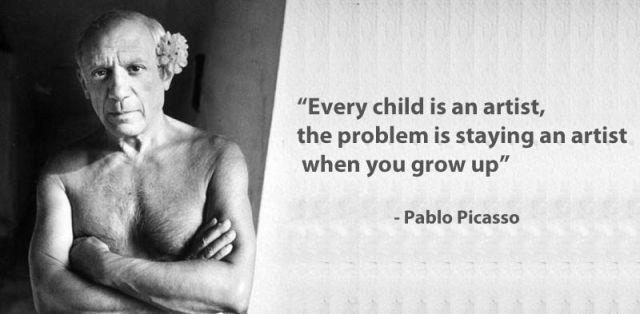
Sermons are art, sometimes they rock, and sometimes they don’t. Its less of a quotient of how many hours you put in, and tends to be where you are emotionally, are you feeling creative, is your imagination engaged, can you connect to your audience, is it relevant and yet provoking.
I’ve always said, I wish every sermon was a masterpiece, but since its art, it doesn’t work that way. There are practices and disciplines that help you to be a better artist, but never any guarantees.
This brings me to Presbyterian Today their articles about arts in the church (Shout out to Katie Douglass who pursued arts even while she did her doctorate at PTS)
Arts and Church  and considering popular culture (ie arts) and religion (cough, cough Science Fiction/Fantasy and Religion anyone? Read about Faith and Dr Who & Star Trek here)
and Whether Sermons are becoming…
View original post 66 more words
Once Upon a Time there (around Matthew 21) there was an actual father who had to deal with two sons. And this family was so typical, Jesus decided to use them as a guide to life. In this family there were two sons who’s father told them to go and work on the vineyard. The first son refused. The second son agreed.
But in an ironic twist, the son who refused changed his mind and went and did the work anyway, the second son didn’t go at all….
Then Jesus asked, which son did what his father asked (not which was the better son, not who was more faithful, just who DID IT) and his disciples answered the first

This is classic teenage behavior: My father (a behavior psychologist and pastor) likes to point out that usually while teenagers are giving you mouth, they are doing exactly what you asked them to do. Hence my father advises parents to look at actions more than words.
You want your kid to do x, y and z and he/she is doing it, great!
They don’t have to be happy about it…that might be asking too much
I have a congregant who complains about every bit of work that has to get done–she is a veritable saint, showing up to everything, serving on boards, cleaning what needs to be cleaned, working when work needs to be done, and is dependable and loyal as anything. I’ll take an entire congregation of such people (even if it does wear me out).
With my eldest, we’ve learned not to give him the opportunity to argue–this is a child who thinks no=anopportunitytoargue, maybe=yes and if-you’ve-given-an-inch=everything-is -up -for-negotiation. I call him the negotiator. So often I don’t tell him what’s going on (against my extroverted nature!) and just start doing it–going upstairs to brush teeth without telling him, taking all the other kids out to the car (because they are too young to argue, at least verbally), or reading the stories whether or not he is present. When I do this, he often follows, because my actions as a parent speak louder than words! Putting things into action means that I REALLY mean that we are doing this now, I’m not just talking about it…
What does this say about parenthood (esp. on days like yesterday when I lose it?) What does it mean about us as Christians? Jesus ends the parable by pointing out that the prostitutes and tax collectors are getting in before the church people for they believed and acted first. A lot of the Spiritual not Religious data says that Christians do not follow through on what they believe. The practical aspect of faith is missing.
As parents, I think this means telling and ACTING on the fact that we love our children. If we do not act out love–if we don’t practice REAL forgiveness, if we are not open and accepting of EVERYBODY, if we curse people while we are driving or tell our children that dressing up in high heel shoes is a ridiculous thing for a boy to do (my son’s experience in nursery school), if we mock the weak, demean the different and blame the poor for their plight, what are we teaching them?
How can we enact love? How can we, on the days we don’t feel like it–go out and pick the fruit of God? How can we return to work in the Garden of the Kingdom of God again, and again in meaningful ways?
We might not always want to do it, but that’s ok, as long as we know that our actions speak louder than words, and its never too late (even after we’ve refused!) to go out and work the garden.
 Christianity is not, “Smile Jesus loves you”–anyone who says that is probably selling you on Christ (so to speak)
Last Sunday’s Scripture included one of my favorites from Revelation
9After this I looked, and there was a great multitude that no one could count, from every nation, from all tribes and peoples and languages, standing before the throne and before the Lamb, robed in white, with palm branches in their hands. 10They cried out in a loud voice, saying, “Salvation belongs to our God who is seated on the throne, and to the Lamb!” 11And all the angels stood around the throne and around the elders and the four living creatures, and they fell on their faces before the throne and worshiped God, 12singing, “Amen! Blessing and glory and wisdom and thanksgiving and honor and power and might be to our God forever and ever! Amen.”
One thing I always testify to is my absolute belief that at the end of the world every knee shall bow to Christ. I don’t know exactly how, but I have faith in Christ that it WILL happen (again do not ask me the why and wherefores, I leave those technicalities to the boss).
I don’t think Christianity is about guilt, I don’t think its my job to convert people and I think that God is ultimately merciful when She sits in judgment. (AGAIN NOTE THE LACK OF JUDGMENT IN ALL OF THIS: IF CHRISTIANITY FEELS JUDGMENTAL YOU MIGHT BE ATTENDING THE WRONG CHURCH)
However, I do know that God loves EACH and EVERY one of us. The Good News of Jesus Christ is not that God loves everybody, but God loves each and every person, with all of their warts and faults and encourages us to do the same–that is the uncomfortable and “not feel good” of Christianity, for Christ’s love calls us to practice a love that is equal to God’s, to practice grace worthy of the Holy Spirit and to be as merciful as God.
In the end, we will all know God’s love, we will all accept ourselves and each other for who we truly are, and in the end we will not be able to help but to bow to God and praise her, crying Glory, Power and Might be our God–for what is more powerful than love!
“Hurry UP!”
Sometimes I can be a tad impatient with my children, especially my “almost” 5 year old. For example last Friday we were late to school because every single thing I asked him to do he said he would and then didn’t. Making me repeat myself over and over again.
Last week I was trying to nap during my children’s nap/quiet time (quiet time for the older boys for 1hr, nap time for the baby and perhaps my 3 year old depending how good a job we did of wearing him out). My mistake was to try to nap upstairs (my window get a nice piece of sunlight to sleep in midday: I’m part plant you know). Every couple of minutes it was “mmmooooo—ooomm–maaaa….how do I spell….” followed by some word that was somehow related to Dr. Suess–which is our current obsession. My problem was I was so tired I couldn’t follow through on my threats so I kept saying “this is the last time” spell it and inevitably he would return….

What amazes me about this all is that my children’s behavior and its significance for me, the fact of whether they are having a good or a bad day is ultimately reflective of the kind of day I’m having.
Jesus tells a parable of the Fig Tree…In it a fig tree that has been growing for 3 years. It grows, its green, it looks healthy, and yet does not produce fruit. The Master declares it should be cut down, but the caretaker (Christ anyone?) says that he will trim it, give it better soil, and to please let it grow another year and see what then happens. The Master agrees….–Luke 13:6-9

…and that’s it…the story ends, not with whether or not the tree behaves better but the two “parents” of the tree, the caretaker and the master, Jesus and God, agreeing to give it better care. Deciding it wasn’t (entirely) the tree’s fault, and that it probably could produce it just needed more time and space to grow, and more nurturing, and trimming of its bad parts….
If I’m having a good day, the hiccups of a 1, 3 and almost 5yr old are minor and workable. If I’m having a bad day every infraction feels like a personal insult.
If I have the wherewithall to take a step back on the bad days then I at least don’t lash out but unfortunately, I am only human. My mom said she used to be really moody/dramatic (Re: my side of the family tends to be) and if one thing went wrong her entire day was ruined. Post-Children, if only a few things went wrong, she knew it had been a “good” day.
So there it is…the promise is that God will follow through on cutting down the bad trees (you know the importance of boundary setting and holding to consequences in parenting), but at the same time, practicing Grace….If my children aren’t bearing fruit that day, maybe I need to look at the care I’m able to give them that day (after all children tend to notice when we are stressed and respond in kind) The focus is not on the consequence but on the gift…let our parenting be the same….not only on my good days, but also on my bad ones
On the other hand on really hard days–where it isn’t about me or the children, but about the world (Newtown and Boston of course spring to mind)–then the misbehavior of small children are put into perspective, and I begin to feel blessed–blessed to be safe, blessed to have children to love, bless to have children who misbehave and are imperfect.
Just a quick disclaimer: The following poem includes rather strong language. Something I think goes well with Easter. For Lent I gave up swearing … well almost.
A Homily for Easter
by David R. HensonGoddamn evil
Goddamn abuse
Goddamn injustice, slavery and rape.
Goddamn racism
Goddamn war
Goddamn that strange fruit of bigotry and hate
Goddamn suffering
Goddamn hunger
Goddamn indifference, apathy and waste
Goddamn noose
Goddamn death
Goddamn despair, depression, the wait
Goddamn Good Friday
And a Goddamn cross
Goddamned it all,
Goddamned it too late
Yet we live like it’s Easter
Like God has been raised
We live like it’s light,
In spite of the dark.
We live like there’s joy
With spite in our hearts
For all that remain of our Goddamned days
These Goddamned
Good Fridays.”
Easter’s Rage: A Poem that Will Get Pastors Fired
April 2, 2012 By davidrhenson
In time of hate and suffering, a reminder that Christ is with us & for us
Church is not a building, a faith or a people–it is nothing more or less than urge for humans to meet together, discuss the theological ramifications of human life and to offer support. Therefore church can happen in all manner of times and places

 katyandtheword