Sermons are Art

Sermons are Art

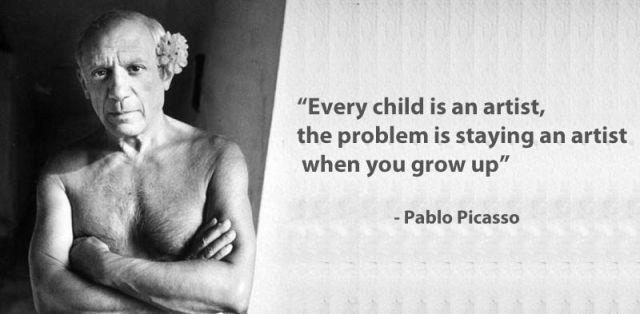
Sermons are art, sometimes they rock, and sometimes they don’t. Its less of a quotient of how many hours you put in, and tends to be where you are emotionally, are you feeling creative, is your imagination engaged, can you connect to your audience, is it relevant and yet provoking.

I’ve always said, I wish every sermon was a masterpiece, but since its art, it doesn’t work that way. There are practices and disciplines that help you to be a better artist, but never any guarantees.

This brings me to Presbyterian Today their articles about arts in the church (Shout out to Katie Douglass who pursued arts even while she did her doctorate at PTS)

Arts and Church Art as worship and considering popular culture (ie arts) and religion (cough, cough Science Fiction/Fantasy and Religion anyone? Read about Faith and Dr Who & Star Trek here)

and  Whether Sermons are becoming Obsolete…(well depends what you mean by sermons)

If we aren’t approaching Sermons as an art, but instead only as a form of communication or education,  then we are not encouraging creation, we are merely communicating about it. And I really think that is missing God’s point. If its art, then the format is far more open then are first and second definitions of sermon imply!!!!

Star Trek and Dr. Who

Having written about Parables and Fairy Tales and the importance they play in defining the universality of the human condition for every particular human–and hence why they are awesome. I feel you are ready for the truth.

Star Trek and Dr. Who are Parables

Not only are they like most science fiction which discusses how the human race will interact with and respond to technological changes in the future (which is a little different than fantasy which explores humanity-exactly-as-it-is-except-there-happens-to-be-magic)…but these are characters whose stories are literally written and re-written from different perspective…
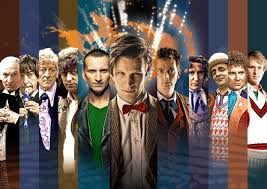
I mean at the end of Season 6 (yes I’m on netflix so I’m behind a season) when time has stopped, a villain offhandedly remarks that Rory is “the one who won’t die” which is so true, (WARNING: SPOILERS, Skip to next paragraph if you care) because Amy and Rory go through 5 different versions of reality to that date, and the timestream so that he is alive again.

Anyway, Dr. Who has similar scenarios played out over and over again with different versions of the main characters–the Doctor and his companion, (or more recently companions). Even building its own mythology (Daleks, MetalMen, Weeping Angels–to encounter again, and again). The goal is the same, humanity is the same, in lots of cases the situations are the same (there is a storyline I call the Space Movie storyline, where everyone dies from something they shouldn’t have touched in the middle of space–this one gets used a lot for the obvious reason that Dr. Who is a first and foremost a Space Adventure).

But we keep watching it, because these are the stories worth repeating again and again!

Similarly, Star Trek has a crew of People stuck wherever they are (usually not at a Space Station) trying to reach home. They have encounters with similar types of beings (Kling-Ons, Vulcans, Robots, and random encounters with unknown species including the ever-lovable Tribbles.) As the characters encounter “the other” they learn to define humanity or even better “lifeforms” in a broader perspective….Even though its filled with tropes like the redshirts 🙂

Each story is a piece of the human experience, and each series can retell a similar plotline with its own set of characters to give us slightly different perspectives. What is maybe the best part is that both series unashamedly state that they are looking into the human condition–there is always a character in Star Trek who is exploring what it means to be human (Data, Seven of Nine, Odo) and Dr. Who is constantly observing and remarking (happy crying, how wonderfully human of you) about it. Thus through the eyes of the other, and the reactions of different characters to different situations allows us to learn more about ourselves!

Thus the tellings,

and the retellings

and the Fun!

That’s why we like Dr. Who, and Star Trek, and Parables, and Fairy Tales

Book Review: Written in Red by Anne Bishop

If you like stories about fragile females, who actually end up being not so fragile, with willing males to simulatenously take care of them even as they serve them, then Anne Bishop is your feminist.

The plotline is basically the same as her other 3 series (Black Jewels<–first and favorite, Belladonna and Bridge of Dreams<–not really a fan of this one).

Despite the plotline and characters getting to be (more than) predictable, Anne Bishop creates awesome worlds where magic is both feared and utilized in unexpected ways.

I like the plotline, so I don’t mind it being that repetitive, however I think that in her most developed world (Black Jewels) the books about side characters start to get away from the tired plotline, so its still my favorite. Plus this is not a common plotline elsewhere, so although its the same tune from Bishop over and over again I do recommend reading one of her series to get a taste of her style.

Be warned: Anne Bishop not only does explicit sex (which no one seems to worry about) but touches on real issues of abuse (self and other-inflicted), and the vulnerability of humanity to abuse and be abused–in fact a lot of the power dynamic within her books are about how powerful characters remain good. I think the fact that she deals so well with these issues are part of what makes her a good writer, but don’t expect a happy, squishy fantasy world…

I would recommend it to anyone who is interested in cool worlds, strong females and powerful issues…..

Parables are Godly Fairy Tales

Ok,

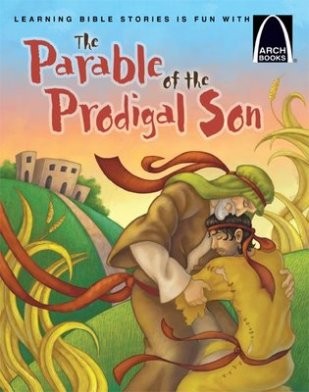
Don’t take this the wrong way. But if Fairy Tales compile to give us an understanding (picture/idea/grasp) of the human condition. Then parables give us a God’s eye view of the human condition. Noting not only life as it is, but also, at the same time, life’s potentials…[think Prodigal Son]
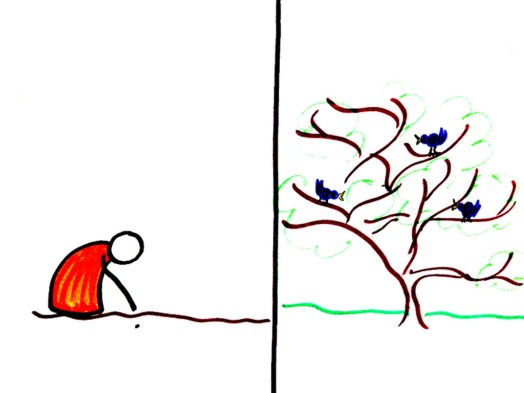
Compiled together, the parables–The Mustard Seed, The Widow’s Mite, The Lost Sheep, The Seven Bridesmaids.

Reading these stories over and over provide windows to the self–clarifying the relationships in our lives. It plants the seeds of knowledge, it gives us the broad scope of life, while allowing us to fill in the details of our own lives.

This is why I read fairy tales theologically, parables practically and reread as much as possible….

An Open Letter to the Church from My Generation

College Student’s Wisdom about the church today

dannikanash's avatar"I Said I Don't Know."--and Other Answers to Hard Questions

Church,

I got to go to the Macklemore concert on Friday night. If you want to hear about how that went, ask me, seriously, I want to talk about it until I die. The whole thing was great; but the best part was when Macklemore sang “Same Love.” Augustana’s gym was filled to the ceiling with 5,000 people, mostly aged 18-25, and decked out in thrift store gear (American flag bro-tanks, neon Nikes, MC Hammer pants. My Cowboy boyfriend wore Cowboy boots…not ironically….). The arena was brimming with excitement and adrenaline during every song, but when he started to play “Same Love,” the place about collapsed. Why? While the song is popular everywhere, no one, maybe not even Macklemore, feels its true tension like we do in Sioux Falls, South Dakota. If you’re not familiar, here’s the song:

Stop–did you watch it? Watch it.

Before the song, Macklemore spoke really…

View original post 976 more words

My Favorite Pastors in TV & Film

I always thought that about shepherd, plus do you notice how often tv ministers are women (very rare). Love this list…didn’t include Father Ted though 😉

J. Barrett Lee's avatarHopping Hadrian's Wall

Too often, clergy in fictional media are portrayed as either demonic, judgmental hypocrites or sincere, mostly nice, but still basically useless.  Hardly ever are we played as real, full human beings in our own right, complete with hopes and flaws.  Here are a few that shatter such misconceptions:

Shepherd-Book-WP-firefly-3087444-1152-864Shepherd BookFirefly, Serenity

Book: River, you don’t fix the Bible.
River: It’s broken. It doesn’t make sense.
Book: It’s not about making sense. It’s about believing in something, and letting that belief be real enough to change your life. It’s about faith. You don’t fix faith, River. It fixes you.

Dr. ChenFrank Lee Bukowski (a.k.a. Dr. Chen) – Eli Stone

Not technically a member of the clergy, but I included him anyway because Eli’s acupuncturist doubles as his spiritual advisor.

Eli Stone: But I don’t believe in God.
Dr. Frank Chen: Sure you do. You…

View original post 398 more words