Brokenness in t…

Brokenness in the Real World “When we fall, as we always do, we pick ourselves up and start again. And when our trust is betrayed the only response that is not destructive is to trust again. Not stupidly, you understand, but fully aware of the facts”

Madeline L’engle a quote of Grandpa Austin’s p. 144 of “The Young Unicorns”

Review “A Wrinkle in Time: the Graphic Novel” Adapted & Illustrated by Hope Larson (and written by Madeline L’Engle)

I am a total fangirl of Madeline L’Engle, she is most likely my favorite self-named Christian Fantasy author (as opposed to Lewis or Tolkien or the like)…so A Wrinkle in Time I bought with my oft hoarded holiday gift cards.

so when my 4 and a 1/2 year old son saw The Invention of Hugo Cabret on the floor and was fascinated by the fact that grownup books can have pictures. Immediately I t

600 × 230 – hardcoversandheroines.com

old him some adult books are entirely pictures, they are called graphic novels, and I showed him A Wrinkle in Time. He then asked if we could read it.

1600 × 902 – yafictionbookreviews.blogspot.com
499 × 329 – stoppingoffplace.blogspot.com

I’m a “Why not?” parent, and said “well we can try…” uncertain of its quality, his interest and our schedule (reading a chapter a night is a big commitment)

Bulletpoints of A Wrinkle in Time

1. The pictures were totally used to “fill in” the story. I have an ongoing theory that all remakes of classics (Oz, Narnia, Lord of the Rings) tend to be better if they were done by children who grew up with the tale, because reading things as adults–we just don’t connect the same way, and we tend to put our own values and systems on instead of exploring the world that is presented (Harry Potter comes to mind, the first movie the director said re: Dumbledore’s Office “what was fun was we could do whatever we wanted, and create it from scratch…um…excuse me isn’t there a perfectly perfect BOOK to refer to argh, a guess that’s another post for another day.) Hope Larson definitely got the world, genre, passion and feel for L’engle’s tale

2. This is what I always pictured a “graphic novel” to be, its a real novel, told in graphics (comic books are great, but they always sound shorter to me). At 383 pages and multiple panels a page (1-10panels) the story is given the breadth, width and depth to be a deep telling of the truth that is in the books

3. She gets stars: Stars are a L’Engle thing, Larson, totally uses it, bonus points galore.

4. My four and a half year old was entranced, wondering when they would finally get to rescue first Meg’s father and then Charles Wallace…He was very disciplined about the one chapter thing, telling me it was “so exciting” to wait til the next day (like me he’s a sick person who enjoys delayed gratification–this makes us really great readers, we will willingly believe whatever you tell us because we like not knowing the real answer)

5. When we finished the book, Franklin (my son) wanted to know if we could pa-lease-read-it-starting-at-the-beginning-tomorrow-night-RIGHT? (needless to say we went a reserved the graphic novel of The Hobbit at the library ASAP)

Katy’s Review 4 out of 4 stars

Franklin’s Review 60 out of 4 stars

PS: The story of love’s triumph over nothingness is amazing, and I can only pray that Hope Larson has been engaged for A Swiftly Tilting Planet, and not someone else–because, hey, I trust her….She was able to show me Aunt Beast, Mrs. Which, Mrs. Who and Mrs. Whatsit without messing with their alien/mysterious natures!!!

Other pictorial interpretations of Wrinkle in time

1024 × 570 – warlord-of-noodles.deviantart.com
718 × 1023 – ebay.com

762 × 1048 – nastasiarocks.deviantart.com

400 × 279 – bookiewoogie.blogspot.com

356 × 500 – thisrecording.wordpress.com

180 × 229 – wanderingeducators.com
158 × 224 – sfpl.org

Anne Lamott · 9…

Anne Lamott · 91,543 like this
10 minutes ago ·

“The light shines in the darkness, and the darkness has not overcome it although this time, or at least right now, it has come very close. My pastor talks often about our dual citizenship, as children of God, and Goodness, gorgeous and divine, and we are also people with human biographies and wounds and families, living in a world of unimaginable suffering, brutality, madness.
We are lighthouses of sacred love, and we are a violent species; Cain is still killing Abel.
What do we do today? Where do we even start? I wish there was a site called, Our Plan for the Next Few Days, in the face of Newtown. I can’t find it, but I’ve realized a few things and remembered a few things, and have decided to share them.
Is it okay to stayed glued to the TV? Yes, if you need to. Is it okay not to watch any TV, and just do exactly what we had planned? Yes; anything you are doing, thinking, blocking, to get through these days, is okay. Do we go ahead with our plans to make gingerbread houses with our little ones? Of course. Do we make another visit to a seemingly uncomprehending relative at the convalescent home? Of course. Do we go through our neighborhood today picking up little, even as we know that there will be more tomorrow? Of course? Do we plant bulbs in the cold rocky crummy earth? Always! Do we light candles? Again–always.
I also remembered a conversion I had with my Jesuit friend Tom Weston during a bleak, cold, excruciating Advent day, three years ago, that I wrote up inSome Assembly Required. Here is some of what we talked about, which I am finding helpful today:
Where, I asked that day in 2009, in such despair and chaos, is Advent?
He tried to wiggle out of it by saying, “You Protestants and your little questions!”
Then he said: “Faith is a decision. Do we believe we are ultimately doomed and fucked and there’s no way out? Or that god and goodness makes a difference? There is heaven, community and hope—and hope that there is life beyond the grave.”
“But Tom, at the same time, the grave is very real, dark and cold and lonely.”
“Advent is not for the naïve. Because in spite of the dark and cold, we see light—you look up, or you make light, with candles, trees. And you give light. Beauty helps, in art and nature and faces. Friends help. Solidarity helps. If you ask me, when people return phone calls, it’s about as good as it gets. And who knows beyond that.”

Anne Lamont on her Facebook Page

Being Christmassed

“That’s What Christmas is all about Charlie Brown” last night, in the face of tragedy, we put on Charlie Brown Christmas to 60 people. Many of them children: children who laughed at Snoopy, marvelled at Linus’ blanket, and tried to tell Charlie Brown where to get his tree “It’s over there!” It was a moment of innocence and hope. With all of Charlie Brown’s searching for hope it is ultimately understand Christmas “and the angels were singing Glory to God in the highest and on earth Peace and Goodwill toward Man.” Charlie Brown who is so often mistreated and depressed is able to be “Christmassed” (yes that is the verb for feeling the true meaning of Christmas–and it often sneaks up on you). And because Charlie Brown found hope in Christ, I did too…I also went through his hopelessness, his loneliness–ending in the sad, dead tree being alone on the stage. But, then the heavenly voice came down, then Angels started to sing about the glory of God. And when hope seemed to be God, the tree was resurrected, decorated and brought back in all of its glory. If a tree can be resurrected then surely brave teachers, small children here and in China can be too!

Merry Christmas Charlie Brown.

“When I was a boy and I would see scary things in the news, my mother would say to me, ‘Look for the helpers. You will always find people who are helping.’ To this day, especially in times of ‘disaster,’ I remember my mother’s words, and I am always comforted by realizing that there are still so many helpers – so many caring people in this world.” — Mister Rogers

Hopefully we too can be part of the helpers

…what I read..in high school

Have you ever listened to, read or watched something so much that you have internalized it, and its become a part of your very being?

That is another way to describe what “Reading out” a book is

in highschool I discovered fantasy as a genre

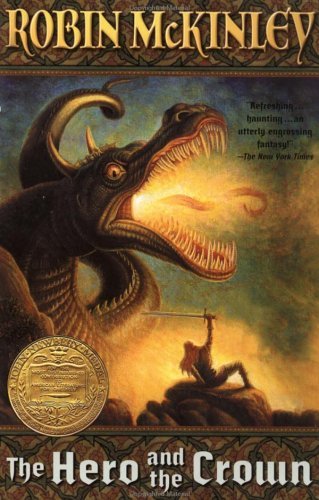
The first “fantasy” book I read was Robin McKinley “A Hero and the Crown” very quickly it and all the McKinley books I could find Beauty, Deerskin and the Blue Sword) became my go to books.

As well as the Tamora Pierce quartets (High School involved reading Alanna and then awaiting as Daine slowly came out) Tamora Pierce Heroines Mouse Mat

And there was Patricia C. Wrede’s Enchanted Forest series which I discovered in the school library in 6th grade. This series maybe, perhaps, if I had to say, my favorite books ever (although I hate t  o pic  k because I love so many)

I never did read fantasy to escape. I always read it theologically. I read it to affirm the goodness of humanity and the human irrepressible & irrational endurance. I read it to see the abundance and presence of hope no matter how hard things get. I read it because I wanted to see people suffer challenges & loss and to know that it is all worth it, to see good triumph over evil. To me the happy-ever-after is guaranteed, but the work that is done to get there is what is truly important.

We agree about pecans, but not about pastors

Here it is because Landon says it so well…:)

Landon Whitsitt's avatarlandon whitsitt

I learned a couple of very important things over the weekend.

First, most of my Facebook friends agree that the correct pronunciation of the word “pecan” is “puh-CAHN”. There is some slight disagreement as to why it is pronounced that way, but (other than a few outliers) that seems to be the consensus, whether talking about the nut itself or the nut in a pie.

The second thing I learned is that there is little to no consensus on what constitutes “Full Time” when talking about the work of pastoral ministry. In the conversation on my profile, I rediscovered a wide chasm between what we think pastors should be doing, the amount of time we think they should be able to do it in, and the reasons why we think so.

In Open Source Church, I quoted a paper I was a part of writing, “Raising Up Leaders…

View original post 871 more words

Generation Wars in Church

And then there are the (rare) churches who want a pastor to lead them into the 21st Century, to equip them to be ministers, to teach them not so that they are smarter but so their faith is deeper, who train others to do pastoral care, and who spend more time out in the community than in their church buildings. There are especially younger pastors who long to do this usually with great passion.

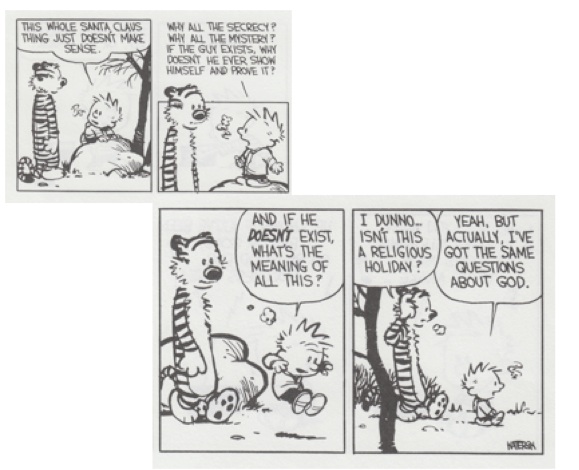
I don’t know what I believe….

When I worked at the Psychiatric Hospital as a chaplain, one of the things I would do as often as possible was a Spiritual Assessment: Basically to get a feel of someone, their faith, and how it may or may not support them.


One of the questions was “Do you feel hope?”


And more than once the answer I got was, “no, not really, maybe someday I will.”


i.e. I’m hoping for hope


To me, this is the essence of the Christian question….


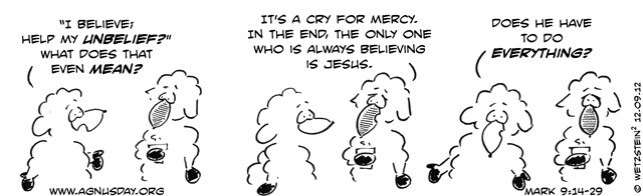
When a father brings his son in Mark 9 to be healed, Jesus says he can only be healed by belief, and the father says “I believe, help my unbelief”


In PCUSA we have a great deal of rules and order. We have systemized theology so that we have a complete (well complete as humans get get) picture–we put all our information about God out on the table, and we desperately try to leave nothing out. Why? 


Because we don’t know everything, so we hang on tightly to those things we do know.
 

Image


Two things about this


1. Church is for unbelievers: Its for those who don’t know whats going on, and the more we make church for unbelievers the more successful church will be 


2. Church is for faith: Faith is not something you can hang onto–one minute you are walking on water, the next you are sinking fast. However, Church is a place to hold onto faith when you yourself don’t have any. We don’t have to believe all the time, because Jesus does. And we can both believe in Christ and not believe at the same time–>I don’t know what I believe


What an honest statement. I don’t know what I believe….

Image


I believe in love


I believe that bad things happen in the world


I believe in discipline


I believe in human brokenness


I believe in being a good person


I believe I can’t do it alone

I believe life is a miracle, every single time


I believe in relationships


I believe in science, math and the order of the world


I believe that someone is behind the ordering of it (most of the time)


I believe that there are intangibles that are as important as tangibles


I believe there are connections that are beyond desciption


I believe that humans have a purpose


I believe in God


I believe that good and evil both exist, and there is a struggle between them


I believe that I can’t understand that struggle


and I believe that God would never leave us hanging and alone ie I believe in Christ and the Holy Spirit


I believe that God is a particular person, not a nameless entity, I believe that we have complete free will and that God controls everything


I believe in auxi morons


I believe that God is timeless, and that often we mess things up by trying to constrain God with time (time travel anyone?)


I believe that most of the time I believe all this, and I believe the the church helps me when I believe…and when I don’t….


But I believe in hope, and if you don’t have hope, I believe you should hope for it! (Isn’t that what waiting for Christ is? Hoping for Hope!)

 

When to go to church (or) the Christian Struggle with Perfection

“Marilla, isn’t it nice to think that tomorrow is a new day with no mistakes in it yet?” Image

“I’ll warrant you’ll make plenty in it,” said Marilla. “I never saw your beat for making mistakes, Anne.”

“Yes, and well I know it,” admitted Anne mournfully. “But have you ever noticed one encouraging thing about me, Marilla? I never make the same mistake twice.”

“I don’t know as that’s much benefit when you’re always making new ones.”

“Oh, don’t you see, Marilla? There must be a limit to the mistakes one person can make, and when I get to the end of them, then I’ll be through with them. That’s a very comforting thought.”


I can still remember having a very “adult” conversation with my parents. It was one in which I must have been about 10, and my parents were telling me that I wasn’t perfect, and that I was going to have to live with myself. My response to this (because I knew no one could be perfect) was “I don’t want to be perfect, I just don’t want to make any mistakes!”

As Christians we have this ongoing struggle with perfection. On the one hand we want to be perfect, on the other part of being Christian (at least for me ) is admitting that we aren’t perfect. It is contending with our brokenness, and giving it up to God to be healed.

However, even though we know this about ourselves, I think that Christians often feel the mistaken need to pro-ject perfection. We want to look or at least seem perfect to everyone else. It’s as if our perfection reflects upon the perfection of God. If we aren’t perfect, then God isn’t perfect. If we don’t have all the answers, then God doesn’t have all the answers.

Instead of pointing towards God’s for answers, we rely upon ourselves or the “church” (i.e. that human conglomeration that we too often see as being the church) to be perfect/have the answers.


That’s where pastors mess up too right? Pastors feel that they have to be perfect, and instead of being open about their faith and their brokenness and talking about where they meet, Pastors try to be perfect, hide their mistakes/failings (which often leads to a whole nasty secret double life). Too often pastors skip their own confessions–of both faith and doubt, and then the quagmire’s come

So we are back to the perfection and mistakes. It is important to strive towards perfection, but to also rely on God on the source of all perfection. And even when I think that I know my way to God, it is important not to project that as the only way to God.

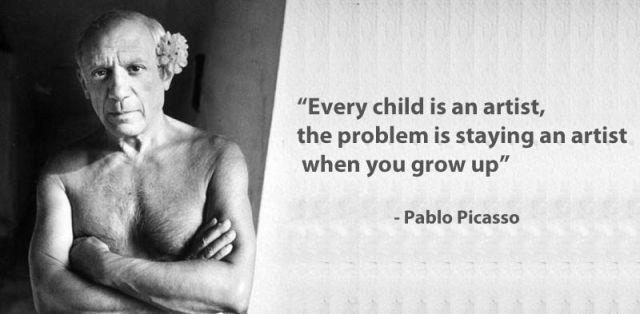
Too often, I think that Church is shown as a place for “perfect” people or (worse) people who think they are perfect. Too often Church is seen as the place where all of our answers are provided. After all, church is not the place to give standardized tests–God answers each of us personally and individually….Image

When, in actuality. God is a mystery, the church doesn’t know how everything works (Trinity, anyone? Or how about that Virgin Birth thing?) The church should be the A number 1 place to go when you AREN’T Perfect, it should be THE place to go when you have questions, and it should be the surrenduring of your mistakes and imperfections to God so that God is the one we are relying on to “project the right image” not humanity or the church in itself…..

Image