Reclaiming #mysticism, #prophets & #christianity in Grounded

You probably haven’t noticed this, but prophets are often outside the fold of the norm in scripture.

Whether its Elisha, Elijah or Jesus himself it is difficult for those who stand outside of religion and claim a relationship with God to fit.

This is, no doubt, because humans long for “normatives” we long for a checklist by which to live our lives, some way to say this is the right (and only) way to be in relationship with God and each other.

Of course if we were created to be that way we wouldn’t be the multi-faceted, every learning, gender-fluid beings we are. Our spirituality and sexuality would not exist in complex relationship to each other, and our experience of the world would be all the same.

Its amazing that Christianity has plateaued into a “normative” state for so long.

In Diana Butler Bass’s book she reclaims the ordinary-earth, water, fire and air. She claims them as ways to experience God in mystical and tactile & experiential ways.

Because these days, when people of all ages have been burned by institutions (whether they be courts or government, schools or churches, scouts or libraries) and are highly suspicious of institutional wisdom.

Experience, instead, informs.

Diana Butler Bass talks about our experiences in the following ways…”Adam and Eve are made from hums, placed in Go’ds garden, and directed to care for the soil from which they came….” Land “is the source, the material basis, of the food supply (no dirt, no food, no us); or it may be viewed through the eyes of spiritual awareness, as part of a divine ecosystem….disregarding the ground is sinful and evil” p. 43

Humans are made of dirt ”

And Diana Butler Bass puts poetic narrative to her experience, allowing life to be mystical and mysterious in its particularity and beautiful & beloved in its multiplicity and shared interactions.

She dignifies the spiritual awareness that so many has, with a well reasoned personal narrative, grounded in scripture touching on the ideas of God as home, neighborhood as a state of being and the hospitality of creating a commons to dwell in.

“Spirituality is about personal experience–the deep erealization that dirt is good, water is holy, the sky holds wonder; that we are part of a great web of life, our home is in God, and our moral life is entwined with that of our neighbor.”

None of that tells us a checklist to be healthy, wealthy and wise, “it is about tracing the threads of the interconnected universe.” 238

Diana Butler Bass explores the spiritual revolution as it is unfolding today. I highly recommend reading with an open mind, to understand God, and just how accessible Xi is.

Personally as a pastor, I love to learn about how people understand God to be in their lives, and to me church is/should be the place where we share our differences to enrich our own faith. I hope that mystics are heard especially when they are not understood and help us to change into whatever church is being born today….




#hopewins #notafraid #diwali Practicing Humanity & Defeating #Terrorism

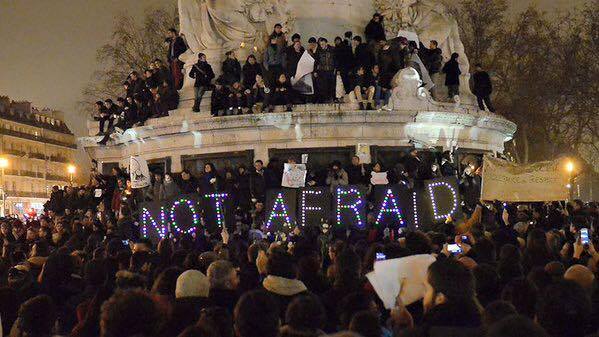
Because those are hope building practices, and this is how to defeat evil. This is how #hopewins, this is how we defeat #terrorism, not with weapons or policies, but with the refusal to live a life of fear.

Today is diwali the celebration of light winning over darkness, how fitting a reminder, for me a Christian when mercy and justice are hard to find today.

Fear Not!

Every time an angle appeared, every time God speaks, fear is cast out. God doesn’t want us to live in fear, God wants us to live into hope.

But that’s hard, its hard when attacks occur all over the world on one day–Beruit, Paris, Baghdad. Its difficult when gun violence continues to cause school shooter drills and institutional racism is unveiled again and again and again.

So what I do is, I cry. I pray. I look at the stars. I light candles.

(until we find the right words, we’ll light candles–Martha Spong)

12250189_10153333015559370_3118431620967031721_n

I live in hope.

This expression is one I use when things are uncertain. I toss it off in casual conversation as though it is easy, but it is so, so difficult.

Worrying is a human past time. Its a way to cope with the reality that evil is in the world. It is a tool that can be overused to the point where we worry too much and forget to live.

Fear also, is interesting. As Christians a tenant of our faith is the fear God. We are not supposed to base our decisions on what could happen, we are not supposed to live our life based in fears, we aren’t supposed to live into the worry and the guilt, because the truth is, we humans do not function well in those state.

When we are anxious and afraid, when we are guilty or judgmental, we make bad decisions.

No doubt, this is why over and over again we are urged only to fear God. “Those who fear God” is an expression in the Old Testament to describe all those who are trying to follow God instead of giving in to other things. But then God tells us over and over again to fear not. And counsels us to hope and trust in what is going on….

Its hard not to fear, not to worry that I’m not secure enough in money or friendships. Its hard when my body does not function the way I want it to, or when my children get hurt from the bad things that go on in the world. Its hard when the news talks a lot about the problems of the world and little about the solutions. Its hard when refugees and children are dying from violence and rejection. Its hard when people proclaim “its not like it used to be” with authority as if evil is new and spreading instead of being old and already defeated by Jesus.

But I live into hope.

I practice not being afraid.

12249606_452409881598728_7499395771736405916_n

Building trust, assuming people are trustworthy, treating everyone with respect and kindness.

Because those are hope building practices, and this is how to defeat evil. This is how #hopewins, this is how we defeat #terrorism, not with weapons or policies, but with the refusal to live a life of fear.

10372771_969917836355651_4507152521144255319_n

Loneliness & Church

Churches feel like lonely places. It is clear to me that one of the reasons that big churches do so well is because they don’t feel lonely, at least not immediately

•I have no doubt there are many reasons to explore about why churches are having trouble…therefore I am only tackling this one

But walking into an empty-ish church of mostly older age feels…lonely….

The loneliness is everywhere; and worse its palpable.

Here is the thing, pastors talk about this a lot…pastors tend to be lonely but little is talked about the layperson’s loneliness. The feeling that “we aren’t in this religion thing together” any more–we are in it alone.

Perhaps that is why the Spiritual but not religious label hits so hard….What do you mean you can do your religious thing by yourself? Where does that leave us…and me?

Religion can be a lonely place to be right now

I just watched Breuggeman’s Prophetic Preaching on the Old Testament which is wonderful

And he talks about how Prophetic Preaching is the breaking of the totalism (or hegemony), which is a SILENCE that leads to VIOLENCE with an outside voice

Good News is so important

Hope is so important

God is not a God who wants us to have to live and die and do everything alone.

Don’t let the emptiness of the church trick you.

Aren’t we the people of the empty tomb?

Aren’t we the people of the empty cross?

Didn’t God make the world out of the emptiness?

Didn’t God create space within God’s very self to give birth to us?

Didn’t God empty out her very self in the personhood of Jesus Christ to give us new and better life?
Churches don’t have to be lonely…don’t buy into it. The lie of death, the lie of not changing, the lie of security and worries about looks and judgements…..don’t believe these lies

God creates…we are called to create and be CREATIVE with God

To me that work is fulfilling, not lonely at all…

Behold I make all things new!

Light in the Darkness #prayforSPUC

Light in the Darkness #prayforSPUC

Prayers for Seattle and Canada–
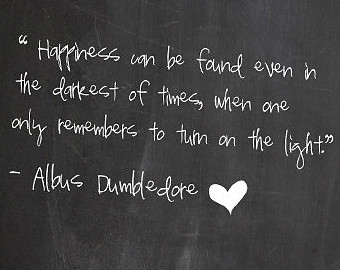
Remember, Jesus is the light that shines in the deepest darkness
Response to Violence

Expecto Patronum to protect all those in danger today we pray

“To read widely…

“To read widely, and often, is thus to hope to be changed, to still believe that change is possible. It is never, ever a waste of time. Be it an essay or short story or novel or article, a good read never goes unanswered because a good read opens up a world that requires our attention. That might be the inner world of the self, it might be the domestic world of a family relationship, or it could be the plight of a whole people.”

To Read is to HOPE!

Boom Fantasy and Christianity in one quote


Read more here

All organizing …

All organizing is science fiction. What does a world without poverty look like? What does a world without prisons look like? What does a world with everyone having enough food and clothing look like? We don’t know. It’s science fiction, and it is as foreign to us as the Klingon homeworld (which is called Q’onos in case you were wondering). But being able to envision it and imagine it means we can begin seeing the steps it would take to move us there.

– Walidah Imarisha, Growing Octavia’s Brood: The Science Fiction Social Justice Created (via nomadmanifesto)

Yay Tumblr…this is definitely why/how I read Sci-Fi/Fantasy as a hopeful act

Millennials, Fantasy & Faith (and why does Katy keep putting them together)

Here is an article about our continued consideration of the “God is dead” question…

“Was Nietzsche right in thinking that God is dead? Is it truly the case that—as the German sociologist Max Weber, who was strongly influenced by Nietzsche, believed—the modern world has lost the capacity for myth and mystery as a result of the rise of capitalism and secularisation? Or is it only the forms of enchantment that have changed? Importantly, it wasn’t only the Christian God that Nietzsche was talking about. He meant any kind of transcendence, in whatever form it might appear. In this sense, Nietzsche was simply wrong. The era of “the death of God” was a search for transcendence outside religion. Myths of world revolution and salvation through science continued the meaning-giving role of transcendental religion, as did Nietzsche’s own myth of the Superman.

Reared on a Christian hope of redemption (he was, after all, the son of a Lutheran minister), Nietzsche was unable, finally, to accept a tragic sense of life of the kind he tried to retrieve in his early work. Yet his critique of liberal rationalism remains as forceful as ever. As he argued with masterful irony, the belief that the world can be made fully intelligible is an article of faith: a metaphysical wager, rather than a premise of rational inquiry. It is a thought our pious unbelievers are unwilling to allow. The pivotal modern critic of religion, Friedrich Nietzsche will continue to be the ghost at the atheist feast.”


http://www.newrepublic.com/article/117082/nietzsche-and-death-god-new-books-peter-watson-terry-eagleton


Deep, deep thinking in this article and in these reviewed books. This is a response not only to this, but also the Pew Research Poll on Millennials (which I believe I was surveyed for)…..its time for us religious folks to look beyond culture and get creative in trying to understand where people are and why they are there–ie the unattached, economically underemployed yet hopeful millennials

This is an article the re-examines the “God is Dead” question from a modern perspective….Here is the way I understand it. Nietzsche, in light of the prominence of science, tried to make a moral code not dependent on religion.

Interestingly enough, this move away from religion relied heavily upon a “Superman” theory, in my nonexact layman’s terms think of it as the “myth of progress” which is the story/belief/mythology that humans are getting better and will always continue to get better, It is a different theory than the theology of Reformed Christianity, which states that the human condition is an imperfect/broken one, but that God intervenes to work within and among the gaps to create his new kingdom.

Here is one of the most exciting parts of this article, for me “Yet Watson is not mistaken in thinking that throughout much of the 20th century “the death of God” was a cultural fact, and he astutely follows up the various ways in which the Nietzschean imperative—the need to construct a system of values that does not rely on any form of transcendental belief—shaped thinking in many fields.”

Why, because I see where that played out in culture/the fantasy genre, and I THINK ITS CHANGING in the 22nd century!

If you are a fantasy reader, you quickly notice a trend in 20th/most of the 21st century fantasy (ie since Tolkien  formalized the genre)–technology is on the rise, and magic is recessing…sercreting itself away and becoming more and more inaccessible. Imagination is on the decline, the elves are retreating across the sea, the Ents are disappearing, Oz is put under an invisible bubble, the Neverland Fairies keep on dying, Narnia is very remote and mysterious, there is only one unicorn left and she is the last. The fantasy genre usually is a reflection of the Western understanding of spirituality. The more science comes, inevitably the less faith will play a part…..this belief was so true in 20th & 21st century.

Behold the changes

J.K. Rowling & Harry Potter: Muggles and Magic live parallel and not so separate worlds, and once you know about it, you are a part of things (and muggles and wizarding folk are all related in a myriad of ways)

Charles De Lint/Neil Gaiman: Fay are a PART of the cities, they integrate into the varied spectrum of the city, oftentimes helping to explain the richness of human interaction. Ex: Charles De Lint “ I’ve taken to calling my writing “mythic fiction,” because it’s basically mainstream writing that incorporates elements of myth and folktale, rather than secondary world fantasy.

Once Upon a Time/Fables/10th Kingdom: The meta-fairy tale genre is relatively new in literature and cemented itself in the mainstream media with Once Upon a Time. No longer are we “stuck” in one fairy tale/one kind of understanding of magic/one culture–but sectarism gives way to the fact that we can all learn from one another and get a greater understanding of ourselves and the human existence! (rather like how the internet now instantaneously exposes you to so many other stories/people than ever before)


I really, really think that we should be studying this change, because it signals a CULTURAL shift in how we understand the human condition and faith. No longer are we sure that technology will change everything. Instead, the increased exposure, the uncertainty of the economy and the advances in technology have all influenced the Millennials.