Seed: Narrative Lectionary Resource for David and Bathsheba


Resources by Rev. Dr. Barbara Hedges-Goettl

The story of David and Bathsheba is part of the RCL lectionary for 2 consecutive weeks Proper 12/Ordinary 17B and Proper 13/Ordinary 18B; the second half of the story makes 2 appearances, also appearing as Proper 6C/Ordinary 11C.

See resources for 2 Samuel 11:1-15 at http://www.textweek.com/history/2sam11.htm

and for 2 Samuel 11:26-12:15 at http://www.textweek.com/history/2sam11_12a.htm

This passage is, as they say, “a sticky wicket”–from the odd slicing of this pericope to the passage’s relationship to our society’s growing awareness of  the abuses of men; see Gennifer Brooks’ commentary at https://www.workingpreacher.org/preaching.aspx?commentary_id=3813

With regard to the NL pericope, if the congregation knows the story (mine does), one could preach from just the Nathan part of the story and use that to review the larger saga. I plan to use 2 Samuel 12:1-13/14/15; I am not yet sure what to do with the punishment being the death of David & Bathsheba’s child—as if she hasn’t suffered enough already! If the story needs to be told more fully, vv. 26-27 don’t work well in isolation from the rest of the story; one at least needs to include (in the reading or as an explanation) that David arranged Uriah’s death.

With regard to the relationship of the text to today, I am thinking of God requiring repentance before offering forgiveness–a piece that is often forgotten when victims are told to forgive their abusers. I am thinking of the Truth and Reconciliation Commission in South Africa, which saw telling the truth as a road to reconciliation. I am thinking of the controversial political cartoon featuring Judge Kavanaugh’s daughter praying for forgiveness for her father, a backhand recognition that we all need God to be our ultimate arbiter, forgiver, and healer. 

PH 1993

Hymns relating to truth, abuse of power 

278 Our God, to Whom We Turn

285 God, You Spin the Whirling Planets

289 O God of Every Nation

291 O God of Earth and Altar

386 O for a World Where Everyone

Hymns related to Penitence/God’s Mercy

261 God of Compassion, In Mercy Befriend Us

301 Lord Jesus, Think on Me

303 Jesus, Lover of My Soul

345 Dear Lord and Father of Mankind/Dear Lord. Creator Good and Kind

355 Hear the Good News of Salvation

370 Just As I Am, Without One Plea

381 O Come Unto the Lord

383 My Faith Looks Up to Thee

395 Have Mercy, Lord, on Me

Settings of Lord, Have Mercy (566, 572, 573, 574)

The David/Bathsheba story in pictures 

http://www.freebibleimages.org/illustrations/david-bathsheba/

A friend of mine who is a NT scholar, Rene Schreiner, recently did an extended Sunday School class on Bathsheba, including looking at the history of its interpretation. 

Here’s one she recommends thinking critically about: Bible Stories for Adults: https://www.youtube.com/watch?v=aEaTuGfm14Q).  

She feels the Feminist approach is probably the most even-handed. See https://www.google.com/search?q=feminist+bathsheba&oq=feminist+bathsheba&aqs=chrome..69i57j0.5043j0j4&sourceid=chrome&ie=UTF-8

She also highly recommend Wils Gafney’s section on Bathsheba in

https://www.amazon.com/Womanist-Midrash-Reintroduction-Women-Throne/dp/066423903X/ref=sr_1_1?ie=UTF8&qid=1539696207&sr=8-1&keywords=wilda+gafney

If you want to get into the idea that 2 Sam was written by the Deuteronomist, a great podcast on Deuteronomy can be found on The Bible for Normal People with Peter Enns (Episode 39).

Veggie Tales also has Nathan’s song posted on YouTube.”  image.png


Seeds: Lectionary Resource 10/14

Joshua 24:1-15 [16-26]

Matt 4:8-10

Additional Scripture

Psalm 119: 25-32

Ephesians 4:22-24

Meditative thought: Renew us with rocks and covenants and water and baptism. 

Call to Worship: 

There are so many places we can go and so many things we can do

As for me and my house we will serve the Lord

The worries of the world are temporary, we look to the eternal

Come let us worship the Lord. 


What is worship?

Its time spent with God

What a gift to worship God

Let us worship God!

Prayer of Confession

We confess that we don’t know how to worship you. We spend a lot of time worrying about how to serve you. We forget that we renewed by worship. We are so human in scope, but when we spend time with your, remember how to worship, we are able to let go of worry, and give some of our burdens to you. Help us to worship you today and everyone, we pray.

For all that we’ve forgotten

Forgive us Lord of mercy

For all that we worry about

Forgive us Lord of mercy

For all the burdens that embitter us 

Forgive us Lord of mercy

For all those things that we judge others about

Forgive us Lord of mercy

Lord, let us confess that we belong to you. Help us to let go of all of those things in our lives that do not belong to you, and place those things in our heart that belong to you, we pray. 

Assurance of Pardon:

Remember, nothing separates us from God, God has promised us over and over again that we will always be God’s People. Hear the Good News; In Jesus Christ we are forgiven.

Eucharist Prayer:

God of Abraham and Sarah, the one to whom Miriam sang after the liberation of the Hebrew People. You created us and loved us into being. You are our God, passing blessings throughout time and space, consecrating ordinary acts of eating bread and drinking wine, promising presence whenever two or three gather together in your name. We are here, in your name, we are gathered to taste your goodness. Please send your Holy Spirit on these elements so we can celebrate communion with one another and with you. 

Prayer of Dedication/Closing Prayer

Lord, help us to dedicate our full selves to worshipping and serving you here and in the world we pray. Amen

Food for Thought


Things without Arms or Legs

i have a sad, are you looking for solutions of comfort?

http://www.thingswithout.com/comic/311-a-sad/

Craft Idea: Draw something permeant on Rocks, Draw God’s house with all the people God welcomes. Create a renewal of baptism and remind everyone that they belong to God.

Hymns/Music

BOW – The United Methodist Book of Worship
CLUW – Come, Let Us Worship (Korean)
MVPC – Mil Voces Para Celebrar (Spanish)
SOZ – Songs of Zion
TFWS – The Faith We Sing
UMH – The United Methodist Hymnal
URW – Upper Room Worshipbook
WSM  – Worship & Song, Music Edition
WSW  – Worship & Song, Worship Resources Edition
SoG  – Songs of Grace


Joshua 24:1-3a, 14-25 UMH MVPC CLUW TFWS SOZ URW WSM WSW SoG
Awesome God       2040          
Battle Hymn of the Republic 717       24        
Christ Beside Me       2166          
Come, Let Us Use the Grace Divine 606         135      
Dear Lord, Lead Me Day by Day 411   100            
Freedom Is Coming       2192          
Guide Me, O Thou Great Jehovah 127                
Holy Ground       2272          
I Have Decided to Follow Jesus       2129          
I Will Trust in the Lord 464   292   14        
Lord, What a Cloud of Witnesses!                 55
Near to the Heart of God 472   324            
O Happy Day, That Fixed My Choice 391                
One God and Father of Us All       2240          
Stand Up and Bless the Lord 662   128            
Surely the Presence of the Lord Is in This Place 328 344 215            
The Family Prayer Song       2188          
The God of Abraham Praise 116 28              
We Believe in One True God 85                

http://www.carolynshymns.com/choose_this_day_the_one_youll_follow.html

to tune “Infant Holy, Infant Lowly”

Joshua 24:16  From God Shall Naught Divide Me.  

The Lutheran Hymnal 39

393  
Joshua 24:16  From God Shall Nothing Move Me.

Lutheran Service Book 713/Lutheran Worship 409

  409

Commentary

http://www.patheos.com/blogs/livingaholyadventure/2017/11/adventurous-lectionary-november-12-2017-pentecost-23/ (below)

Sample: Paul Tillich saw our god-visions in terms of our ultimate concern, that is, what we are willing to live or die for, the primary objects of our loyalty. What we worship and treasure shapes our character. Anything that demands exclusivity or primacy focuses our spirit. Placing the one God above all others orders our lives and enables us to live globally as well as locally, transcending the individual ego in light of larger visions. Yet, exclusivity can also lead to violence and displacement as it did in the Israelite occupation of Canaan. Joshua demands a choice. There is no “cheap grace” here; following your god’s path is not optional, and there are consequences to serving the “wrong” deities.

Full content from https://www.pulpitfiction.com/notes/proper27a (below)

pastedGraphic.png

JOSHUA 24:1-3A, 14-25

INITIAL THOUGHTS

  • “As for me and my house, we will serve the Lord,” makes a beautiful arts and craft project to hang in your home.  Somehow, I feel like this cheapens the solemn act of covenant that happens here.

BIBLE STUDY

  • Literary Context
    • Near the closing verses of Joshua.  One of the last things he does alive. Before it closes, they bury the bones of Joseph in the promised land
    • Promise of Genesis: You will be a great nation in this land.
    • Genesis closes with a great nation in the wrong land
    • Exodus closes with the nation on the border of the land.
    • Joshua is the story of possessing the land.  It contains some of the most disturbing parts of the Bible. They are now a great people in the land
      • Do you read Joshua as God ordaining horrendous violence OR do you read Joshua as a history of the victors justifying the violence they used to win?  Is there another way to read Joshua?
  • Lectionary Issues
    • The verses cut out are a retelling of the history of the people.
    • Verses 4-12 retells Exodus and Joshua.
    • Focus is on God’s work, “I sent.. I plagued… I brought… I handed…”
  • “I gave you a land on which you had not labored, and towns that you had not built…”
    • Not a self-made nation
    • God reminds them that their existence is dependent upon God, and God alone.
    • NRSV and CEB translates: “Now go and revere the Lord.”
      • CEB Study Bible note: “The word revere is sometimes translated ‘fear,’ but the rendering here is most helpful.  The term has to do with the reverence and honor for God seen in complete devotion.”
      • “Fear the Lord,” seems to be in direct contrast to Jesus’ call to “Fear not.”  How are these things related?  Does this reveal the nature of God that is changed from the Old and New Testaments?  Is Jesus claim to “fear not,” go against the OT claim to “fear the Lord.”  Or is it a misunderstanding of the OT’s use of the word ‘fear.’  There is no way that Jesus is saying “Respect Not,” or “Be irreverent.”  Or maybe he is saying, “lighten up.”
  • Joshua puts forth a choice: “Serve the Lord” or “serve the other gods.”  You cannot serve both (reminiscent of Jesus’ claim that no one can serve two masters)
    • Joshua: “My family is going to serve the Lord.  What about you?”
    • People:  “Of course we’ll serve the Lord, he’s awesome.”
    • Joshua: “I don’t think you realize what you’re saying.  Serving the Lord is really hard, and he’ll get extra pissed if you promise to serve him, and then don’t.”
    • People: “No really, we will serve the Lord.”
    • Joshua: “Alright.  Let’s mark this agreement with this big rock just in case someone forgets.  And by ‘someone’ I mean you, because God won’t forget.”

PREACHING THOUGHTS

  • What does it mean to “serve the Lord?”
    • Put away other gods. – What is the modern equivalent of putting away other gods?
    • “Inner devotion can be so vaporous, so vague and unmeasurable, that it is meaningless.  Perhaps for that reason verse 14 recalls Genesis 35:2-4, in which Jacob leads a ceremony of collecting and burying idols.  Joshua 24:14 may suggest a ritual removing of gods that might compete with the Lord as a sign of exclusive devotion.  This can be important for contemporary people of faith who find it difficult to reject the pervasive societal and cultural influences that mitigate faith in God” (Jerome Creach, Interpretation: Joshua, p. 125).
      • This sort of ritual burying of false idols could have some potential for modern worship services, but could also slip into ‘book burning’ type of ritual that could be counter productive.
  • Is a wall hanging a pleasant reminder of the covenant, or a cheapening of what is meant?  It depends on the motivation, and the heart of those in the covenant.
    • An analogy: “A fitting similitude for modern people is the relationship of a person to a passionate lover.  If the relationship leads to a marriage covenant, certain formal agreements apply.  The obligation to the lover, however, is not fulfilled by mechanical compliance with stipulations.  Imagine the absurdity of a partner in marriage greeting the spouse at the end of the day, ‘My commitment to you is complete today because  I have not committed adultery.’  The relationship requires multiple expressions of love that can never be legislated fully.  Moreover, the passion of the lover is naturally expressed as anger if the partner ignores or neglects the relationship” (Creach, p. 127)

Whole content from https://lectionarylab.com/2014/11/03/year-a-the-twenty-second-sunday-after-pentecost-november-9-2014/ (below)

Teaching the Text
by the Rev. Dr. John Fairless

Joshua 24:1-3a, 14-25
“Third time’s a charm!”

I’ve heard that all my life, though I’ve never thought much about the meaning (or original context) of the phrase. I suppose usually we mean it as either a token of good luck or persistence. Of course, I’ve also always heard that “the harder you work (persist), the luckier you are.”

Whatever the deepest meaning may be, Joshua makes the Israelites commit three times to follow Yahweh. I guess he didn’t want any backing up later…nobody saying, “Well, you didn’t tell us it would be this hard!”

Whole content from http://montreal.anglican.org/comments/archive/apr32m.shtml (below)

Joshua

Joshua tells of the conquest of the Promised Land (Palestine). God had promised to their forefathers that they would one day occupy this territory. The book begins with the crossing of the Jordan. It then relates the stories of military victories, achieved under his guidance, through which the people of Israel came to control all of the hill country and the Negev Desert. It describes the allotment of land to each of the tribes and ends with Joshua’s final address to the people.

pastedGraphic_1.png

Joshua 24:1-3a,14-25

The people of Israel are now residents of Canaan. According to this book, the conquest is complete. The land has been divided among the tribes. We leap forward to the final chapter of the book. The people (or their representatives) gather at Shechem, on the eastern edge of the hill country, some 50 km (30 miles) north of Jerusalem. Shechem was the site of a pagan shrine. Here Abraham built an altar to commemorate his meeting with God; here Jacob, returning from Haran, set up camp, bought land, and erected an altar; here Joseph was buried. Our reading describes a treaty between God and his people, in the general style of treaties between a victorious king and a vanquished people, vassals. Such treaties say: in return for protecting you …, you are obligated to … But what really matter to us are the differences from a typical treaty, what makes this an agreement between God and Israel.

In v. 2, God’s titles are given. (“Terah” was Abraham’s father, who “served other gods”.) Vv. 2-13 is the whereas section: the background, the reason why the parties wish a treaty. V. 14 states Israel’s obligations: “to revere the Lord …”. V. 22 speaks of witnesses, but (then and now) it is odd that the witnesses are parties to the agreement. This treaty, unlike others, is light on the curses: what will happen if either party breaks the oath; v. 20 says “if you forsake the Lord …” But this verse is discordant with the rest of the reading and with Israel’s experience during the Exile, so perhaps it was inserted later, as a lesson for people of a later age who were straying from worshipping God. V. 25 says that the treaty was ratified, together with subsidiary documents.

Vv. 14-20 are really separate from the treaty. The people have a free choice as to whether they worship God or the local gods, but Joshua and his household elect to serve God (v. 15). The people, recognizing all God has done for them, do choose to serve him. (“Beyond the River”: the river is the Euphrates, so this refers to Aramea, the land to the north. The ”Amorites”, vv. 1518, appear to be an indigenous people of the Promised Land.)

Verse by verse word study: http://montreal.anglican.org/comments/archive/apr32l.shtml

Full content from http://wiki.faithfutures.org/index.php?title=Proper_32A#First_Reading:_Renewing_the_covenant (below)

First Reading: Renewing the covenant

The OT reading from the RCL invites us to reflect on the theme of covenant renewal, and specifically renewal of the covenant as the people of God near the end of the beginning.

As the biblical narrative of Israel’s origins tells the story, the 12 tribes of Israel (under the leadership of Joshua/Jesus) have now taken possession of the land. They have worked together for the common good, and they have overcome great obstacles (with the assistance of their god, Yahweh). All they hoped for is now in their grasp. The land of promise is theirs.

All of us familiar with the story know it was too good to be true, and the ensuing narratives will show a never-ending struggle to retain the land and sustain anything like a viable sense of being the covenant people.

Even the collective promise to put away (finally? after all these years?) the pagan gods of their ancestors has no substance. Later episodes in Judges, 1 & 2 Samuel and 1 & 2 Kings—not to mention the testimomy of the prophetic literature—show that ancient Israel and Judah were attached to their plethora of deities (as well as their sacred images) until at least the time of the Exile.

Even so, the story in Joshua 24 is a classic scene in which the essence of Israel’s faith is proclaimed:

  • gratitude to Yahweh for past and present blessings
  • a sense of collective vocation/identity
  • a rejection of other gods, and their sacred paraphernalia
  • commitment to serve Yahweh and no other gods

Full content from https://ralphmiltonsrumors.blogspot.com/search?q=joshua+24 (below)

The Story (from the Revised Common Lectionary) Joshua 24:1-3a, 14-25 and Matthew 25:1-13

Here’s an amazing coincidence. Deuteronomy 30 says that Moses closed his career by urging his people to “Choose life!” Here, Joshua ends his leadership by demanding, “Choose whom you will serve!”
It could be Joshua’s spin-doctors still trying to show that their leader was a worthy successor to Moses.
Or it could be that every leader needs to confront her/his followers with the need to choose. Don’t drift. Choose! Choose now! And then run your life accordingly.
I would hope to dramatize that message with video clips from television ads (copyright be damned – they put them out there to be seen!). All those ads say, “Choose! Choose ME to be beautiful, to be sexy, to be healthy, to be powerful… to be loved…”
If TV ads prove technically impossible, I could resort to glossy magazine ads.
We also need to say, “Choose!” But the real choices are not which product to buy, but which values, which standards, which way of life. Will we support a culture that deals with short-term interests and selfishness, or will we promote long-term values that will benefit all of God’s creation, including us?
As Joshua says, whatever our decision, our life choices make us witnesses against ourselves.
Jim Taylor

It seems to me the Joshua and Matthew readings come together to form a couple of parables with strong contemporary relevance. It’s important to notice that Joshua is not calling on the folks to choose between God and no god. The choice is between God and gods – the gods of fertility and prosperity.
So why not paraphrase the Joshua reading and where he refers to the gods of fertility and prosperity, talk instead of the gods that rule the shopping malls, the car dealerships, the real estate market and yes, in these days especially, the stock market. I might ask them to take out their favorite credit card and look at it while I read the paraphrase.
Be sure to include the built-in warning that’s in the story. Don’t make pious little promises you don’t intend to keep, because they’ll come back and bite you.
And Matthew’s story about the bridesmaids – try not to tell the one about the preacher who asked a group of young men, “Would you rather be with the wise bridesmaids and their lighted lamps, or would you rather spend the night in the dark with those foolish bridesmaids?”
The story reminds me of the geezer who was asked why he spent so much time reading the Bible and doing church stuff. “I’m cramming for the finals!” he said. Or the person who said, “I’m going to stop procrastinating. As soon as I can get around to it.”
This story connects with the Joshua passage in reminding us that good intentions about future changes in our lifestyle or habits are quite irrelevant. The promise must be made in the present tense.
Ralph Milton

Following musings on a cruise, also on https://ralphmiltonsrumors.blogspot.com/search?q=joshua+24

The Joshuas among us demand that we choose – and we do choose. Whatever is the most fun and the least hassle.
Don’t read this as a grumpy, green-eyed rant about folks who have things we covet. It is a lament for the living that is lost. It is a lament for people who “laugh, but not all of their laughter. Who cry but not all of their tears.” (Kahil Gibran)
It is a lament over the dull-eyed wanderers who have made their choice about who they will serve. They spend their days moving from one amusement to the next. They spend their evenings mindlessly pulling the handle of a slot machine. They spend their nights in drugged and dreamless sleep.
And they tell themselves.
“I must be happy, because nothing hurts.”

Soft Edges – by Jim Taylor
Getting a Grip on Gravity
Around the time of Moses, the ancient Egyptians worshipped the sun god Ra. They were smart enough to recognize that all the other gods that people worshipped – gods of wind, fertility, river, storm, etc. – all depended on a single source of heat and light, the sun.
Moses may have adapted the concept of monotheism – one God, and only one God – from the Egyptians; he was raised in the Pharaoh’s palace, after all. Or he may have borrowed it from his Midianite father-in-law, Jethro, after Moses fled from Egypt as a wanted-dead-or-alive murderer.
Or, of course, he may have received his revelation directly, just as the Bible relates, from a burning bush in the middle of the desert.
There’s a growing trend among some environmental movements to worship Ra again. They recognize that everything on this earth – plants, animals, insects, fish, and yes, humans too – depends on the sun for life.
Without the sun, there would be no photosynthesis and no plants. Without the sun, we would be a sterile rock hurtling through frozen space. Without the sun, water would not evaporate, form clouds, fall as rain, run as rivers, or irrigate our fields.
Even the fossil fuels that our industrial civilization depends on are simply solar energy that fell on the earth millions of years ago.
Some people claim that if we could more efficiently capture the energy that reaches the earth from the sun, if we could store it, convert it to heat and electricity, we would have no need for fossil fuels.
With no pollution, they insist.
But if I were going to worship something other than God, I think I would choose gravity.
That thought occurred to me the other day, while taking the dog for a walk. We go down a steep little trail that the municipality kindly graveled a few years ago.
The top end of the trail has no gravel left, though. Because every time I put my heel down, it crunches a small mound of gravel ahead of it. Thousands of foot-falls over the years have moved the overlay of gravel steadily downhill.
Gravity does more than just drop apples on Isaac Newton’s head. It causes water to flow downhill, carving ravines and canyons. It causes cliffs to crumble. It wraps a thin skin of atmosphere around the earth.
It holds the earth – and the other planets – in stable orbit around the sun.
Indeed, gravity brought the sun god Ra into being, by compressing the solar gases until they ignited the fusion furnace that still gives us light and heat.
Gravity is the only thing that escapes the clutches of an astronomical black hole.
Physicists speak of four forces. Compared to the “strong force” that holds atomic nuclei together, gravity is considered a very weak force.
Yet gravity surrounds us, envelops us, so completely, so universally, that most of us are completely unaware of its presence.
Which is, now that I start to think about it, a pretty good description of how most of us perceive God, too.

Another commentary, incl. address of the problem of the incomplete conquering of the Canaa  http://www.workingpreacher.org/preaching.aspx?commentary_id=3465

Excerpt from http://www.workingpreacher.org/preaching.aspx?commentary_id=2602 (below)

The place in the story

We are at the end of the story of Joshua and the Israelites’ conquest of the Promised Land. In fact, we are well after the period of invasion and warfare, “a long time afterward, when the Lord had given rest to Israel from all their enemies all around, and Joshua was old and well advanced in years” (Joshua 23:1). All the tribes have gathered at Shechem, a point right in the middle of the land and right between Mt. Ebal and Mt. Gerizim, where Joshua had previously renewed the covenant with the people (Joshua 8:30-35). Joshua had already spoken to the leaders of all the people in chapter 23, right before our passage, had given what had seemed to be his final words, in awareness that he himself was shortly to die (23:14). He had given them stern warnings to follow the law of Moses, laying out the severe consequences should they fail to do so, concluding with, “you shall perish quickly from the good land that he [the Lord] has given to you” (23:16).

Yet here in chapter 24 Joshua speaks again. This time he speaks “to all the people” (Joshua 24:2), and he speaks not from himself but as a prophet: “Thus says the Lord,” begins his speech. The speech from v. 2b through v. 13 consists of a first-person narrative — from the perspective of God — of the mighty acts God had accomplished from the time of Abraham through the conquest of the land. It emphasizes throughout that the whole history was God’s doing, not the people’s: “I brought you out” (v. 5); “I destroyed them before you” (v. 8); “I rescued you” (v. 10); “I sent the hornet ahead of you” (v. 12); culminating with, “I gave you a land on which you had not labored, and towns that you had not built, and you live in them; you eat the fruit of vineyards and oliveyards that you did not plant” (v. 13). The speech contains no admonitions, instructions, or warnings, not even including the giving of the law in its account. None of Israel’s failures along the way are mentioned, either. It is a straightforward, powerful narrative of God’s presence with and action on behalf of the people….

How do we remember?

The question for the people, then, is how they will remember their history and whether this history of God’s acts will be the basis of their identity going forward. Here we ought to see ourselves in a similar position, for the question of how we narrate our own past and present, and how we see God working in them, is a perennial question for Christians….

Moreover, the question is always before us in our daily lives. Can we narrate the story of our own lives as the mighty acts of God? We might think of the question in terms of our individual lives, but Joshua put it to the people as a whole. We thus might better think of the question corporately, as a church. How can we narrate our history as a people and our lives together going forward as God’s work among us?…

The response

The people shined in their response to Joshua: “Far be it from us that we should forsake the Lord to serve other gods” (Joshua 24:16). They summarize Joshua’s (God’s) account of their history as their own (vv. 17-18a) and then conclude, “Therefore we also will serve the Lord, for he is our God” (v. 18b). Joshua is not satisfied, for he then goes on to give all the warnings we might have expected already (vv. 19-20), but the people are emphatic in their commitment to the Lord (vv. 21-24), and the exchange concludes with a covenant renewal (vv. 25-28). Nor was this mere lip service, for v. 31 then tells us that “Israel served the Lord all the days of Joshua, and all the days of the elders who outlived Joshua.” This was a great moment in the history of Israel, one of those all-too-few times when the people really got it right. The story stands as an example and a charge to us: Will we serve the Lord or the gods of our times?

Sample from http://words.dancingwiththeword.com/2015/08/do-i-choose-or-am-i-chosen.html (below)

Did I choose or was I chosen?

It seems to me this is what Simon Peter finds himself struggling with today as he hears Jesus’ demand to choose. For he responds by saying there really is no choice at all, even though others have clearly chosen not to follow. And as Jesus points out, the twelve were chosen, yes. But one of the twelve chose another way.

So I expect in the end it is perhaps some of both. Indeed, it goes without saying that out of great love, God has chosen us all. And yet, at the same time, you and I are called to choose every day ‘whom we will serve.’

And so I am called to wonder every day as I begin a new day:

  • Will I choose to live in kindness or will I let old hurts taint my responses to those around me?
  • Will I close my office door or will I respond to the cry of pain in the outer office? Or on the other end of the phone line? Or in our neighborhood and beyond?
  • Will I work for justice in the world or will I cower in my fear that I might offend?
  • Will I entrust to God a portion of what I have been given or will I hoard it all away in fear?
  • Will I begin and end my day in prayer or will I try to go it alone?

And on and on…

Oh yes, with Joshua and Simon Peter we do choose ‘who we will serve — who it is we will follow.’ This being so, I thank God every day that God made the ultimate choice for me first. Because of this, all of my choices every day are made under a benevolent cloud of grace.

Indeed, we have before us now a central question for people of faith and so it is so vitally important to keep it before us. For while God did choose us, you and I are called to choose how we will live out the joy of having been so chosen. Shall I, shall we, live it in hope and love and promise? Or shall we not? Either way, what will that look like?

  • Do we choose or are we chosen? What do you think? What stories from your own experience shape your thinking on this?
  • What does it look like to ‘choose’ to serve God in the day to day? What choices are you faced with even now?

Another take on choosing, this one on free human choice over God’s provenience is found at http://www.workingpreacher.org/preaching.aspx?commentary_id=2215 and includes this commentary:

In verse 14, where Joshua urges the people to fear and serve the Lord. “Serve God” becomes the core refrain of Joshua’s message. He repeats the word twice in verse 14, and it appears three times in the subsequent four verses. Serving God means worshipping God alone and not other gods. Indeed, Joshua’s admonition to serve other gods includes instructions to “put away” those gods that their ancient ancestors served and that their more recent ancestors served in Egypt (Joshua 3:14).

But the semantic range of the Hebrew word ?abad includes both “worship” and “serve,” and in the book of Joshua it makes sense to translate — and understand — it as service because of its proximity to Exodus. The Israelites have been freed from slavery in Egypt, but their freedom is not absolute. Rather, they move from being Pharaoh’s servants to being God’s servants. Unlike the type of slavery and service they provided in Egypt, however, this time they must choose to serve God.

And Joshua presents this as a genuine choice, not something they are compelled to do. In fact, the Hebrew of Joshua 24:15 puts it starkly, “it may be evil in your eyes” to serve God! The NIV and NRSV soften the language, with the NRSV saying, “if you are unwilling,” and the NIV saying, “if it is undesirable to you,” but the ESV and the KJV present the difficulty more literally. Maybe it is not a good thing to serve God! Maybe it seems bad to serve God! Joshua ends the verse by presenting his own choice: he, and his house, will serve God.

Perhaps unsurprisingly in the light of Joshua’s rhetorical challenge, the people affirm that they will never forsake the Lord and serve other gods. But they are not only imitating their leader, because they have their own reasons. In verses 17-18, they recall what God has done for them in the past: bringing them and their ancestors up from Egypt out of slavery, doing great signs in their sight, protecting them along the way and among the people, and driving out the people in the land. Because of what God has done for them, they choose to serve God. And, in verse 18, they add another reason, “For he is our God.” This God they choose to serve is their own, personal God.

The other lectionary passage from year B ends with that verse, with the people making the positive affirmation that they will serve the Lord. This one continues, almost humorously. Joshua had laid down the challenge in verses 14-15 — to serve God — and the people have said they would in verses 16-18, but in verse 19, Joshua tells them, “You cannot serve the Lord!” He goes on to explain that God is holy, and jealous, and if the people forsake God, God will not forgive. To Joshua’s word that they cannot serve the Lord, the people respond (with indignation?), “No, we will serve the Lord” (Joshua 24:21).

It seems unlikely that Joshua is merely practicing reverse psychology. Instead, Joshua is proving the people an opportunity to reaffirm their choice. They have already said, once, in verse 18, that they will serve God, but after Joshua’s rejoinder, they affirm it two more times in verse 21 and in verse 24. Their three-fold affirmation to serve God is followed by the official covenant making ceremony, writing down the words, and setting up a stone as a witness.

http://www.workingpreacher.org/preaching.aspx?commentary_id=1371 excerpt below 

Joshua has gathered together all the tribes of Israel at Shechem, the place where, long ago, God had appeared to Abram and promised the gift of the land (Genesis 12:6-7). Abram built there an altar, the first sanctuary to Yahweh in the land of promise. In the book of Joshua we learn that the Lord has also designated Shechem as a city of refuge, a haven that interrupts and transforms a landscape marred by violence and revenge (Joshua 20:7).

Joshua now gathers the people in this city that orients them to the boundary between justice and mercy and beside the altar that commemorates God’s revelation and promise and their ancestor’s worshipful response.  At the moment of decision the people are surrounded by physical reminders of God’s revelation and promise and oriented by their own shared practices of worship, justice, and mercy.

The leaders of the community are also such a physical reminder. Joshua summons the elders, heads, judges, and officers to station themselves and stand upright in the presence of God (24:1). These individuals possess wisdom and memory, live as visible examples of covenant faithfulness, dedicate their lives to justice, and are entrusted with responsibility for the people’s welfare. They commit their bodies, hearts, and minds to bridge the space between heaven and earth and draw their people closer to God.

The opposition between worship and slavery rises to the fore.

The editorial shaping of the lection moves the hearer past God’s first-person account of what God has done for Israel’s past generations and given to the present generation. The emphasis falls instead on what the people will do.

The threefold repetition in one verse (24:14) of the Hebrew verb ‘abad sharpens the focus. The verb occurs six more times in the lection (24:15-18; the related noun ‘abadim occurs once). The range of meanings for this verb includes “to be a slave”, “to serve”, “to work”, and “to worship.” The conceptual link between worship and slavery may seem obscure or theologically distasteful, but it is critical for understanding the choice Joshua offers the tribes of Israel. They can and will give their whole selves to one kind of relationship only. Worship of false gods is slavery to human artifice and self-interest. Joshua calls Israel out of bondage into the freedom of life in covenant with God.

Joshua’s call to worship Yahweh in integrity therefore entails putting away (vehasîrû)  the gods “your ancestors” worshipped in Mesopotamia and Egypt (24:14). This instruction echoes an earlier command. In the book of Genesis, Jacob instructs his household to put away foreign gods (Genesis 35:2), and he hides the gods beneath the oak at Shechem (35:4), in the very ground on which the tribes now stand. The preacher who now summons the congregation to choose worship of God must also reveal the false gods hidden like landmines in the ground beneath their feet.

The people speak their reasons and tell their story in their own words.

The elided divine speech in Joshua 24:2b-13 offers God’s version of the story and suggests reasons, from God’s point of view, why the Israelites should now choose to serve God. But to arrive at their decision in true freedom and integrity, the people must tell their own story and declare their own reasons.

They begin by naming the relationship that has claimed them and allows them to claim God for their own: “Yahweh is our God” (24:17). They then profess that God brought “us” and “our fathers” up from Egypt, from a house of slaves. The people who stand before Joshua never set foot in the land of Egypt (except possibly Caleb, see Deuteronomy 1:36), but they remember this passage to freedom. They testify to miracles worked in their sight and to God’s care for them on the road and in their crossings.

Only after the tribes have told the story in their own words do they declare their commitment to serve Yahweh (Joshua 24:18). This declaration is climactic, but not the last word. Three words follow, highlighting once again the relationship that is the ground for every free choice this people makes: “Because [Yahweh] is our God” (24:18).

Brief commentary from Brueggemann https://www.huffingtonpost.com/walter-brueggemann/joshua-2413a-1425_b_1070263.html (excerpt below)

Joshua attests to his community that he and his household have chosen covenantal life with YHWH, the God who has given both the land and the commandments of Sinai. But he fully recognizes that other choices are available, other gods and other ways of life. And a decision must be made! Israel, and the church, must decide again and again about identity, about defining passions and loyalties. And beyond religious community, the civic community continually needs to decide again what kind of society it intends to be. This decision may be made in a formal ceremonial way, thus we have frequently reiterated patriotic occasions. But more powerfully, these decisions are made by public action, by policy formation, by budget priorities, and by the shape and nature of the infrastructure of the community….

What this God requires is a life-commitment that will impinge upon every dimension of public life — social, political and economic. This God, so says Joshua, is uncompromising. With YHWH it is “all or nothing,” no casual allowance for accommodation. What is at issue is a jealous God who is committed to neighborly justice and the organization of the economy for the sake of the weak and vulnerable (thus the testimony of the book of Deuteronomy that stands behind this narrative chapter). But the other gods, the totems of agricultural self-sufficiency, do not require such neighborly passion. The either/or that Joshua presents has immediate practical social consequences. A decision for YHWH entails socio-economic justice. A decision for the “other gods” leads inevitably to socio-economic exploitation, the accumulation of wealth at the expense of neighbors. Such a “religion” without commitment to social justice will eventuate in communities of economic failure, such as we now witness in Reading.

Brueggemann on scarcity and abundance https://www.religion-online.org/article/the-liturgy-of-abundance-the-myth-of-scarcity/

Another commentary raising questions about Joshua’s depiction of the victory over the Canaanites: http://www.patheos.com/resources/additional-resources/2011/11/whom-will-you-choose-john-holbert-11-02-2011.aspx?p=2

African American commentary on the passage*** http://www.theafricanamericanlectionary.org/PopupLectionaryReading.asp?LRID=167    

Australian resource with links***

http://otl.unitingchurch.org.au/index.php?page=joshua-24-1-25

Quoting MLK about choice: http://www.workingpreacher.org/.aspx?commentary_id=378

Another Working Preacher commentary http://www.workingpreacher.org/preaching.aspx?commentary_id=175

Seeds: Narrative Lectionary 10/7

IMAGE:

Book Title: Euangelische vnnd Christenliche Predige[n] / Judoci Clichtouei vo[n] dem Vatter vnser, Aue Maria, Glauben, zehen Gebot, vnd siben Sacramenten, Lateinisch beschriben, vn[d] durch Haimeran Schweller, Rö. Rü. Ma. [et]c geliebter Rüningklicher finder zü Insprug Caplan, vnd Prediger verteutscht

Author: Clichtove, Josse, d. 1543

Image Title: Ten Commandments

http://pitts.emory.edu/dia/bridge.cfm?ID=108066


COMMENTARY


https://www.workingpreacher.org/?lect_date=10/07/2018&lectionary=nl

Exodus 19:2-8  http://www.textweek.com/yeara/propera6.htm

http://www.textweek.com/pentateuch/ex19.htm

Exodus 20:1-17  http://www.textweek.com/yearb/lentb3.htm

http://www.textweek.com/pentateuch/ex20b.htm

Exodus 20:1-4, 7-9, 12-20 http://www.textweek.com/yeara/propera22.htm

http://www.textweek.com/pentateuch/ex20b.htm


WORD STUDY POSSIBILITIES


Note the repeated use of shama/shema (listen)/sh’ma in 19:5 as in “Hear, O Israel,” the Jewish prayer; see https://en.wikipedia.org/wiki/Shema_Yisrael


For transliteration/word study, see   https://www.blueletterbible.org/kjv/exo/19/3/t_conc_69005


Transliteration

shama`

Pronunciation

shä·mah’ (Key)

Part of Speech

masculine noun, verb

Root Word (Etymology)

A primitive root

Dictionary Aids

TWOT Reference: 2412, 2412a

KJV Translation Count — Total: 1,159x

The KJV translates Strong’s H8085 in the following manner: hear (785x), hearken (196x), obey (81x), publish (17x), understand (9x), obedient (8x), diligently (8x), shew (6x), sound (3x), declare (3x), discern (2x), noise (2x), perceive (2x), tell (2x), reported (2x), miscellaneous (33x).

Outline of Biblical Usage [?]

v

  • to hear, listen to, obey
    1. (Qal)
      • to hear (perceive by ear)
      • to hear of or concerning
      • to hear (have power to hear)
      • to hear with attention or interest, listen to
      • to understand (language)
      • to hear (of judicial cases)
      • to listen, give heed
        1. to consent, agree
        2. to grant request
      • to listen to, yield to
      • to obey, be obedient
    2. (Niphal)
      • .to be heard (of voice or sound)
      • to be heard of
      • to be regarded, be obeyed
    3. (Piel) to cause to hear, call to hear, summon
    4. (Hiphil)
      • .to cause to hear, tell, proclaim, utter a sound
      • to sound aloud (musical term)
      • to make proclamation, summon
      • to cause to be heard

n m

  • sound

Strong’s Definitions [?](Strong’s Definitions Legend)

שָׁמַע shâmaʻ, shaw-mah’; a primitive root; to hear intelligently (often with implication of attention, obedience, etc.; causatively, to tell, etc.):—× attentively, call (gather) together, × carefully, × certainly, consent, consider, be content, declare, × diligently, discern, give ear, (cause to, let, make to) hear(-ken, tell), × indeed, listen, make (a) noise, (be) obedient, obey, perceive, (make a) proclaim(-ation), publish, regard, report, shew (forth), (make a) sound, × surely, tell, understand, whosoever (heareth), witness.


Also Exodus 20:1: Elohim dabar dabar amar.

https://www.blueletterbible.org/kjv/exo/20/1/t_conc_70001


dabar=do, make, say, thing, word; suggests command/performative speech of God as in creation; here God is commanding a command, making a making, wording a word.

Speaking and doing are one. Sometimes when actions contradict words,  I say that actions can speak so loudly that people cannot hear what is being said. Matthew 21:28ff relates the parable of the sons, one of whom said he would do something but didn’t do it; the other who said he wouldn’t do it but then did, comes to mind. Teenagers are experts at saying no while doing yes. Which speaks louder, words or actions? What is they aligned and spoke together? What would the power of that witness be?


Our power to bring words and action together is dependent on God’s grace and power:

Second Chapter of Acts song “Which Way the Wind Blows”

with the lyric “do a doing, say a saying” https://www.youtube.com/watch?v=oYW65gzedo0


SONGS/HYMNS


Thy Word by Amy Grant https://youtu.be/CSZlIVP9u0Y

See Psalm 119:105-112


https://hymnary.org/text/you_who_dwell_in_the_shelter_joncas  (“On Eagles’ Wings”)


https://hymnary.org/text/the_god_of_abraham_praise_who_reigns

2 The great I AM has sworn;
I on this oath depend.
I shall, on eagle wings upborne,
to heaven ascend.
I shall behold God’s face;
I shall God’s power adore,
and sing the wonders of God’s grace
forevermore.


https://hymnary.org/text/when_we_walk_with_the_lord (“Trust and Obey”)


https://hymnary.org/text/o_come_o_come_emmanuel_and_ransom

3 O come, O come, great Lord of might,
who to your tribes on Sinai’s height
in ancient times did give the law
in cloud and majesty and awe. Refrain


https://hymnary.org/text/glorious_things_of_thee_are_spoken

1 Glorious things of thee are spoken,
Zion, city of our God.
He whose Word cannot be broken
formed thee for His own abode.
On the Rock of Ages founded,
what can shake thy sure repose?
With salvation’s walls surrounded,
thou may’st smile at all thy foes.


https://hymnary.org/text/the_care_the_eagle_gives_her_young

3 And if we flutter helplessly, as fledgling eagles fall,
beneath us lift God’s mighty wings to bear us, one and all.


https://hymnary.org/text/amazing_grace_how_sweet_the_sound


https://hymnary.org/text/let_us_with_a_gladsome_mind

5 He His chosen race did bless
in the wasteful wilderness:
for His mercies shall endure,
ever faithful, ever sure.


https://hymnary.org/text/o_beautiful_for_spacious_skies

2 O beautiful for heroes proved
in liberating strife,
who more than self their country loved,
and mercy more than life!
America! America! May God thy gold refine,
till all success be nobleness,
and every gain divine.


https://hymnary.org/text/o_god_of_bethel_by_whose_hand

4 O spread thy covering wings around
till all our wanderings cease,
and at our Father’s loved abode
our souls arrive in peace.


https://hymnary.org/text/come_let_us_join_our_friends_above


  1. Come, let us join our friends above
    who have obtained the prize,
    and on the eagle wings of love
    to joys celestial rise.
    Let saints on earth unite to sing
    with those to glory gone,
    for all the servants of our King
    in earth and heaven are one.


https://hymnary.org/text/lift_every_voice_and_sing

1 Lift every voice and sing till earth and heaven ring,
ring with the harmonies of liberty;
let our rejoicing rise high as the listening skies,
let it resound loud as the rolling sea.
Sing a song full of the faith that the dark past has taught us,
sing a song full of the hope that the present has brought us;
facing the rising sun of our new day begun,
let us march on till victory is won.


https://hymnary.org/text/the_mighty_god_with_power_speaks


https://hymnary.org/text/i_am_your_god_you_are_my_people


https://hymnary.org/text/jesus_calls_us_oer_the_tumult

1 Jesus calls us; o’er the tumult
of our life’s wild, restless sea;
day by day His sweet voice soundeth,
saying, “Christian, follow me.”
Jesus calls us from the worship
of the vain world’s golden store,
from each idol that would keep us,
saying, “Christian, love me more.”


https://hymnary.org/text/god_spake_these_words_and_said


https://hymnary.org/text/may_we_thy_precepts_lord_fulfill

1 May we Thy precepts, Lord, fulfill
And do on earth our Father’s will
As angels do above;
Still walk in Christ, the living way,
With all Thy children and obey
The law of Christian love.


https://hymnary.org/text/god_spake_these_words_o_israel_hear

1 GOD spake these Words, O Isr’el, hear,
What I shall now command;
Thy LORD and only GOD am I,
Who with Almighty Hand

(A verse for each of the commandments)


https://hymnary.org/text/the_great_command_jehovah_gave

1 The great command Jehovah gave,
No other Gods but only me
Shall ye my chosen People have,
Your only trust in me shall be.

(A verse for each of the commandments)


https://hymnary.org/text/o_god_who_gives_us_life_and_breath

3 O God of covenant and law,
revealed in cloud and flame,
your mighty deeds evoke our awe;
we dare not speak your name.
Yet we by faith are drawn to you
and will your people prove,
as on our hearts you write anew
the covenant of love.

https://hymnary.org/text/these_are_the_holy_ten_commands

Goes through the commandments; some verses are not on Hymnary because they are still under copyright


https://hymnary.org/text/the_ten_commandments_patterson


https://hymnary.org/text/thus_spoke_the_lord_i_am_your_god


http://carolynshymns.com/long_ago_god_reached_in_love.html (to tune “Jesus Loves Me”)

v.3 Ten Commandments were the way God called people to obey,
For God wanted us to see: In obeying, we are free.


http://carolynshymns.com/gifts_of_love_our_lord_has_given.html(to tune “Lord, I Want to Be a Christian”

  1. 1 Gifts of love our Lord has given, Words of life: “I’m your God!
    I have brought you out of Egypt; now I call.
    Listen here, listen well:
    When you live in gratitude you’ll keep my law.”
  2. 2 “Have no other gods before me, says the Lord God Most High.
    Don’t choose idols that you worship in God’s place.
    Know God’s name, use it well.
    Keep the Sabbath for it is God’s gift of grace.”

https://hymnary.org/text/hark_israel_and_what_i_say

Hark Israel and what I say,
give heed to understand:
I am the Lord thy God that brought
thee out of Egypt land,
Even from the house wherein thou didst
in thraldome live a slave:
None other God at all before
my presence shalt thou have.


https://hymnary.org/text/attend_my_people_and_give_ear

Attend my people ad give eare,
Of setly things I will thee tell:
See that my word in mind thou beare
And to my precepts listen well.


https://hymnary.org/text/when_israel_camped_in_sinai_then_moses_h

  1. When Israel camped in Sinai, then Moses heard from God:
    “This message tell my people, and give them this, my word:
    From Egypt I was with you, and carried on my wing,
    The whole of your great nation from slavery I did bring.
  2. Just like a mother eagle, who helps her young to fly,
    I am a mother to you, your needs will I supply;
    And you are as my children, the ones who hear my voice,
    I am a mother to you, the people of my choice.”
  3. If God is like an eagle who helps her young to fly,
    And God is also Father, what then of you and I?
    We have no fear of labels, we have no fear of roles–
    If God’s own being blends them, we seek the selfsame goals.
  4. Our God is not a woman, our God is not a man;
    Our God is both and neither, our God is I Who Am.
    From all the roles that bind us our God has set us free.
    What freedom does God give us? The freedom just to be.

https://hymnary.org/text/when_i_remember_o_my_god


https://hymnary.org/text/be_still_and_know_that_i_am_god_and_th


PRAYERS (please include “by Barb Hedges-Goettl, copyright 2018). You may use/adapt these for use in worship settings.


Call to Worship:

God calls to us from the mountain, saying, “I bore you on eagles’ wings and brought you to myself. Therefore, obey my voice and keep my covenant and you shall be my treasured possession, a priestly kingdom and a holy nation.” Come, let us worship the One who calls and sanctifies us.


Prayer of Approach/Invocation

Hear, listen, understand.

O Lord, give us ears to hear.

Give heed, consent, agree.

O Lord, give us ears to hear.

Diligently discern.

O Lord, give us ears to hear.

Consider, be content.

O Lord, give us ears to hear.

Yield and obey.

O Lord, give us ears to hear.

Proclaim and summon.

O Lord, give us ears to hear.

ALL: AMEN.


Confession of sin:


O God, your commandments glisten with the possibility of life lived in faithfulness to you and with one another. Yet we know we fail to live up to that call.


(Each petition may be followed by a time for silent confession, and/or the refrain:

Lord, have mercy.)


We put other things before you.

We misuse you and the faith we profess.

We let work take over our lives.

We do not honor those you have given us in love.

We hate.

We trample boundaries and promises.

We take from others.

We lie.

We envy.


Bear us up on eagles’ wings to you, that we may be your people, priestly and holy, living what we believe.


Words of Assurance: In Christ, the law is fulfilled. Through his power and his mercy, we are being re-made as God’s treasured possession, God’s own kingdom. Thanks be to God for the Good News: In Jesus Christ, we are forgiven.


PONDERINGS/THEMES


I work in a middle school. The theme of recent morning “word of wisdom” was the need for rules to make school, society, games, life, work.


Why did God give the Commandments? What does the giving of rules mean? What does the giving of these rules mean? Is this a place to discuss human sinfulness, need for limits/boundaries/guidance and also forgiveness?  My father thought Jesus was worth following because he understood human nature better than other religious leaders. What do the Ten Commandments say about human nature?


Do the Commandments apply to everyone? Do they fit “the rule of law”?                 Quote from James Madison: “If men were angels, no government would be necessary. In framing a government which is to be administered by men over men, the great difficulty lies in this: you must first enable the government to control the governed; and in the next place oblige it to control itself.”  From the American Bar Association discussion of “The Rule of Law” at  https://www.americanbar.org/content/dam/aba/migrated/publiced/features/Part1DialogueROL.authcheckdam.pdf

See also

Rule of Law Institute of Australia                                           https://www.ruleoflaw.org.au/what-is-the-rule-of-law/

World Justice Project                                                                        https://worldjusticeproject.org/about-us/overview/what-rule-law

Wikipedia

https://en.wikipedia.org/wiki/Rule_of_law


Seeds: Narrative Lectionary Resource 9/30 Parting of the Seas/Escape Egypt

Genesis 14

Matthew 2:13-15

Additional Scripture

Psalm 105 (summarizes story thus far)

Psalm 80

Meditative Thought: How often is rescue through a restoration?

Call to Worship (based on Psalm 105)

Give thanks to the Lord, call on his name, make known his deeds among the people

Sing to him, sing praises to him; tell of all his wonderful works.

Call to Worship

Rescuer of Israel, You call your people out of Oppression

When Moses was enslaved, when baby Jesus was threatened, you rescued them

Call us out of oppression, again, lead us into light

You are our Lord and Our God, worthy of our Praise.
Prayer of Confession

Give ear, O Shepherd of Israel, you who lead Joseph like a flock. We confess that we follow our own ideas instead of you.

Restore us, O Lord God of hosts, let your face shine, that we may be saved.

We confess that we are often distracted by shiny things, the popular things, we put our trust in money and power.

Restore us, O Lord God of hosts, let your face shine, that we may be saved.

We confess that we have trouble listening to you and to one another, and that our relationships need to be saved.

Restore us, O Lord God of hosts, let your face shine, that we may be saved.

We confess that we forget that you are the God of forgiveness, that we would rather hid our faults than name them.

Restore us, O Lord God of hosts, let your face shine, that we may be saved.

Remind us of your love, your grace and your forgiveness, so that we can be filled with hope and live the life of the People of the Resurrection

Restore us, O Lord God of hosts, let your face shine, that we may be saved.

Prayer of Confession

God of the rainbows and the stars. We confess that we have trouble trusting. We do not want to make ourselves vulnerable. We have trouble baring ourselves in relationships. Yet, you promise to bring us out of the wilderness we wander in, you give us signs of your love, splitting the oceans and splashing us with baptism. Help us to trust in your steadfast love we pray. Amen.

We confess that we have trouble listening. We do not listen to you, we do not listen to those who are oppressed, we plug our ears and hum as if everything is find

Assurance of Pardon: Our God is the God of the Covenant. Promising us over and and over again to love us no matter what. In the name of this God we can proclaim together: In Jesus Christ we are forgiven.

God declares, God is our God, and we are God’s people, forever. In this we know that God’s forgiveness never ends.

Eucharist Prayer: Lord, you are a Covenantal God. You created us to be relational, to one another and to you. And when we forgot that relationship you gave us a rainbow and pointed to the multitude of stars, you walked with us along the beach. And when we got tangled in rules and who was in and out, you came to us as a baby. Vulnerable and cute, your grew into the grace of Jesus Christ, showing us just how radical your love could be. And when we met love with hatred, you died on the cross for us, you proved love to be the power of resurrection and you sent your loving advocate in the Holy Spirit to bless us. Bless these elements here, so that they are imbued with your love, and so that we can taste and see the seal of your Covenant we pray. Amen

Prayer of Dedication/Closing Prayer: Let us Seek the Lord and his strength; seek his presence continually. Remember the wonderful works he has done, his miracles, and the judgements he has uttered as we go forth as the children of the promise to Abraham and Sarah. Amen.

Food for Thought:

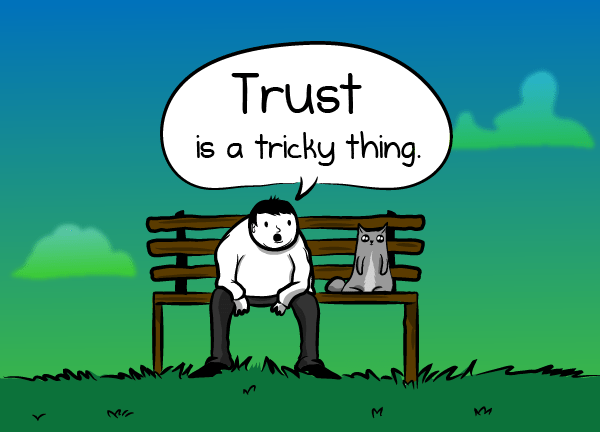
http://theoatmeal.com/comics/trust Trust and Vulnerability a comic

1.png


https://fromoffshore.files.wordpress.com/2010/12/calvin-hobbes-santa.gif

Music

You Are My Hiding Place O Lord https://www.youtube.com/watch?v=wnM4a3TKPro

O Hear Our Cry, O Lord (vineyard haven tune)

Our God, Our Help in Ages Past (St. Anne tune)

Spirit of the Living God

Every Time I feel the Spirit (Pentecost tune)

When Israel Was in Egypt’s Land (Go Down Moses Tune)

I Love the Lord, Who Heard My Cry (Watts words)

O Jesus, I Have Promised (Nyland or Angel’s Story tune)

Craft/Sunday School Ideas

Create Meditation Mason Jars: Glitter & Water, add fish sequins if you want, Remembrance of baptism prayer & sprinkle water, Make an ocean with glue & glitter draw with crayon in the middle for the split (keeping glue/glitter off) put a Moses in the middle, Make a promise banner: add what promises God makes along the way, Older: Discuss Slavery & What deliverance meant, Action: Have some pleople wave streamers and others walk thru on dry land.

Image result for ocean crafts

https://ducksnarow.com/2016/03/o-is-for-ocean-paper-plate-preschool.html

Ocean in a bottle http://activitiesforkids.com/ocean-in-a-bottle/


Resource: By Pastor Katy Stenta, solo pastor of a bigger on the inside Church New Covenant Presbyterian in Albany, NY

Seeds: NL (try 2) Potiphar’s wife

HYMNS

ELW-Evangelical Lutheran Worship (from NL website)
God himself is present openhymnal.org
Arise your light has come ELW314
Goodness is stronger than evil ELW 721
Presbyterian Hymnal (1993)
If there is a number after the decimal, it refers to the verse addressing the theme
Hymns in bold print are thought to particularly address the theme
Parentheses mean that the theme is not explicitly mentioned

God’s Faithfulness
251 Your Faithfulness is Sure, O God
276 Great Is Thy Faithfulness

Assurance of God’s Presence
170.3 The Lord’s My Shepherd, I’ll Not Want
172.2 My Shepherd Will Supply My Need
173.2 Psalm 23
(174.3) The Lord’s My Shepherd
248 You Are Before Me, Lord (Psalm 139)
Note: Margaret Wise Brown’s picture book, Runaway Bunny, is a good parable of God constantly holding us as in Psalm 139.
(269) O God of Bethel, by Whose Hand
342.1 By Gracious Powers
361 How Firm a Foundation
407 When a Poor One
446.3 Glorious Things of Thee Are Spoken
461 God is Here!
483.3 Sing Praise to God, Who Reigns Above

LIBERATION: GOD HAS LIBERATED
112.1 Christ the Lord Is Risen Again
114.1 Come, Ye Faithful, Raise the Strain
115.1 Come, Ye Faithful, Raise the Strain
153.2 He Is King of Kings
168.2 Lord, Why Have You Forsaken Me
205 All Hail to God’s Anointed
237 When God Delivered Israel
334 When Israel Was in Egypt’s Land
604 Song of Simeon (Nunc Dimittis)

LIBERATION: GOD LIBERATES
222.6 Psalm 103
243.4 We Thank You, Lord, for You Are Good
253.2+3 I’ll Praise My Maker
254.7+8 Psalm 146
423.4 Jesus Shall Reign Where’er the Sun
466.3 O for a Thousand Tongues to Sing
478.3 Praise, My Soul, the King of Heaven
600 Song of Mary (Magnificat)

LIBERATION: GOD WILL LIBERATE
18 The Desert Shall Rejoice
205 All Hail to God’s Anointed
219.3 To God Compose a Song of Joy
332 Live Into Hope
401 When Will People Cease Their Fighting?
445 Great Day!
601 Song of Zechariah (Benedictus)
602 Song of Zechariah (Benedictus)

LIBERATION: OUR RESPONSIBILITY
274.3 O God of Earth and Space
291.3 O God of Earth and Altar
311 We Meet You, O Christ
332 Live Into Hope
334 When Israel Was in Egypt’s Land
401 When Will People Cease Their Fighting?
411 Arise, Your Light Is Come!
420.4 God of Grace and God of Glory
428.4 We Give Thee but Thine Own
434 Today We All Are Called to Be Disciples
443.3 O Christ, the Great Foundation
552 Give Thanks, O Christian People
563 Lift Every Voice and Sing

LIBERATION: PRAYER FOR
1 Come, Thou Long-Expected Jesus
2 Come, Thou Long-Expected Jesus
9 O Come, O Come, Emmanuel
204 Psalm 72
237.3 When God Delivered Israel
291.3 O God of Earth and Altar
(321.4) Holy Spirit, Truth Divine
343.3 Called as Partners in Christ’s Service
(351.2) Give to Me, Lord, a Thankful Heart
(353.2) Great God, Your Love Has Called Us Here
378 Make Me a Captive, Lord
427.2 Lord, Whose Love Through Humble Service
555.2 Now Thank We All Our God

PRISON/PRISONER
9.1 O Come, O Come, Emmanuel
253.3 I’ll Praise My Maker
(321.4) Holy Spirit, Truth Divine
411.2 Arise, Your Light Is Come!
423.4 Jesus Shall Reign Where’er the Sun
466.3 O for a Thousand Tongues to Sing

CHORAL A Blessing, Howard Don Small

From Glory to God PCUSA 2013
772 Live into Hope
773 Heaven Shall Not Wait
776 O God, Be Gracious (Psalm 4)
777 How Long, O Lord (Psalm 13)
779 How Long, O Lord, Will My Prayers Be in Vain?
782 Hear My Prayer, O God (Psalm 143)
786 Why Stand So Far Away, My God (Psalm 10)
790 In Silence My Soul Thirsts (Psalm 62)
841 God is My Strong Salvation (Psalm 27)
842 The Lord is My Light (Psalm 27)
845 To the Hills I Lift My Eyes (Psalm 121)
851 Come, Bring Your Burdens to the Lord

Note: One might search other hymnals for hymns connected to the psalms listed above, or do the same at hymnary.org or other online hymn source.

Wondered if others in these categories from the index, p. 949ff, might apply
Assurance
Love of God for Us
Sovereignty of God
Original materials:
you may print/adapt but please credit: © Barbara Hedges-Goettl

The psalms above seem to indicate what Joseph might be saying to God; therefore, I have taken them as texts for the original resources below:

Confession of Faith:
Psalm 4 (primarily from the NRSV)
Our righteous God answers me when I call.
God gives relief from my distress;
God has mercy on me and hears my prayer.

When people turn glory into shame,
when people love delusions and seek false gods,
God still sets apart faithful servants for God’s own service.
God hears when these servants call.

So we tremble and do not sin;
when we are on our beds,
we search our hearts and are silent.
We offer the sacrifices of the righteous.
We trust in the Lord.

When people ask, “Who will bring us prosperity?”
we respond by asking the light of God’s face to shine on us.
The gladness God gives us is far greater than their joys at
harvest, as they gaze on their bountiful crops.
In peace we will lie down and sleep,
   for God alone makes us dwell in safety.

Note: See also The Message paraphrase of this psalm, https://www.biblegateway.com/passage/?search=psalm4&version=MSG

Prayers of Intercession from Psalm 13 (part for “Many” is from v. 3, 5):

One: When betrayal comes,
Many: O Lord our God, we trust in your steadfast love. Consider and answer us.
One: When loneliness takes the place of family and friends,
Many: O Lord our God, we trust in your steadfast love. Consider and answer us.
One: When pain has to be borne,
Many: O Lord our God, we trust in your steadfast love. Consider and answer us.
One: When needs are large and resources small,
Many: O Lord our God, we trust in your steadfast love. Consider and answer us.
One: When darkness is overpowering,
Many: O Lord our God, we trust in your steadfast love. Consider and answer us.
One: When it’s hard to know what to do,
Many: O Lord our God, we trust in your steadfast love. Consider and answer us.
One: When divisions deepen,
Many: O Lord our God, we trust in your steadfast love. Consider and answer us.
One: When words wound and inaction lets those words stand,
Many: O Lord our God, we trust in your steadfast love. Consider and answer us.
One: When God’s bounty is evident,
Many: O Lord our God, we trust in your steadfast love. Consider and answer us.
One: When salvation beckons,
Many: O Lord our God, we trust in your steadfast love. Consider and answer us.
One: When light dawns and songs are sung,
Many: O Lord our God, we trust in your steadfast love. Consider and answer us.
Prayers for individual needs or lifting up of particular names may take place here
ALL: O Lord our God, we trust in your steadfast love. Consider and answer us.

Calls to Worship
Psalm 13:5-6 (The Message)
I’ve thrown myself headlong into your arms—
    I’m celebrating your rescue.
I’m so full of answered prayers,
 I’m singing at the top of my lungs [should be followed by a song!]

Psalm 27: 4, 8-9 (NIV)
One: One thing I ask from the Lord,
    Many: this only do I seek:
One: that I may dwell in the house of the Lord
    all the days of my life,
Many: to gaze on the beauty of the Lord
    and to seek him in his temple.
ALL: Come, together let us seek the Lord.
[Prayer of invocation could go here instead of at reading of Scripture]

The clothes unmake the man?

COMMENTARY:
https://www.workingpreacher.org/narrative_podcast.aspx
https://www.workingpreacher.org/preaching.aspx?commentary_id=3809

FROM ATLA
If you’re a seminary grad, you likely have alum access at your seminary.

Tamar and Joseph in Genesis 38 and 39
Bekins, Peter
Journal for the Study of the Old Testament, June 2016, Vol.40(4), pp.375-397
story of Joseph and his master’s wife in Genesis 39. If… his master’s wife in Genesis 39. This episode appears… positions of Genesis 38 and 39. In
PEER REVIEWED
Full text available

ARTICLE
CONFRONTING REDUNDANCY As MIDDLE MANAGER AND WIFE: THE FEISTY WOMAN OF GENESIS 39 [1]
Mckay, Heather A.
Semeia, Summer, 1999, p.215
: Uncovering the Woman in Genesis 39." Pp. 318-42… Potiphar's wife (Genesis 39) using a reader-response… . A READING OF GENESIS 39
PEER REVIEWED
Full text available
DISSERTATION
Powerplay in Potiphar’s house: The interplay of gender, ethnicity, and *class in Genesis 39
Junior, Nyasha Sakenfeld, Katharine Doob (advisor) 2008
ProQuest Dissertations and Theses
Wife: The Feisty Woman of Genesis 39.” Semeia 87 (1999… CLASS IN GENESIS 39 A DISSERTATION SUBMITTED TO THE… . Within this story, Genesis 39 constitutes
Full text available
ARTICLE
Madam Potiphar’s Boy Toy: No Laughing Matter
Zucker, David
Women in Judaism, Spring 2011, Vol.8(1), pp.1-11
gender, ethnicity, and class in Genesis 39,” Princeton… . In Genesis 39, Madam Potiphar’s use of the verb…Genesis are familiar with the outline of chapter
PEER REVIEWED
Full text available

ARTICLEmultiple sources exist. see all
Divestiture, Deception, and Demotion: The Garment Motif inGenesis 37–39
Huddlestun, John R
Journal for the Study of the Old Testament, June 2002, Vol.26(4), pp.47-62
reading of Genesis 3739 suggests that, as far as the… Genesis 39, Alter draws attention to a number of… , Deception, and Demotion: The Garment Motif in Genesis 37
PEER REVIEWED

Note: My husband feels there is a message here about (male) vulnerability and the lack of recognition of this possibility/reality
Related stories: female clothes in tennis!
http://www.foxnews.com/sports/2018/08/29/us-open-official-draws-ire-after-penalizing-female-player-who-fixed-shirt-mid-match.html

https://www.cbssports.com/tennis/news/french-open-bans-serena-williams-black-catsuit-to-impose-rules-on-clothing-starting-in-2019/

Prayer on clothing angle:

O God, we say that “clothes make the man,”
but in Joseph’s case, clothes unmade the man.
His fancy robe gave rise to jealousy and was used to “prove” his death to his father.
The robe he abandoned in the hand of Potiphar’s wife was used to frame him.

God, protect us from the tendency to be defined by outward things,
by what is seen and worn. Deepen our gaze, that we may see with our hearts,
for what is essential is invisible to the eye.

See below for artwork/quote using The Little Prince

Artwork credit: By Marcel Mayer – Own work, CC BY 3.0, https://commons.wikimedia.org/w/index.php?curid=3337510

NL (try 2) Potiphar’s Wife 9/23

HYMNS

ELW-Evangelical Lutheran Worship (from NL website)
God himself is present openhymnal.org
Arise your light has come ELW314
Goodness is stronger than evil ELW 721
Presbyterian Hymnal (1993)
If there is a number after the decimal, it refers to the verse addressing the theme
Hymns in bold print are thought to particularly address the theme
Parentheses mean that the theme is not explicitly mentioned

God’s Faithfulness
251 Your Faithfulness is Sure, O God
276 Great Is Thy Faithfulness

Assurance of God’s Presence
170.3 The Lord’s My Shepherd, I’ll Not Want
172.2 My Shepherd Will Supply My Need
173.2 Psalm 23
(174.3) The Lord’s My Shepherd
248 You Are Before Me, Lord (Psalm 139)
Note: Margaret Wise Brown’s picture book, Runaway Bunny, is a good parable of God constantly holding us as in Psalm 139.
(269) O God of Bethel, by Whose Hand
342.1 By Gracious Powers
361 How Firm a Foundation
407 When a Poor One
446.3 Glorious Things of Thee Are Spoken
461 God is Here!
483.3 Sing Praise to God, Who Reigns Above

LIBERATION: GOD HAS LIBERATED
112.1 Christ the Lord Is Risen Again
114.1 Come, Ye Faithful, Raise the Strain
115.1 Come, Ye Faithful, Raise the Strain
153.2 He Is King of Kings
168.2 Lord, Why Have You Forsaken Me
205 All Hail to God’s Anointed
237 When God Delivered Israel
334 When Israel Was in Egypt’s Land
604 Song of Simeon (Nunc Dimittis)

LIBERATION: GOD LIBERATES
222.6 Psalm 103
243.4 We Thank You, Lord, for You Are Good
253.2+3 I’ll Praise My Maker
254.7+8 Psalm 146
423.4 Jesus Shall Reign Where’er the Sun
466.3 O for a Thousand Tongues to Sing
478.3 Praise, My Soul, the King of Heaven
600 Song of Mary (Magnificat)

LIBERATION: GOD WILL LIBERATE
18 The Desert Shall Rejoice
205 All Hail to God’s Anointed
219.3 To God Compose a Song of Joy
332 Live Into Hope
401 When Will People Cease Their Fighting?
445 Great Day!
601 Song of Zechariah (Benedictus)
602 Song of Zechariah (Benedictus)

LIBERATION: OUR RESPONSIBILITY
274.3 O God of Earth and Space
291.3 O God of Earth and Altar
311 We Meet You, O Christ
332 Live Into Hope
334 When Israel Was in Egypt’s Land
401 When Will People Cease Their Fighting?
411 Arise, Your Light Is Come!
420.4 God of Grace and God of Glory
428.4 We Give Thee but Thine Own
434 Today We All Are Called to Be Disciples
443.3 O Christ, the Great Foundation
552 Give Thanks, O Christian People
563 Lift Every Voice and Sing

LIBERATION: PRAYER FOR
1 Come, Thou Long-Expected Jesus
2 Come, Thou Long-Expected Jesus
9 O Come, O Come, Emmanuel
204 Psalm 72
237.3 When God Delivered Israel
291.3 O God of Earth and Altar
(321.4) Holy Spirit, Truth Divine
343.3 Called as Partners in Christ’s Service
(351.2) Give to Me, Lord, a Thankful Heart
(353.2) Great God, Your Love Has Called Us Here
378 Make Me a Captive, Lord
427.2 Lord, Whose Love Through Humble Service
555.2 Now Thank We All Our God

PRISON/PRISONER
9.1 O Come, O Come, Emmanuel
253.3 I’ll Praise My Maker
(321.4) Holy Spirit, Truth Divine
411.2 Arise, Your Light Is Come!
423.4 Jesus Shall Reign Where’er the Sun
466.3 O for a Thousand Tongues to Sing

CHORAL A Blessing, Howard Don Small

From Glory to God PCUSA 2013
772 Live into Hope
773 Heaven Shall Not Wait
776 O God, Be Gracious (Psalm 4)
777 How Long, O Lord (Psalm 13)
779 How Long, O Lord, Will My Prayers Be in Vain?
782 Hear My Prayer, O God (Psalm 143)
786 Why Stand So Far Away, My God (Psalm 10)
790 In Silence My Soul Thirsts (Psalm 62)
841 God is My Strong Salvation (Psalm 27)
842 The Lord is My Light (Psalm 27)
845 To the Hills I Lift My Eyes (Psalm 121)
851 Come, Bring Your Burdens to the Lord

Note: One might search other hymnals for hymns connected to the psalms listed above, or do the same at hymnary.org or other online hymn source.

Wondered if others in these categories from the index, p. 949ff, might apply
Assurance
Love of God for Us
Sovereignty of God
Original materials:
you may print/adapt but please credit: © Barbara Hedges-Goettl

The psalms above seem to indicate what Joseph might be saying to God; therefore, I have taken them as texts for the original resources below:

Confession of Faith:
Psalm 4 (primarily from the NRSV)
Our righteous God answers me when I call.
God gives relief from my distress;
God has mercy on me and hears my prayer.

When people turn glory into shame,
when people love delusions and seek false gods,
God still sets apart faithful servants for God’s own service.
God hears when these servants call.

So we tremble and do not sin;
when we are on our beds,
we search our hearts and are silent.
We offer the sacrifices of the righteous.
We trust in the Lord.

When people ask, “Who will bring us prosperity?”
we respond by asking the light of God’s face to shine on us.
The gladness God gives us is far greater than their joys at
harvest, as they gaze on their bountiful crops.
In peace we will lie down and sleep,
   for God alone makes us dwell in safety.

Note: See also The Message paraphrase of this psalm, https://www.biblegateway.com/passage/?search=psalm4&version=MSG

Prayers of Intercession from Psalm 13 (part for “Many” is from v. 3, 5):

One: When betrayal comes,
Many: O Lord our God, we trust in your steadfast love. Consider and answer us.
One: When loneliness takes the place of family and friends,
Many: O Lord our God, we trust in your steadfast love. Consider and answer us.
One: When pain has to be borne,
Many: O Lord our God, we trust in your steadfast love. Consider and answer us.
One: When needs are large and resources small,
Many: O Lord our God, we trust in your steadfast love. Consider and answer us.
One: When darkness is overpowering,
Many: O Lord our God, we trust in your steadfast love. Consider and answer us.
One: When it’s hard to know what to do,
Many: O Lord our God, we trust in your steadfast love. Consider and answer us.
One: When divisions deepen,
Many: O Lord our God, we trust in your steadfast love. Consider and answer us.
One: When words wound and inaction lets those words stand,
Many: O Lord our God, we trust in your steadfast love. Consider and answer us.
One: When God’s bounty is evident,
Many: O Lord our God, we trust in your steadfast love. Consider and answer us.
One: When salvation beckons,
Many: O Lord our God, we trust in your steadfast love. Consider and answer us.
One: When light dawns and songs are sung,
Many: O Lord our God, we trust in your steadfast love. Consider and answer us.
Prayers for individual needs or lifting up of particular names may take place here
ALL: O Lord our God, we trust in your steadfast love. Consider and answer us.

Calls to Worship
Psalm 13:5-6 (The Message)
I’ve thrown myself headlong into your arms—
    I’m celebrating your rescue.
I’m so full of answered prayers,
 I’m singing at the top of my lungs [should be followed by a song!]

Psalm 27: 4, 8-9 (NIV)
One: One thing I ask from the Lord,
    Many: this only do I seek:
One: that I may dwell in the house of the Lord
    all the days of my life,
Many: to gaze on the beauty of the Lord
    and to seek him in his temple.
ALL: Come, together let us seek the Lord.
[Prayer of invocation could go here instead of at reading of Scripture]

The clothes unmake the man?

COMMENTARY:
https://www.workingpreacher.org/narrative_podcast.aspx
https://www.workingpreacher.org/preaching.aspx?commentary_id=3809

FROM ATLA
If you’re a seminary grad, you likely have alum access at your seminary.

Tamar and Joseph in Genesis 38 and 39
Bekins, Peter
Journal for the Study of the Old Testament, June 2016, Vol.40(4), pp.375-397
story of Joseph and his master’s wife in Genesis 39. If… his master’s wife in Genesis 39. This episode appears… positions of Genesis 38 and 39. In
PEER REVIEWED
Full text available

ARTICLE
CONFRONTING REDUNDANCY As MIDDLE MANAGER AND WIFE: THE FEISTY WOMAN OF GENESIS 39 [1]
Mckay, Heather A.
Semeia, Summer, 1999, p.215
: Uncovering the Woman in Genesis 39." Pp. 318-42… Potiphar's wife (Genesis 39) using a reader-response… . A READING OF GENESIS 39
PEER REVIEWED
Full text available
DISSERTATION
Powerplay in Potiphar’s house: The interplay of gender, ethnicity, and *class in Genesis 39
Junior, Nyasha Sakenfeld, Katharine Doob (advisor) 2008
ProQuest Dissertations and Theses
Wife: The Feisty Woman of Genesis 39.” Semeia 87 (1999… CLASS IN GENESIS 39 A DISSERTATION SUBMITTED TO THE… . Within this story, Genesis 39 constitutes
Full text available
ARTICLE
Madam Potiphar’s Boy Toy: No Laughing Matter
Zucker, David
Women in Judaism, Spring 2011, Vol.8(1), pp.1-11
gender, ethnicity, and class in Genesis 39,” Princeton… . In Genesis 39, Madam Potiphar’s use of the verb…Genesis are familiar with the outline of chapter
PEER REVIEWED
Full text available

ARTICLEmultiple sources exist. see all
Divestiture, Deception, and Demotion: The Garment Motif inGenesis 37–39
Huddlestun, John R
Journal for the Study of the Old Testament, June 2002, Vol.26(4), pp.47-62
reading of Genesis 3739 suggests that, as far as the… Genesis 39, Alter draws attention to a number of… , Deception, and Demotion: The Garment Motif in Genesis 37
PEER REVIEWED

Note: My husband feels there is a message here about (male) vulnerability and the lack of recognition of this possibility/reality
Related stories: female clothes in tennis!
http://www.foxnews.com/sports/2018/08/29/us-open-official-draws-ire-after-penalizing-female-player-who-fixed-shirt-mid-match.html

https://www.cbssports.com/tennis/news/french-open-bans-serena-williams-black-catsuit-to-impose-rules-on-clothing-starting-in-2019/

Prayer on clothing angle:

O God, we say that “clothes make the man,”
but in Joseph’s case, clothes unmade the man.
His fancy robe gave rise to jealousy and was used to “prove” his death to his father.
The robe he abandoned in the hand of Potiphar’s wife was used to frame him.

God, protect us from the tendency to be defined by outward things,
by what is seen and worn. Deepen our gaze, that we may see with our hearts,
for what is essential is invisible to the eye.

See below for artwork/quote using The Little Prince

image

Artwork credit: By Marcel Mayer – Own work, CC BY 3.0, https://commons.wikimedia.org/w/index.php?curid=3337510

Seeds: Narrative Lectionary Resource 9/16


Resource: By Pastor Katy Stenta, solo pastor of a bigger on the inside Church New Covenant Presbyterian in Albany, NY

Scripture

Genesis 12

Matthew 28:19-20

Additional Scripture: Matthew 5-7, Psalm 115

Meditative Thought And the Lord said Go Go into the world and tell the good news, for what is news if you keep it to yourself? 

Call to Worship:

This is the day that the Lord has made

Let us rejoice

This is the church that the Lord has made

Let us rejoice

Bless and be a blessing, this is the covenant that the Lord has made

Let us rejoice and be glad in it


Call to Worship

Lord we like it here.

Go into the world 

We are happy with the Church

Make more disciples and include all nations, sexualities and genders

What can we do to make certain they are Christian?

Baptize them in the name of the Father and the Son and Holy Spirit

Call to Worship

Bles the Lord, all the people

Praise God’s Holy Name

Blessings are given to us by God

And they never run out, so let us be blessed and be a blessing to all

Prayer of Confession: Holy One, we confess that we do not count our blessings, instead we hoard them, thinking they run out or are like pie. Remind us that blessings are not pie, they are like seeds or a cup overflowing or a banquet for all people. Give us the vision of how your blessings work we pray, and forgive us when we stumble or forget. In your Holy Name we pray. Amen

Prayer of Confession: God most high, forgive our sins we pray. Reclaim us as your baptized children, remind us of your love and mercy. You were the God of Abraham and Sarah, you blessed them and promised to always be their God. Be our God, teach us to be your people we pray in the name or your son. Amen

Prayer of Confession: Heavenly God, we confess that we do not know how to bless one another. On our worst days we give gossip and judgement to one another. On our best days we share food and money with one another. But blessings are harder. Teach us how to bless one another. Reveal to us your blessings in the rainbow, the taste of the bread and the cup and the splashing of the baptismal waters, so we might begin to bless one another again, we pray together in the name of Christ. Amen. 

Assurance of Pardon: Go forth, proclaiming the blessings of Jesus Christ, practice forgiveness as you are forgiven in Jesus Christ.

Assurance of Pardon: God’s mercy is from everlasting to everlasting, infinite grace for each and and every one of us. Let us proclaim the truth to one another: In Jesus Christ we are forgiven

Assurance of Pardon: Amazing Grace, how sweet the song, that saves wretch like me. Know the truth, once you were lost to love, but now you are found in the grace of Jesus Christ, know that you are completely forgiven in the name of Jesus.

Eucharist Prayer: Source of all blessings, you breathed life into earth and then formed an everlasting covenant with Noah to nurture us with rainbows, and with Abraham and Sarah to spread your blessing throughout the universe of stars. You then blessed us with Jesus Christ, your only son who insisted on blessing the young and old, the poor and the rich, the sick and the well. Jesus’ continuous blessings overflowed even into the last meal that he has with his disciples, where he took bread, blessed it, broke and said “This is my body broken for you do this in remembrance of me” and then he shared that blessing in the bread to feed all present. Then in the same way, Jesus took the cup and in the same way blessed it and said “this is the blood of my new covenant, poured out for each of you. Whenever you eat this bread and your drink this cup, you proclaim my death until I return.” Bless this bread and cup with your most Holy Spirit, we pray, so we might be nourished to continued your work of blessings as we go forth, we pray. Amen.

Prayer Dedication/Ending Prayer Bless be the one who binds us together, reminding us to love one another through sharing our blessing. Send us forth as true disciples of hope and sharing we pray. Amen

Food for Thought

Agnus 1

Comic: https://www.agnusday.org/comics/16/genesis-121-4Matthew28v16to20_2014.jpg

comic: https://www.agnusday.org/comics/625/matthew-28-16-20-2014

Holy Ghost

Comic: http://adventuresoftheholyghost.tumblr.com/page/2


John Calvin “All the blessings we enjoy are Divine deposits, committed to our trust on this condition, that they should be dispensed for the benefit of our neighbors.”

Mr. Rogers “The real issue in life is not how many blessings we have, but what we do with our blessings. Some people have many blessings and hoard them. Some have few and give everything away.”

The following reflection on the Beatitudes comes from Elias Chacour, a Palestinian Christian, in “We Belong to the Land” (pp 143 – 144).

Knowing Aramaic, the language of Jesus, has greatly enriched my understanding of Jesus’ teachings. Because the Bible as we know it is a translation of a translation, we sometimes get a wrong impression. For
example, we are used to hearing the Beatitudes expressed passively:
Blessed are those who hunger and thirst for justice, for they shall be satisfied.
Blessed are the merciful, for they shall obtain mercy.
Blessed are the pure in heart, for they shall see God.
Blessed are the peacemakers, for they shall be called children of God.
“Blessed” is the translation of the word MAKARIOI, used in the Greek New Testament. However, when I look further back to Jesus’ Aramaic, I find that the original word was ASHRAY, from the verb YASHAR. ASHRAY does not have this passive quality to it at all. Instead, it means “to set yourself on the right way for the right goal; to turn around, repent; to become straight or righteous.”
How could I go to a persecuted young man in a Palestinian refugee camp, for instance, and say, “Blessed are those who mourn, for they shall be comforted,” or “Blessed are those who are persecuted for the sake of justice, for theirs is the kingdom of heaven?” That man would revile me, say neither I nor my God understood his plight, and he would be right.
When I understand Jesus’ words in the Aramaic, I translate like this:
Get up, go ahead, do something, move, you who are hungry and thirsty for justice,
for you shall be satisfied.
Get up, go ahead, do something, move, you peacemakers,
for you shall be called children of God.
To me this reflects Jesus’ words and teachings much more accurately. I can hear him saying, “Get your hands dirty to build a human society for human beings; otherwise, others will torture and murder the poor, the voiceless, and the powerless.” Christianity is not passive but active, energetic, alive, going beyond despair.
One day two bats fell into a pot of milk. The pessimistic bat said, “What can I do? Will I struggle and sink, and die so very tired? I will not die tired.” He sank and drowned immediately. The optimistic bat said, “I will strive to the end, and at least they will say I tried everything.” She struggled and struggled, trying to fly, until she fainted. Later she awakened and found herself resting safely on a big roll of butter. This is not giving in to despair, but going beyond despair.
“Get up, go ahead, do something, move,” Jesus said to his disciples.

Music:

Taize: Bless the Lord My Soul

Bless Be The Tie that Binds

Lord I Wanna Be a Christian In My Heart

Amazing Grace

As For Me and My House, we will serve the Lord

Bless Be the Tie that Binds

Come Thou Fount of Every Blessing

Blessed Assurance Jesus is Mine

Lord Dismiss Us with Your Blessing

Great Is They Faithfulness

The God of Abraham Promise

God of the Ages, Whose Almighty Hand

Craft Ideas: God’s promises as knots with rainbow beads in a bracelet, Decorate tissue boxes and remind people to “Bless and be a Blessing,” Crayon draw a lot of white stars on black paper, Draw white stars on white paper and then watercolor paint over it for it to “appear,” Start a gratefulness chain writing down so you can “Count your blessings” together


#Prayers for the #kids

Prayers for the kids: for the queer kids; the gay, the lesbian, the nonbinary, asexual, bisexual, intersex kids and the trans kids,for the nerdy kids, for the black kids and the Latinx and the “Asian” kids, prayers for the friendless kids, the homeless and the poor kids, prayers for the kiddos who are in the cycle of bullying, who have none to go home to and for whom their world is not safe, prayers for the immigrant kids who are creating new homes, prayers for the ADHD kids,  the twice exceptional kids and the spectrum kids, for the Down syndrome kids, the chromosomally different kids, prayers for the kids who are physically different, prayers for the drama kids, the partying kids, the rebellious kids, prayers for the kids who feel in and those who feel out, prayers for the foster kids, the adopted kids, prayers for the kids who have already lost a sibling or a parent or a friend, prayers for the kid with one friend and those who are told to shut up, prayers for the kids who feel dumb, for the ones who want more and those who dare to dream, prayers for all the kids, because they are beginning school and each child is a unique miracle

Seeds: A Resource for Narrative Lectionary Sept 9, Genesis 5:4-22, 8:6-12; 9:8-17 and Matthew 8:24-27

Narrative Lectionary 

September 9, 2019

Genesis 5:4-22, 8:6-12; 9:8-17 and Matthew 8:24-27

Resources by Rev. Dr. Barbara Hedges-Goettl

Image result for seeds of prayer

Audio/Video/Print takes on Noah

https://blogs.loc.gov/folklife/2014/04/a-boatload-of-songs-about-noahs-ark/

Animated Christmas Video of school choral piece Old Man Now Built a Boat

    https://www.youtube.com/watch?v=qSQwfp0QRxk

Robert Shaw Chorale version of Old Man Noah Built a Boat    

    https://www.youtube.com/watch?v=8kQp5PBEsLg

Bill Cosby’s take on the Noah story https://www.youtube.com/watch?v=bputeFGXEjA

Frederick Buechner’s take on Noah 

     http://www.frederickbuechner.com/quote-of-the-day/2016/5/17/noah


Intro to the Fall NL https://revgalblogpals.org/2014/09/02/narrative-lectionary-leanings-the-promise-in-the-sky-edition/


Themes

The ark=teva in Hebrew, meaning nature, biosphere, wildlife. All of nature in a single     vessel. Different word from ark ov covenant-aron, but might have in common specially  built container for something precious. Suggested that Moses’ little boat as a baby was    a kind of miniature ark.   See https://www.quora.com/What-is-the-difference-between-   the-Ark-of-the-Covenant-and-Noahs-Ark

Renewal of baptism (see Flood Prayer resources below)*

These next 3 themes are from   http://www.workingpreacher.org/preaching.aspx?commentary_id=2224

Human stewardship of animals and their welfare (Gen 6:19-21-keeping each animal according to its kind/species safe, incl. taking the food they’ll need

Fresh start but bringing along something from what came before*God keeping covenant with humans and animals and the earth even when they do not keep covenant in return

Liturgical Resources

Hymns from Hymnary.org

The title is the final set of words after the /

Genesis

https://hymnary.org/text/it_rained_on_the_earth_forty_days_forty  Also titled “You Are Our God, We Are Your People”

https://hymnary.org/text/lord_of_all_being_throned_afar  v. 3

https://hymnary.org/text/as_a_fire_is_meant_for_burning   v.3

https://hymnary.org/text/when_in_the_cloud_with_colors_fair

https://hymnary.org/text/my_god_the_covenant_of_thy_love


Matthew

https://hymnary.org/text/our_god_our_help_in_ages_past_watts     (verse 3)


https://hymnary.org/text/jesus_lover_of_my_soul_let_me_to_thy_bos    

(Jesus, Lover of my Soul, let me to thy bosom fly)

https://hymnary.org/text/i_was_sinking_deep_in_sin_far_from_the   

  (I was sinking deep in sin far from the peaceful shore)

https://hymnary.org/text/eternal_father_strong_to_save_whose_arm

https://hymnary.org/text/praise_the_one_who_breaks_the_darkness#authority_media_flexscores    

Hymns from the PCUSA 1993 hymnal

The notation .2 means that verse 2 is most pertinent to the scripture passage; 2+3 means verses 2 and 3 are most pertinent 

Genesis 9.8-17

134.2 Creating God, Your Fingers Trace

191 God Is Our Refuge and Our Strength

192.1+2 God, Our Help and Constant Refuge

193.2+3 Psalm 46

209.3 My Song Forever Shall Record

214.4 O Come and Sing Unto the Lord

271.1 Many and Great, O God, Are Thy Things

276 Great Is Thy Faithfulness

283.1 God Marked a Line and Told the Sea

293 This Is My Father’s World

294 Wherever I May Wander

554 Let All Things Now Living

Genesis 9.13

384.3 O Love That Wilt Not Let Me Go

Genesis 9.13

384.3 O Love That Wilt Not Let Me Go

Matthew 8.23-27

184.3 How Blest Are Those

191 God Is Our Refuge and Our Strength

192 God, Our Help and Constant Refuge

193 Psalm 46

201.2 Praise Is Your Right, O God, in Zion

209.3 My Song Forever Shall Record

214.4 O Come and Sing Unto the Lord

271.1 Many and Great, O God, Are Thy Things

286 Give to the Winds Thy Fears

303.1 Jesus, Lover of My Soul

365.2 Jesus, Priceless Treasure

373 Lonely the Boat

388.3 O Jesus, I Have Promised

389.3 O Jesus, I Have Promised

560.2 We Plow the Fields and Scatter

562.2 Eternal Father, Strong to Save

Matthew 8.26a

86.4 When We Are Tempted to Deny Your Son

189.4 As Deer Long for the Streams

286 Give to the Winds Thy Fears

326.3 Spirit of God, Descend Upon My Heart

348.3 Christian Women, Christian Men

390.6 O Savior, in This Quiet Place

399.3 We Walk by Faith and Not by Sight

462.3 Christ, Whose Glory Fills the Skies

463.3 Christ, Whose Glory Fills the Skies

464.1 Joyful, Joyful, We Adore Thee

522.3+4 Lord, When I Came Into This Life

Hymns from the new Glory to God PCUSA hymnal (2013)

Genesis 9:7-17

315 In the Midst of New Dimensions

Genesis 9:12-16

738 O Master, Let Me Walk with Thee

Genesis 9:12-17

22 God of the Sparrow

Genesis 9:13-15

39 Great Is Thy Faithfulness

Genesis 9:13-17

250 In the Bulb There Is a Flower

Renewal of Baptism

Luther’s “Flood Prayer”  

Lutheran version (Lutheran service book): Almighty and eternal God, according to Your strict judgment You condemned the unbelieving world through the flood, yet according to Your great mercy You preserved believing Noah and his family, eight souls in all. You drowned heart-hearted Pharaoh and all his host in the Red Sea, yet led Your people Israel through the water on dry ground, prefiguring this washing of Your Holy Baptism. Through the Baptism in the Jordan of Your beloved Son, our Lord Jesus Christ, You sanctified and instituted all waters to be a blessed flood, and a lavish washing away of sin. We pray that You would behold N. according to Your boundless mercy and bless him with true faith by the Holy Spirit that through this saving flood all sin in him which has been inherited from Adam and which he himself has committed since would be drowned and die. Grant that he be kept safe and secure in the holy ark of the Christian Church, being separated from the multitude of unbelievers and serving Your name at all times with a fervent spirit and a joyful hope, so that, with all believers in Your promise, he would be declared worthy of eternal life, through Jesus Christ, our Lord.

Anglican version (Book of Common Prayer):

Almighty and everlasting God, who of thy great mercy didst save Noah and his family in the ark from perishing by water; and also didst safely lead the children of Israel thy people through the Red Sea, figuring thereby thy holy Baptism; and by the Baptism of thy beloved Son, Jesus Christ, in the river Jordan didst sanctify Water to the mystical washing away of sin: We beseech thee, for thine infinite mercies, that thou wilt mercifully look upon this Child, wash him and sanctify him with the Holy Ghost; that he, being delivered from thy wrath, may be received into the ark of Christ’s Church; and being stedfast in faith, joyful through hope, and rooted in charity, may so pass through the waves of this troublesome world, that finally he may come to the land of everlasting life, there to reign with thee world without end; through Jesus Christ, our Lord. 

1993 Book of Common Worship (PC-USA) version:

The Lord be with you.

And also with you.

Let us give thanks to the Lord our God.

It is right to give our thanks and praise.

We give you thanks, Eternal God,

for you nourish and sustain all living things

by the gift of water.

In the beginning of time,

your Spirit moved over the watery chaos,

calling forth order and life.

In the time of Noah,

you destroyed evil by the waters of the flood,

giving righteousness a new beginning.

You led Israel out of slavery,

through the waters of the sea,

into the freedom of the promised land.

In the waters of Jordan

Jesus was baptized by John

and anointed with your Spirit.

By the baptism of his own death and resurrection,

Christ set us free from sin and death,

and opened the way to eternal life.

We thank you, O God, for the water of baptism.

In it we are buried with Christ in his death.

From it we are raised to share in his resurrection,

Through it we are reborn by the power of the Holy Spirit.

The minister may touch the water.

Send your Spirit to move over this water

that it may be a fountain of deliverance and rebirth.

Wash away the sin of all who are cleansed by it.

Raise them to new life,

and graft them to the body of Christ.

Pour out your Holy Spirit upon them,

that they may have power to do your will,

and continue forever in the risen life of Christ.

To you, Father, Son, and Holy Spirit, one God,

be all praise, honor, and glory,

now and forever. [411]

Amen.

Directives for a baptismal prayer with similar content:

The minister may give thanks over the water in his or her own words:

a. praising God for God’s faithfulness in the covenant;

b. thankfully remembering God’s reconciling acts such as:

the cleansing and rebirth in the flood in the time of Noah;

the exodus through the waters of the sea;

Jesus’ baptism in the Jordan;

the baptism of Jesus’ death and his resurrection.

c. invoking the Holy Spirit

to attend and empower the baptism;

to make the water a water of redemption and rebirth;

to equip the church for faithfulness.

The prayer concludes with an ascription of praise to the triune God.

Book of Common Worship offering prayer (covenant)

Let us pray.

Faithful God,

you placed the rainbow in the skies

as the sign of your covenant with all living things.

May we who are saved through water and the Spirit,

worthily offer to you our sacrifice of thanksgiving.

We ask this in the name of Jesus Christ our Lord. [256]

Amen.

Other water/flood-related scriptures:

Psalm 29, 42, 69

Song of Solomon 8:6–7

Psalm 29 (Book of Common Worship)

PSALM 29 Tone 3; PH 180; PS 26

R

1 Ascribe to the LORD, you gods, *

ascribe to the LORD glory and strength.

2 Ascribe to the LORD the glory that is due the holy name; *

worship the LORD in the beauty of holiness. R

3 The voice of the LORD is upon the waters;

the God of glory thunders; *

the LORD is upon the mighty waters.

4 The voice of the LORD is a powerful voice; *

the voice of the LORD is a voice of splendor. R

5 The voice of the LORD breaks the cedar trees; *

the LORD breaks the cedars of Lebanon;

6 the LORD makes Lebanon skip like a calf, *

and Mount Hermon like a young wild ox. R

7 The voice of the LORD splits the flames of fire;

the voice of the LORD shakes the wilderness; 

the LORD shakes the wilderness of Kadesh.

8 The voice of the LORD makes the oak trees writhe *

and strips the forests bare.

9 And in the temple of the LORD *

all are crying, “Glory!” R

10 The LORD sits enthroned above the flood; *

the LORD sits enthroned as Sovereign forevermore.

[Unison]

11 The LORD shall give strength to the chosen people; *

the LORD shall give the people the blessing of peace. R

God of mystery and power,

open our eyes to the fire of your love,

and open our ears to the thunder of your justice,

that we may receive your gifts of blessing and peace,

to the glory of your name;

through Jesus Christ our Lord. Amen.

PSALM 42 Tone 8; PH 189, 190; PS 37

R

1 As the deer longs for the water-brooks, *

so longs my soul for you, O God.

2 My soul is athirst for God, athirst for the living God; *

when shall I come to appear before the presence of God?

3 My tears have been my food day and night, *

while all day long they say to me,

“Where now is your God?” R

4 I pour out my soul when I think on these things: *

how I went with the multitude and led them into the house of God,

with the voice of praise and thanksgiving, *

among those who keep holy-day.

5 Why are you so full of heaviness, O my soul? *

and why are you so disquieted within me? R

Put your trust in God; *

for I will yet give thanks to the One

who is the help of my countenance, 6 and my God.

My soul is heavy within me; *

therefore I will remember you from the land of Jordan,

and from the peak of Mizar among the heights of Hermon.

7 One deep calls to another in the noise of your cataracts; *

all your rapids and floods have gone over me.

8 The LORD grants loving-kindness in the daytime; *

in the night season the song of the LORD is with me,

a prayer to the God of my life. R

9 I will say to the God of my strength,

“Why have you forgotten me? *

and why do I go so heavily while the enemy oppresses me?“

10 While my bones are being broken, *

my enemies mock me to my face;

all day long they mock me *

and say to me, “Where now is your God?” R

11 Why are you so full of heaviness, O my soul? *

and why are you so disquieted within me?

[Unison]

Put your trust in God; *

for I will yet give thanks to the One

who is the help of my countenance, and my God. R

Gracious God,

in the night of distress we forget the days of sun and joy.

When we do not know your presence,

preserve us from the deep torrent of despair.

We ask this in the name of Jesus Christ our Lord. Amen.

PSALM 69 Tone 8

R

1 Save me, O God, *

for the waters have risen up to my neck.

2 I am sinking in deep mire, *

and there is no firm ground for my feet.

I have come into deep waters, *

and the torrent washes over me. R

3 I have grown weary with my crying;

my throat is inflamed; *

my eyes have failed from looking for my God.

Those who hate me without a cause are more than the hairs of my head;

my lying foes who would destroy me are mighty. *

Must I then give back what I never stole?

5 O God, you know my foolishness, *

and my faults are not hidden from you.

6 Let not those who hope in you be put to shame through me,

Lord GOD of hosts; *

let not those who seek you be disgraced because of me,

O God of Israel. R

7 Surely, for your sake have I suffered reproach, *

and shame has covered my face.

8 I have become a stranger to my own kindred, *

an alien to my mother’s children.

9 Zeal for your house has eaten me up; *

the scorn of those who scorn you has fallen upon me.

10 I humbled myself with fasting, *

but that was turned to my reproach. R

11 I put on sack-cloth also, *

and became a byword among them.

12 Those who sit at the gate murmur against me, *

and the drunkards make songs about me. R

13 But as for me, this is my prayer to you, *

at the time you have set, O LORD:

“In your great mercy, O God, *

answer me with your unfailing help.

14 Save me from the mire; do not let me sink; *

let me be rescued from those who hate me

and out of the deep waters.

15 Let not the torrent of waters wash over me,

neither let the deep swallow me up; *

do not let the pit shut its mouth upon me. R

16 Answer me, O LORD, for your love is kind; *

in your great compassion, turn to me.

17 Hide not your face from your servant; *

be swift and answer me, for I am in distress.

18 Draw near to me and redeem me; *

because of my enemies deliver me. R

19 You know my reproach, my shame, and my dishonor; *

my adversaries are all in your sight.”

20 Reproach has broken my heart, and it cannot be healed; *

I looked for sympathy, but there was none,

for comforters, but I could find no one.

21 They gave me gall to eat, *

and when I was thirsty, they gave me vinegar to drink. R

22 Let the table before them be a trap *

and their sacred feasts a snare.

23 Let their eyes be darkened, that they may not see, *

and give them continual trembling in their inner parts.

24 Pour out your indignation upon them, *

and let the fierceness of your anger overtake them.

25 Let their camp be desolate, *

and let there be none to dwell in their tents.

26 For they persecute the one whom you have stricken *

and add to the pain of those whom you have pierced.

27 Lay to their charge guilt upon guilt, *

and let them not receive your vindication.

28 Let them be wiped out of the book of the living *

and not be written among the righteous. R

29 As for me, I am afflicted and in pain; *

your help, O God, will lift me up on high.

30 I will praise the name of God in song; *

I will proclaim the greatness of the LORD with thanksgiving.

31 This will please the Lord more than an offering of oxen, *

more than bullocks with horns and hoofs.

32 The afflicted shall see and be glad; *

you who seek God, your heart shall live.

33 For the Lord listens to the needy *

and does not despise those who are in prison. R

34 Let the heavens and the earth give praise, *

the seas and all that moves in them;

35 for God will save Zion and rebuild the cities of Judah; *

they shall live there and have it in possession.

36 The servants of the LORD will inherit it, *

and those who love the name of God will dwell therein. R

Blessed are you, God of hope;

you restore the fallen

and rebuild the broken walls.

Teach us the song of thanksgiving,

for you are the strength of your people;

through Jesus Christ our Lord. Amen. [

Call to Worship from Psalm 29:3-4, 10-11

One: The voice of the Lord is over the waters;
Many: the God of glory thunders,

One: the Lord, over mighty waters.
Many: The voice of the Lord is powerful;
One: The Lord sits enthroned over the flood;
Many: the Lord sits enthroned as king forever.
ALL: May the Lord give strength to his people!
May the Lord bless his people with peace!

Collect (from Genesis 9)

O Saving God, who made a covenant with Noah and his descendants and with every living creature surviving on the ark; when clouds cover the earth, remember and keep your covenant with all living things, so that the waters will never again become a flood to destroy all flesh. 

In the name of the Creator, who makes and keeps covenant with the people of God; the Spirit, who sweeps over creative waters; and the Son, who calms the seas, Amen.

Prayers of the People (from Psalm 42:7-8)

All: Deep calls to deep at the thunder of your cataracts;
all your waves and your billows have gone over me.

O God, we are billowed and buffeted by waves of evil and violence. Silent or specific prayers.

All: I pray to you, O God of my life.  By day command your steadfast love. By night your song is with me.

Floods of illness and grief threaten to drown us. 

Silent or specific prayers.

All: I pray to you, O God of my life.  By day command 

your steadfast love. By night your song is with me.

Tears of weariness and sadness have been our food.

Silent or specific prayers.

All: I pray to you, O God of my life.  By day command 

your steadfast love. By night send your song to be with me.

But we hope in you, O God. Dry our tears and quench our thirst.

Silent or specific prayers.

All: I pray to you, O God of my life.  By day command 

your steadfast love. By night your song is with me.

Send your cleansing waters upon us, soothing and healing, renewing and refreshing. Silent or specific prayers.

All: I pray to you, O God of my life.  By day command 

your steadfast love. By night your song is with me.

Buoy us with the relief of rain, the flow of a stream, the quiet of a lake, the ebb and flow of the ocean. Silent or specific prayers.

All: I pray to you, O God of my life.  By day command 

your steadfast love. By night your song is with me. 

In the name of the Creator, who placed the rainbow in the heavens; the Spirit, who brought order to the chaos of the deep; and Jesus, the living water, Amen.

Prayer of Confession (Psalm 69:1-3, 29, 17-18 from The Message)

In 2 groups (bold & italic); it would be best if leaders jump in quickly, or if people read the bold and leader (quickly afterward) the italics,

indicating the urgency and overwhelmingness of the need.

God, God, save me! I’m in over my head,

Quicksand under me, swamp water over me;
Going down for the third time.

Hoarse from calling for help,
Bleary-eyed from searching the sky for God.

I’m hurt and in pain;
Give me space for healing, and mountain air.

Don’t look the other way; your servant can’t take it.
I’m in trouble. Answer right now!

18 Come close, God; get me out of here.
Rescue me from this deathtrap.

Maybe play/sing “Bridge Over Troubled Water” https://www.youtube.com/watch?v=H_a46WJ1viA during quiet time for confession after the litany or after these words of assurance: “Jesus is our bridge over troubled water. He laid himself down to dry our tears and calm our seas. Thanks be to God for the Good News: In Jesus Christ we are forgiven.” 

Contributions from readers

*Brief portions of this Book of Common Worship may be reproduced without special permission for one-time use only, for worship and educational purposes, in an order of service for use by a congregation, or in a special program or lesson resource, provided that no part of such reproduction is sold, directly or indirectly, and that the following acknowledgment

is included: Reprinted by permission from Book of Common Worship, © 1993

Westminster/John Knox Press.