What if I stood up and said “Jesus=anti-stumbling-blocks” and sat down?
Thoughts on tomorrows sermon…

What if I stood up and said “Jesus=anti-stumbling-blocks” and sat down?
Thoughts on tomorrows sermon…
What if I stood up and said “Jesus=anti-stumbling-blocks” and sat down?
Thoughts on tomorrows sermon…
Embracing God and self identity, that’s what is about folks!
In a world where too much ugliness happens every day–much of it on the internet for millions of eyes to see–let’s take a moment and celebrate how one young woman has transformed a moment of ugliness into one of beauty.
It all started when this photo, taken without the subject’s knowledge, was posted on a website that invited mocking and cruel comments.

Then this happened:
“Hey, guys. This is Balpreet Kaur, the girl from the picture. I actually didn’t know about this until one of my friends told on facebook. If the OP wanted a picture, they could have just asked and I could have smiled 🙂 However, I’m not embarrased or even humiliated by the attention [negative and positve] that this picture is getting because, it’s who I am. Yes, I’m a baptized Sikh woman with facial hair. Yes, I realize that my gender is often confused and I…
View original post 394 more words
Sometimes I feel like we can really relate to Hunger Games. Luckily things aren’t quite as bad as during the depression, but for me student debt is a real and heavy weigh in on my life as I tot up the bills and work towards providing for my family.
My friend Charlie says student debt is palpable (we graduated the same year) you can see it weighing people down when they enter a room.
So, here we are, hunger games–who are we sending out as our sacrifice? Who are we going to watch struggle for entertainment. You know what happens in hunger games, everyone is hungry for something. Even the rich city people are always eating, eating, eating (then they throw up to eat more). Why? Because they feel empty inside.
Jesus addresses emptiness, not by telling people to deal, not by pointing out people’s faults, and certainly not by giving them false platitudes.
Jesus sits with people, Jesus meets people, gets to know them, and (always) calls people by name. Maybe that’s what everyone is hungering for–even those of us who hear their name called out by crowds, those who are followed by the paparazzi and have their lives on public display (Duchess of Cambridge anyone) really just want someone to REALLY know them, to REALLY be present with them and to REALLY call them by name.
If the Hunger Games are about the games we end up playing because we are feeling emotionally, physically and spiritually hungry (um…like we do in politics maybe), then Jesus is not about Games. Jesus is about reality, Jesus is about being the real you, Jesus is about the truth of the world, and the Real-ity of Re(a)l-ationships! And if we are asking who is going to be the sacrifice, the answer was, is and will be Jesus Christ, and we don’t need “God in the white house”  to know that (did anyone else see that meme?). Because God is bigger than the white house, God is bigger than America and God is bigger than a world economic downturn. If you think we have control over where God is, frankly that is are humanity showing (oops)
If you don’t believe that, then there is no point in preaching the gospel in third world countries, because they are in no way on equal footing to our problems.

Say it with me, Jesus is about Love and graciousness (not being judgmental, putting our morals on others or creating the world for Christ). God is HERE, love is HERE, let’s act like it. And please let’s think before we say something about how “other people were raised” or what “real morals” are–God loved, talked to and did not make anyone feel bad about their mistakes, he forgave and gave them a chance to change. If Almighty God can do that, then we should at least try to do the same– Remember, no one convinced anyone of anything by yelling insults to them over the internet. People have been changed through true acts of lovingkindness (or hesed as its called in the Old Testament).
Me: “Who does Westley (my 2yr old) say hi to?”
Congregation: “Everybody”
Me: In fact he’s quite militant about it. If you say hi once, you are doomed to continue to say hi to him all day!
Best synopsis of my sermon about welcome today. Text: Mark 9:30-37
30They went on from there and passed through Galilee. He did not want anyone to know it; 31for he was teaching his disciples, saying to them, “The Son of Man is to be betrayed into human hands, and they will kill him, and three days after being killed, he will rise again.” 32But they did not understand what he was saying and were afraid to ask him.
33Then they came to Capernaum; and when he was in the house he asked them, “What were you arguing about on the way?” 34But they were silent, for on the way they had argued with one another who was the greatest. 35He sat down, called the twelve, and said to them, “Whoever wants to be first must be last of all and servant of all.” 36Then he took a little child and put it among them; and taking it in his arms, he said to them, 37“Whoever welcomes one such child in my name welcomes me, and whoever welcomes me welcomes not me but the one who sent me.”
Me: “Who does Westley (my 2yr old) say hi to?”
Congregation: “Everybody”
Me: In fact he’s quite militant about it. If you say hi once, you are doomed to continue to say hi to him all day!
Best synopsis of my sermon about welcome today. Text: Mark 9:30-37
30They went on from there and passed through Galilee. He did not want anyone to know it; 31for he was teaching his disciples, saying to them, “The Son of Man is to be betrayed into human hands, and they will kill him, and three days after being killed, he will rise again.” 32But they did not understand what he was saying and were afraid to ask him.
33Then they came to Capernaum; and when he was in the house he asked them, “What were you arguing about on the way?” 34But they were silent, for on the way they had argued with one another who was the greatest. 35He sat down, called the twelve, and said to them, “Whoever wants to be first must be last of all and servant of all.” 36Then he took a little child and put it among them; and taking it in his arms, he said to them, 37“Whoever welcomes one such child in my name welcomes me, and whoever welcomes me welcomes not me but the one who sent me.”

I may or may not own a billion different versions of Beauty and the Beast. (Plus some figures, snowglobes and plastic McDonald’s toys)
Why? Because its my favorite fairy tale. Why? Because its the first/best fairytale and it is so TOTALLY theological!!!! (did I put too many exclamation points there?)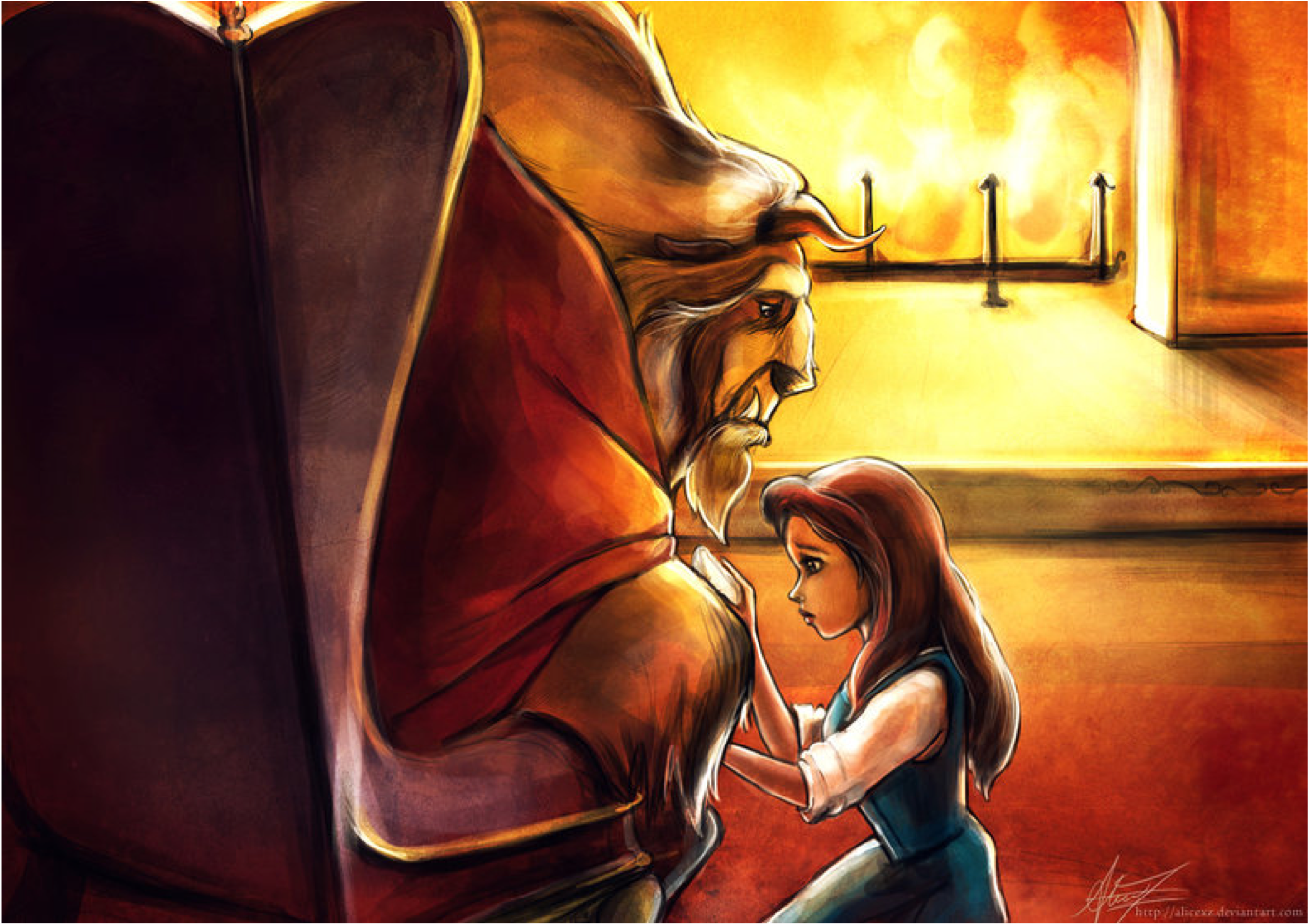
Things to know about Beauty and the Beast which I have disseminated from years of study (no seriously I have been convertly studying fairy tales for 8 years. First as an “English” major at Oberlin, then as a theological student at Princeton)
1. It is the FIRST fairy tale we know of
2. It evolved from what is the last myth we know of: Cupid and Psyche (in “The Golden Ass”) written a couple of hundred of years after myths were in style
3. Before Christianity, the “happily ever after concept” did not seem to exist in stories….In fact the theological differences between Cupid & Psyche and Beauty and the Beast are amazing but I will write my thesis on all that later (hopefully). Today we’ll stick to B&B
Next thoughts
If you haven’t read Beauty and the Beast, I invite you to do so on literally the best Fairy Tale Resource today (I mean literally, I’ve done the research) at Sur La Lune http://www.surlalunefairytales.com/beautybeast/index.html
 1. The prince/beast is a fallen man somehow either through his own or his parents brokenness. Usually his outer ugliness mirrors his inner ugliness (The Fall from Grace Anyone)
2. His Salvation/Transformation into his former/real/best self is through Love
3. Beauty Loves Beast even in his ugliness
4. Beast regains his life/and is transformed through the pure love of Beauty

(PS how cool is it that the Christ figure is a girl in this one)
1. Humanity falls and is ugly
2. Humanity’s hope lies in God’s grace through God’s Love
3. God loves us, period.
4. We are born again/from above and transformed
And we all will live happily ever after!
For God was pleased to have all his fullness dwell in him, and through him to reconcile to himself all things, whether things on earth or things in heaven, by making peace through his blood, shed on the cross.–1 Col 19-20
All the nations you have made
will come and worship before you, Lord;
they will bring glory to your name.–Ps. 86:9
(PS concerns and questions about the every knee shall bow language will be addressed in another post, so don’t worry)
Now that I’ve blown your mind (or at least reminded you to hear “Be Our Guest” again) I invite you to read any/all of the following, and if you know another Beauty and the Beast that you like let me know in case I haven’t read it.
(This may, perhaps, possibly in the Disney version make Gaston into the devil…hehehehehehehe)
Good Versions of Beauty and the Beast
1st John 4:7-18 (I’ve copied it below)
C.S. Lewis Voyage of the Dawn Treader Eustace’s Story
 Beauty by Robin McKinley & Rose Daughter by Robin McKinley (yes she wrote 2 good ones)
Beast by Donna Jo Napoli
Cupid and Psyche in the Golden Ass (Hi, Chloe! I love you!)
La Belle et La Bete directed by Cocteau (black and white one of the 1st films, look at the effects, I mean this was before computers)
Beauty and the Beast the 80s TV show
10th Kingdom (in a lighter vein)
Donkeyskin/Tattercoat/Alleirauh are very similar (though different)
Deerskin by Robin McKinley (I know, but I couldn’t help myself)
Fables Comic Series (note: main characters)
and of course the Disney movie/play
1st John 4:7-18; 7 Dear friends, let us love one another, for love comes from God. Everyone who loves has been born of God and knows God. 8 Whoever does not love does not know God, because God is love. 9 This is how God showed his love among us: He sent his one and only Son into the world that we might live through him. 10 This is love: not that we loved God, but that he loved us and sent his Son as an atoning sacrifice for our sins. 11 Dear friends, since God so loved us, we also ought to love one another. 12 No one has ever seen God; but if we love one another, God lives in us and his love is made complete in us.
13 This is how we know that we live in him and he in us: He has given us of his Spirit. 14 And we have seen and testify that the Father has sent his Son to be the Savior of the world. 15 If anyone acknowledges that Jesus is the Son of God, God lives in them and they in God. 16 And so we know and rely on the love God has for us.
God is love. Whoever lives in love lives in God, and God in them.17 This is how love is made complete among us so that we will have confidence on the day of judgment: In this world we are like Jesus. 18 There is no fear in love. But perfect love drives out fear, because fear has to do with punishment. The one who fears is not made perfect in love.
For those of you who don’t know me, I am very obsessed with Beauty and the Beast (Post about the Amazing Theology of Beauty and the Beast here)

Beauty and the Beast on Broadway (yes the Disney one) has a great song about home. Point and Case the title is Is this Home?
Synposis: Belle is weird, she reads books to get away, she is captured by a Beast, she still isn’t satisfied.
One of the major themes in Beauty and the Beast is the idea of Home/belonging. In the end, I think that is what everyone wants…to belong.
Belonging is home. What if instead of getting people to “join” churches, we made churches places where they feel like they belong.
How do we make church=home?

Dear Claymaker,
Please mold me so that those thin lines I see in me are not me cracking at the seems, but instead are the growing edges by which I grow into a newer and better version of myself.
Your Potty Daughter
Katy
“We will never grow up” Sometimes I think that this is the theme song for my generation. Playing the day away–putting off being settled, trying to find a foothold on which to grasp. Here we are living at home, putting off marriage and renting. .
“Today, some 29 percent of 25- to 34-year olds either never moved out of their parents’ home or say they returned home in recent years because of the economy, according to the Pew report. Among 18- to 24-year olds, that figure is even higher – 53 percent of young adults in that age group live at home”. That’s right half of the youngest adults have to live at home.
(for more read http://www.csmonitor.com/USA/Society/2012/0315/Three-in-10-young-adults-live-with-parents-highest-level-since-1950s)

Personally, I know this to be true. My siblings and I have all been supported by my parents since college. Every person I know has had to live off/with their parents Luckily my family had my grandmother’s house so I was one of the few of my friends who didn’t have to move back in with the family after grad school–that’s right grad school with two kids and two cats in tow.
The Young Adult age keeps getting longer and longer. Young Adults are those who have the responsibilities of an adult but don’t yet feel settled (thanks Kenda Dean for that definition). Young Adults used to be the generation that belongs in the YA section of the library–you know those between the ages of 15 and 18 or maybe even 20. Today “young” adults are all those under age 35.

Because of the economy, us Boomerangs, or Millenials have put off marriage, housing and Children. “Nearly half say that in recent years they’ve taken a job they didn’t really want, to pay the bills. More than a third have gone back to school because of the poor economy. About a third have postponed either their plans to get married or have a child, and one in four say they have moved back in with their parents after living independently. And fewer than half of young people who are now employed say they have the education and training necessary to get ahead in their jobs”.
Maybe it isn’t “We won’t grow up” but we can’t grow up. Personnally I know that we will not be owning a house for a long time, the used bookstore we want to open has to wait, and we are lucky that we were able to have kids so soon.
So what does religion have to do with us? Can religion help those struggling with debt and self-worth as is described in http://articles.latimes.com/2012/feb/09/local/la-me-young-recession-20120209
Here a summary of the current situation. Most people consider themselves “Spiritual” but “not religious” “Katie Douglass a Phd student at Princeton, researched young adults “While they typical attendance/praying/Bible study questions continue to be dismal when it comes to young adult responses – when asked Have you become more or less religious in the last year? – and Are you interested in growing in your faith? -produces emphatic yeses.”
for the hr long interview about young spirituality see http://churchnext.tv/2012/09/12/katherine-douglass-young-adults-are-more-spiritually-aware-than-you-think/
So young people are looking for meaning, they are looking for purpose, but the connection has not been happening. Apparently most young people find anything relevant to them in the sermon. There is nothing. According to research done by Stephen Cady, young people do not find anything spiritual or connectional about a sermon (http://churchnext.tv/2012/08/20/stephen-cady-why-100-of-young-people-dread-the-sermon/)
If young people who are in high school find little meaning in worship, I expect the same is true of this generation of boomerang/millenial/Peter Pans. Plus, if we are feeling rootless and unfulfilled a rooted congregation might feel overwhelming, or apathetic about a generation that can’t be around for the long haul, can’t attend church every Sunday, and can’t commit the way other generations might have.
Here is a generation that was told “work hard and go to school and you will succeed” and here we are: Not Succeeding. Understanding that this must be somehow our fault. How might faith and Christ address this? How might the love of God and the purpose of our lives to build relationships and communities based on that love give purpose to these people’s lives. If Jesus met a college student, what would he have to say to them????
Would he had said “Peter Pan why won’t you grow up and get your butt to church, so that you can understand God (the way we do)”
or Would he have met him where he was “Peter Pan, Can I play with you?”
PS remember the Harry Potter/Fantasy generation is graduating next, what is their fascination with fantasy about? how does that fit into spirituality? How does that work in this economy? *”For young adults, bad times don’t trump optimism. Among those ages 18 to 34, nearly nine-in-ten (88%) say they either have or earn enough money now or expect they will in the future” see for full survey http://www.pewsocialtrends.org/2012/02/09/young-underemployed-and-optimistic/
(Just some light philosophical questions 🙂
How can a pastor save a dying church??? read here to find out!
 Whenever a congregation goes looking for a new pastor, the first question on their minds when the committee interviews a new candidate is: Will this pastor grow our church?
I’m going to go ahead and answer that question right now: No, she will not.
No amount of pastoral eloquence, organization, insightfulness, amicability, or charisma will take your congregation back to back to its glory days.
What then can your pastor do? She can make your board meetings longer with prayer and Bible study. She can mess with your sense of familiarity by changing the order of worship and the arrangement of the sanctuary. She can play those strange new songs and forget about your favorite old hymns. She can keep on playing those crusty old hymns instead of that hot new contemporary praise music. She can bug you incessantly about more frequent celebration of Communion. She can ignore your phone…
View original post 562 more words
“As healing was integral to Christ’s ministry, the church is called to continue this concern for wholeness. (W-3.5401) Wholeness not as a result of holiness, earnestness or skill of prayers, or the faith of the ones seeking healing, but as the gift of God through the power of the Holy Spirit. (W-3.5405) Prayer is vital because Prayer essentially a a time of waiting in faith upon God, (W-3.5403).”
“As healing was integral to Christ’s ministry, the church is called to continue this concern for wholeness. (W-3.5401) Wholeness not as a result of holiness, earnestness or skill of prayers, or the faith of the ones seeking healing, but as the gift of God through the power of the Holy Spirit. (W-3.5405) Prayer is vital because Prayer essentially a a time of waiting in faith upon God, (W-3.5403).”


 katyandtheword