Open Sourcing and Laziness

Image

Ok, so what if this open source movement which started with the music companies and the digital downloading (actually it started with the record button on VCRs but I’m too youngImage to remember that). Was a cultural shift today? If you look at communities sharing businesses, etc. this generation is into open source

Examples include Relayrides, carsharing, CSA, community gardens, couchsurfing, firefox, anything Wiki and of course probably the most famous and one of the first Linux

Opensource means sharing information freely so that the community benefits. Granted making money by sharing your car isn’t a direct example of open source, but the free sharing of when you use and don’t use your car helps to free it up so others can use it (see what I mean). It also can hint at laziness because your are using someone else’s work/resources to get information. You didn’t do the work yet you get to benefit from it!

When it comes to Spirituality, my generation also tends to take a more open source perspective, enjoying all of the knowledge that comes from religion and then choosing what they want to practice (hence spiritual not religious can mean anything from a vague idea of God, to a number of spiritual practices that just to happen to exist via the church). I think this is a piece of culture of millennials that older people are missing. In fact there is a slight movement towards Open Source Theology/Christianity Read Landon Whitsitt’s book  or blog(http://landonwhitsitt.com/2012/11/27/pecans-and-pastors-continued/) or checkout http://www.opensourcetheology.net/ and the Bible without Religion Project http://jimpalmerblog.com/rfv-bible-religion-free-version-by-jim-palmer/.

Which brings me to the “lazy” idea. There is this idea that unemployed people are lazy, and since roughly %40  of those who are unemployed are under the age of 30 I take great offense of this. Every single person I know is looking for a job, those who are employed are either underemployed or unable to make enough to support themselves/their families (this is esp. true for families where one spouse has found employment and the other is more limited in their geographical choices). It isn’t that we are lazy, its that we can’t find work, and we have to make do in the in-between. (And if you think people don’t want to be working, do me a favor and offer someone a job and see what they say)

In the meantime we are making do by sharing, by returning to trading times, goods and services for things instead of money. Something that started as an internet phenomenon (free information: its everywhere) became a necessity as we couldn’t get to work, and the reality that working harder has not meant that we do better/make more money or are more successful. Since we’ve seen through the promise of “work hard and you’ll succeed” (because that’s what we were told growing up).

If you mean we won’t work harder for little to no rewards, if you mean that we don’t have our eye on the prize, if you mean we are less possessive and are becoming instead an open source generation: then yes, I guess your right we are lazy Instead we are doing what we need to make ends meet and then using our extra time creatively.

But I, instead, see it as a cultural shift away from materials and valuing information, a place where timeand space are seen as more definitional than profession or monetary status. Image

Yes, boredom helps creativity, and yes we as a generation are bored, there is little to no meaning in our lives, and all the things we were taught to strive for (no student debt, professional fulfillment, financial security) are inattainable–but that boredom is giving us creativity. And if that is a side effect to our so called laziness, I’ll take it.

I see this as a moment for change…

Go Laziness, Go Openness, Go Millenials, I wonder what we will do next

Image

Money=Symbol

I still remember when the stock market was falling. I had just decided (luckily) to stay another year in school, and the market was doing horribly, and everyone was running around like chickens with their heads cut off saying “the sky is falling, the sky is falling” no wait…that’s chicken little. ImageThey were actually saying “The market is falling, the market is falling” which of course just made the panic and therefore the downturn of the market worse…

2 things get me about this

1. If someone with authority had just said, Stop, calm down, let’s take the time to think about this–instead of throwing money at the situation as quickly as possible things might have gone better (and I am totally bipartisan in my blame here)

2. Money is not what we think it is…

Anyone remember when gas was under a dollar a gallon? When I was 10 (that would be 19yrs ago–yes you may do the math of how old I am 🙂 ) I remember gas sometimes being as cheap as $.89

And when I asked my congregation if they can remember one cent candy, most of them could (alas that was before my time) ImageThe point being that a dollar is not really a dollar, and that money is just a symbol.

To us it means status (yes)Image but its more than that, we trust the value of the dollar, to us it means security something we can depend on. But you know what? Money is not security. People like to think about money in the bank, or land ownership as guarentees. People like to talk about job security (is there such a thing). Heck, we even have a system of money that is named Social Security.

Do you know that our dollars aren’t backed by silver anymore? It used to be money was the symbol of the silver that backed it up in the treasury–now its backed up by nothing.

So what I have a question, what makes money an effective symbol? Probably its quantifiable and tangible nature. We have put a piece of paper out to symbolize commerce, and so we are able to better conceptualize it.

This is why tithing is so important, it isn’t just about giving money to the church–its about your relationship with God. If you give money to God regularly, then you are going think about God whenever you deal with money, hence changing the very way we deal with money in the day to day–it changes the symbol. (Maybe this is why research shows the only way money makes you happy is if you give it away see amazing TED Talk http://www.ted.com/talks/michael_norton_how_to_buy_happiness.html for more)

Now…what if God was our security? What if we depended not on pieces of paper but on God to bring us through. What if we, in essence bank of God.Image

How much God do you have on you?

Do you have enough to get you through the week?

Can you share some God with me today?

Need more God, better go back to the bank (Church) where theres enough God to go around..

As the church, are we “generating interest” in God? Are we growing our funds? Are we accruing more God through our actions?

Image

Because after all, God doesn’t grow on trees…

PS Scripture Matthew 19, note 2 things 1. When the man is foolish, Jesus loves him first before he responds in ANY other way, Jesus loves him & 2. Jesus promises to increase everything a hundredfold–which is great because it clues us in to the fact that this love isn’t really quantifiable…hundredfold is a better interpretation than a hundred, because it isn’t exact, it is more a SYMBOL of what is going happen (besides who can handle a hundred spouses, speaking as a married woman who finds polygamy BIblical yet crazy, I couldn’t even handle two 😉

Anyway, the point being, Possessions are just symbols

17As he was setting out on a journey, a man ran up and knelt before him, and asked him, “Good Teacher, what must I do to inherit eternal life?” 18Jesus said to him, “Why do you call me good? No one is good but God alone. 19You know the commandments: ‘You shall not murder; You shall not commit adultery; You shall not steal; You shall not bear false witness; You shall not defraud; Honor your father and mother.’” 20He said to him, “Teacher, I have kept all these since my youth.” 21Jesus, looking at him, loved him and said, “You lack one thing; go, sell what you own, and give the money to the poor, and you will have treasure in heaven; then come, follow me.” 22When he heard this, he was shocked and went away grieving, for he had many possessions.

23Then Jesus looked around and said to his disciples, “How hard it will be for those who have wealth to enter the kingdom of God!” 24And the disciples were perplexed at these words. But Jesus said to them again, “Children, how hard it is to enter the kingdom of God! 25It is easier for a camel to go through the eye of a needle than for someone who is rich to enter the kingdom of God.” 26They were greatly astounded and said to one another, “Then who can be saved?” 27Jesus looked at them and said, “For mortals it is impossible, but not for God; for God all things are possible.”

28Peter began to say to him, “Look, we have left everything and followed you.” 29Jesus said, “Truly I tell you, there is no one who has left house or brothers or sisters or mother or father or children or fields, for my sake and for the sake of the good news, 30who will not receive a hundredfold now in this age—houses, brothers and sisters, mothers and children, and fields with persecutions—and in the age to come eternal life. 31But many who are first will be last, and the last will be first.”

I don’t know what I believe….

When I worked at the Psychiatric Hospital as a chaplain, one of the things I would do as often as possible was a Spiritual Assessment: Basically to get a feel of someone, their faith, and how it may or may not support them.


One of the questions was “Do you feel hope?”


And more than once the answer I got was, “no, not really, maybe someday I will.”


i.e. I’m hoping for hope


To me, this is the essence of the Christian question….


When a father brings his son in Mark 9 to be healed, Jesus says he can only be healed by belief, and the father says “I believe, help my unbelief”


In PCUSA we have a great deal of rules and order. We have systemized theology so that we have a complete (well complete as humans get get) picture–we put all our information about God out on the table, and we desperately try to leave nothing out. Why? 


Because we don’t know everything, so we hang on tightly to those things we do know.


Image


Two things about this


1. Church is for unbelievers: Its for those who don’t know whats going on, and the more we make church for unbelievers the more successful church will be 


2. Church is for faith: Faith is not something you can hang onto–one minute you are walking on water, the next you are sinking fast. However, Church is a place to hold onto faith when you yourself don’t have any. We don’t have to believe all the time, because Jesus does. And we can both believe in Christ and not believe at the same time–>I don’t know what I believe


What an honest statement. I don’t know what I believe….

Image


I believe in love


I believe that bad things happen in the world


I believe in discipline


I believe in human brokenness


I believe in being a good person


I believe I can’t do it alone

I believe life is a miracle, every single time


I believe in relationships


I believe in science, math and the order of the world


I believe that someone is behind the ordering of it (most of the time)


I believe that there are intangibles that are as important as tangibles


I believe there are connections that are beyond desciption


I believe that humans have a purpose


I believe in God


I believe that good and evil both exist, and there is a struggle between them


I believe that I can’t understand that struggle


and I believe that God would never leave us hanging and alone ie I believe in Christ and the Holy Spirit


I believe that God is a particular person, not a nameless entity, I believe that we have complete free will and that God controls everything


I believe in auxi morons


I believe that God is timeless, and that often we mess things up by trying to constrain God with time (time travel anyone?)


I believe that most of the time I believe all this, and I believe the the church helps me when I believe…and when I don’t….


But I believe in hope, and if you don’t have hope, I believe you should hope for it! (Isn’t that what waiting for Christ is? Hoping for Hope!)


Soul Beauty

Embracing God and self identity, that’s what is about folks!

suchkindways's avatarthe beautiful changes...

In a world where too much ugliness happens every day–much of it on the internet for millions of eyes to see–let’s take a moment and celebrate how one young woman has transformed a moment of ugliness into one of beauty.

It all started when this photo, taken without the subject’s knowledge, was posted on a website that invited mocking and cruel comments.

Then this happened:

“Hey, guys. This is Balpreet Kaur, the girl from the picture. I actually didn’t know about this until one of my friends told on facebook. If the OP wanted a picture, they could have just asked and I could have smiled 🙂 However, I’m not embarrased or even humiliated by the attention [negative and positve] that this picture is getting because, it’s who I am. Yes, I’m a baptized Sikh woman with facial hair. Yes, I realize that my gender is often confused and I…

View original post 394 more words

Me: “Who does Westley (m…

Me: “Who does Westley (my 2yr old) say hi to?”
Congregation: “Everybody”
Me: In fact he’s quite militant about it. If you say hi once, you are doomed to continue to say hi to him all day!

Best synopsis of my sermon about welcome today. Text: Mark 9:30-37

30They went on from there and passed through Galilee. He did not want anyone to know it; 31for he was teaching his disciples, saying to them, “The Son of Man is to be betrayed into human hands, and they will kill him, and three days after being killed, he will rise again.” 32But they did not understand what he was saying and were afraid to ask him.

33Then they came to Capernaum; and when he was in the house he asked them, “What were you arguing about on the way?” 34But they were silent, for on the way they had argued with one another who was the greatest. 35He sat down, called the twelve, and said to them, “Whoever wants to be first must be last of all and servant of all.” 36Then he took a little child and put it among them; and taking it in his arms, he said to them, 37“Whoever welcomes one such child in my name welcomes me, and whoever welcomes me welcomes not me but the one who sent me.”


Me: “Who does Westley (my 2yr old) say hi to?”
Congregation: “Everybody”
Me: In fact he’s quite militant about it. If you say hi once, you are doomed to continue to say hi to him all day!

Best synopsis of my sermon about welcome today. Text: Mark 9:30-37

30They went on from there and passed through Galilee. He did not want anyone to know it; 31for he was teaching his disciples, saying to them, “The Son of Man is to be betrayed into human hands, and they will kill him, and three days after being killed, he will rise again.” 32But they did not understand what he was saying and were afraid to ask him.

33Then they came to Capernaum; and when he was in the house he asked them, “What were you arguing about on the way?” 34But they were silent, for on the way they had argued with one another who was the greatest. 35He sat down, called the twelve, and said to them, “Whoever wants to be first must be last of all and servant of all.” 36Then he took a little child and put it among them; and taking it in his arms, he said to them, 37“Whoever welcomes one such child in my name welcomes me, and whoever welcomes me welcomes not me but the one who sent me.”


Home

For those of you who don’t know me, I am very obsessed with Beauty and the Beast (Post about the Amazing Theology of Beauty and the Beast here)

Image

Beauty and the Beast on Broadway (yes the Disney one) has a great song about home. Point and Case the title is Is this Home?

Synposis: Belle is weird, she reads books to get away, she is captured by a Beast, she still isn’t satisfied.

One of the major themes in Beauty and the Beast is the idea of Home/belonging. In the end, I think that is what everyone wants…to belong.

Belonging is home. What if instead of getting people to “join” churches, we made churches places where they feel like they belong.

How do we make church=home?

Katy’s Rant Against Associate Pastors, and a proposed solution


II think Associate Pastors are totally stupid for the following reasons 1. Didn’t Protestants break away from Catholicism to avoid a hierarchical governance of the church, yet here we are reinstituting it.

2. Most associates are women and most head pastors are men

3. Associate Pastors have to work for too many bosses. Regular pastors already have two (sort of) between the congregation and God. The associate has the congregation, God and the Head Pastor

4. Finally, the most important reason why I hate associateships is that the ministries that are put under this heading “Pastoral Care” (translation: sick and old people), “Youth” (translation: those who we don’t get) and occaisionally “Mission (translation: those outsiders who need our help) are deemed LESS important than the “real” church (which apparently is made up of insiders who aren’t sick, over the age of twenty well off enough to not need help and not so old to be considered frail.

This

a. severely limits the church. We are essentially giving the more powerful pastor to those in power in the church. Basically rewarding those who we think can pull their own weight which is a broken theology, because no one has everything they need to be perfect, and we are putting our human limitations on who we think can serve the church

b. Severely limits the ministry itself, causing more red-tape, committees, paperwork and channels to get this “specialized” ministry done.

c. Finally, it severely limits the gifted associate pastors, all of whom have an important call to work, and may have specialized gifts in ministry that should be recognized. (Plus there’s that whole male/female discrepancy, I avoided Christian Ed and Associates like the plague figuring if I started there I’d never move out)

Image

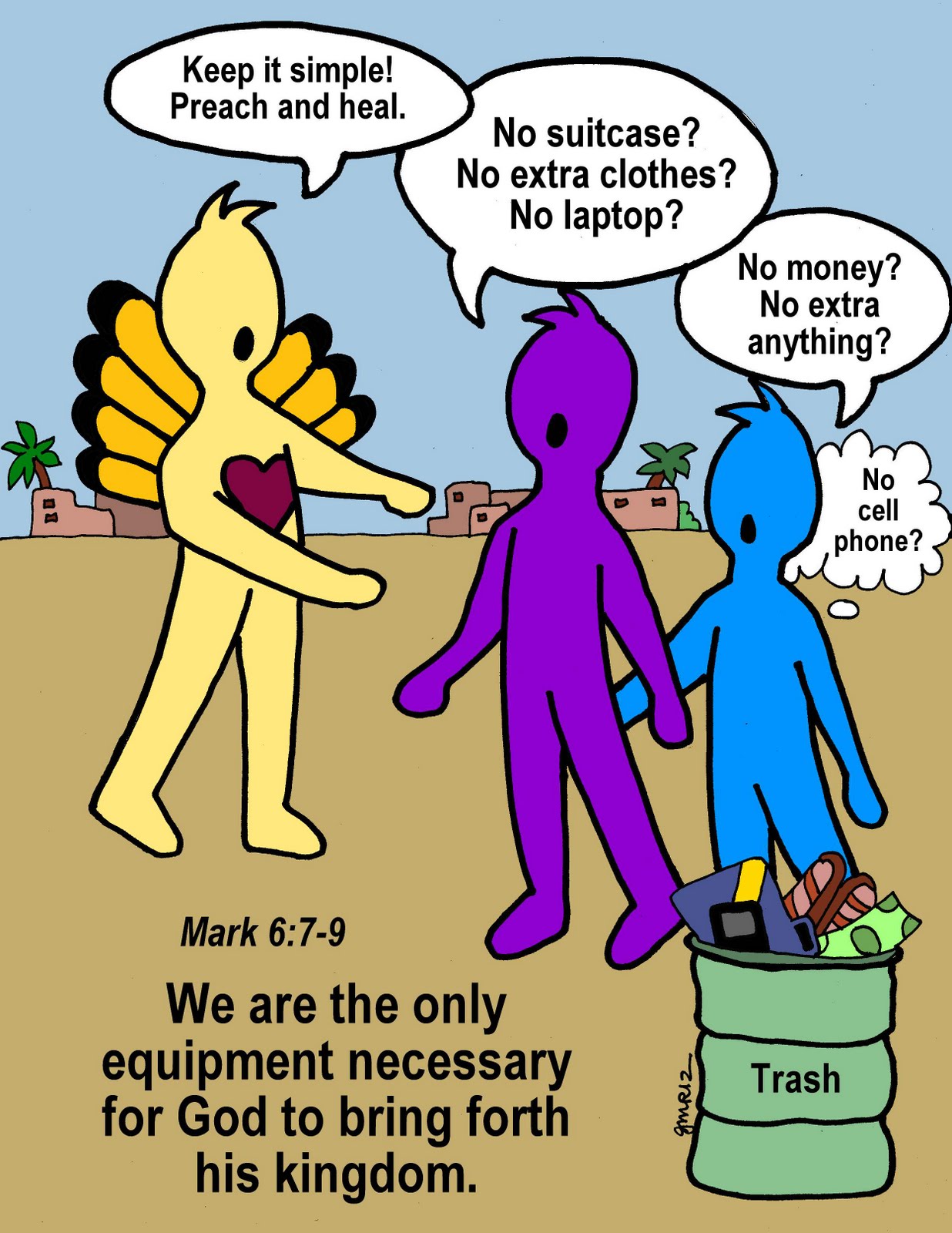
Finally, I am aware that most pastors are lonely and sad, and am aware that we have completely ignored the fact that Jesus sent everybody out in twos (Mark 6). What if we took this one step further and move more and more towards the copastorate being the regular form of ministry as opposed to the solo! This is especially true, since Christ says we don’t need anything but each other to do ministry!!!

Therefore, I propose we do away with all associate pastorships and move instead to co-pastorships. (This idea which I’ve been bouncing around forever dovetails well with Jack’s in  http://jackjenkins.wordpress.com/2012/04/30/hey-pcusa-i-have-an-idea/ to employ pastors. Could be the Holy Spirit is moving us one and one towards this new kind of employment).


Image

One co-pastor could be parttime and one could be fulltime or any combo thereof (how would two parttime pastors with full benefits work–wouldn’t that be AWESOME!!)

The way it tends to work is both pastors still get full vacation (particularly important if your a married couple). The pastors take turns moderating session, and probably a “pastor” would be available to answer pastoral needs (no guarentees which one, it would be worked out between the two pastors).

Down with Associateships! Up with Co-Pastorships

Let’s Talk about Debt…

Debt is a big problem for us. Even if you don’t personally have debt (hooray) the United States as a country walks around with billions of dollars in debt every day.

What does this mean to be in debt? I’ve decided it means that you are empty–you have are literally worth less than nothing when you are in debt. And here we are in debt.

If you’ve ever studied the book of Ruth there is a weird legalistic part at the end. Instead of an immediate happily-ever-after between Ruth and Boaz (I love that fact that she proposes to him, talk about being ahead of the times!) It basically has to do with the fact that if you take on Elimelech’s indebted land, then you can make it fruitful again. However, if you have a son by Ruth you are then beholden to that inheritence instead of you own. I think thats it. Honestly, scholars disagree. They aren’t really sure what all was meant, and when Ruth was written down it was already ancient history because the whole sandal thing had to be explained.

Image

Anyway, what everyone agrees on is

A. Elimelech’s land had laid empty/fallow for many years and the debt on it had to be redeemed in order for it be planted again

B. Ruth was part of the deal, and Ruth was so obviously (at least as far as they knew in Biblical times) barren, because she didn’t have any previous children.

So here you go, empty land, empty family.

In many ways we the mainline church have the same problem with empty land–have you seen our crumbling-on-the-sale-block-only-six-people-attend-here churches? (the irony being that non-religious people are always sad to see churches close, what is that about anyway???)

Ok but without getting too tangential, we as a church are empty.

Then there’s me, well us, well my entire generation. I grew up during the boom years, I was told that as long as I work hard and do right things will work out for me. Yet here we are (and I speak from my personal experiences and those of my friends) struggling with debt, purpose and fulfillment.

Opportunities are so scarce for my generation, and many people have had to put off marriage, children, settling down or even being able to start their career due to the economy. Every single person I know has had to live off of their parents in some way, shape or form post college.

Married, single, graduate, post-graduate, post-baccelerate, even those with children have had to get help, move in with their parents or follow their spouse across the country only to work a menial job hopefully sort of in their field.

So what is it people want when they come to church?

They want somewhere, where they are no longer empty. They want somewhere where they can be fulfilled. And (more importantly) they don’t want to feel judged. Us Milleniumers, Boomerangers (because we return home), us zero-ers or whatever you want to call us feel the weight of our own emptiness.

All our hard work seems to be for naught, much of what we are characterized by is our selfishness our need to be special our consumerism etc.

I can say (in total biased opinion) that this is not true. We don’t all think we are special or well-deserved, we just hope we might be a little bit, and our experience of adulthood (do you know my second week of undergrad was 9/11/2001–my entire adulthood has been shaped by our post 9/11 world, whereas my entire childhood was pre-9/11).

Do you know what Young People think of when they think of church? Antigay (i.e. judgemental and bigotted). I cannot tell you how much this hurts me. No wonder people think church has nothing to offer, no wonder it seems nonsensical and out of date. People don’t associate church with love and service, but rather selfishness and closemindedness. Plus the church is trying to figure out how to bring people to the church, when instead we should be figuring out how to bring church to people.

So here we are, empty. What does it mean when we forgive our debts? What does it mean when God Fulfills God’s promises?

What does God offer us that is different from the regular activity?

Here is a need, plain and simple, for many “young people” and most people in general. A need to find fulfillment and worth outside of money, a way to struggle with debt and yet not to feel empty, and definition that exists outside the bounds of the day-to-day slog. So what is fulfillment, what is forgiveness. How does debt figure into all of this, and should the church heed this desperate call of the empty young professionals today, or do we continue to figure out how to survive without worrying about these problems!!!

I feel a VERY strong call here to do something about this, what if the church stood in the way of debt, what if we showed how God fulfills us, what would happen then?

When to go to church (or) the Christian Struggle with Perfection

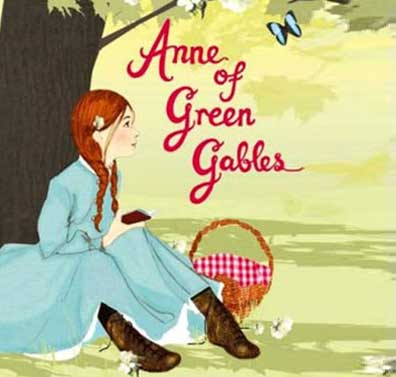
“Marilla, isn’t it nice to think that tomorrow is a new day with no mistakes in it yet?” Image

“I’ll warrant you’ll make plenty in it,” said Marilla. “I never saw your beat for making mistakes, Anne.”

“Yes, and well I know it,” admitted Anne mournfully. “But have you ever noticed one encouraging thing about me, Marilla? I never make the same mistake twice.”

“I don’t know as that’s much benefit when you’re always making new ones.”

“Oh, don’t you see, Marilla? There must be a limit to the mistakes one person can make, and when I get to the end of them, then I’ll be through with them. That’s a very comforting thought.”


I can still remember having a very “adult” conversation with my parents. It was one in which I must have been about 10, and my parents were telling me that I wasn’t perfect, and that I was going to have to live with myself. My response to this (because I knew no one could be perfect) was “I don’t want to be perfect, I just don’t want to make any mistakes!”

As Christians we have this ongoing struggle with perfection. On the one hand we want to be perfect, on the other part of being Christian (at least for me ) is admitting that we aren’t perfect. It is contending with our brokenness, and giving it up to God to be healed.

However, even though we know this about ourselves, I think that Christians often feel the mistaken need to pro-ject perfection. We want to look or at least seem perfect to everyone else. It’s as if our perfection reflects upon the perfection of God. If we aren’t perfect, then God isn’t perfect. If we don’t have all the answers, then God doesn’t have all the answers.

Instead of pointing towards God’s for answers, we rely upon ourselves or the “church” (i.e. that human conglomeration that we too often see as being the church) to be perfect/have the answers.


That’s where pastors mess up too right? Pastors feel that they have to be perfect, and instead of being open about their faith and their brokenness and talking about where they meet, Pastors try to be perfect, hide their mistakes/failings (which often leads to a whole nasty secret double life). Too often pastors skip their own confessions–of both faith and doubt, and then the quagmire’s come

So we are back to the perfection and mistakes. It is important to strive towards perfection, but to also rely on God on the source of all perfection. And even when I think that I know my way to God, it is important not to project that as the only way to God.

Too often, I think that Church is shown as a place for “perfect” people or (worse) people who think they are perfect. Too often Church is seen as the place where all of our answers are provided. After all, church is not the place to give standardized tests–God answers each of us personally and individually….Image

When, in actuality. God is a mystery, the church doesn’t know how everything works (Trinity, anyone? Or how about that Virgin Birth thing?) The church should be the A number 1 place to go when you AREN’T Perfect, it should be THE place to go when you have questions, and it should be the surrenduring of your mistakes and imperfections to God so that God is the one we are relying on to “project the right image” not humanity or the church in itself…..

Image