#rejectedsermontitles Really Your Thoughts and #Prayers? That’s all you got?

Prayers are so much more than a comforting platitude

Context:

At the beginning of the week, and saw that the passage was about prayer. Thank God, because no matter what happens this week, I know that it will apply.

Then the African-American caretaker of an autistic man was shot……

I am the mother of an autistic child. Right now he is small and cute. When he flaps his hands giving “exclamatory hands” to excitement or frustration, its not very threatening, and if he does throw a tantrum he is still small enough that I can pick him up in a worse-case-scenario.

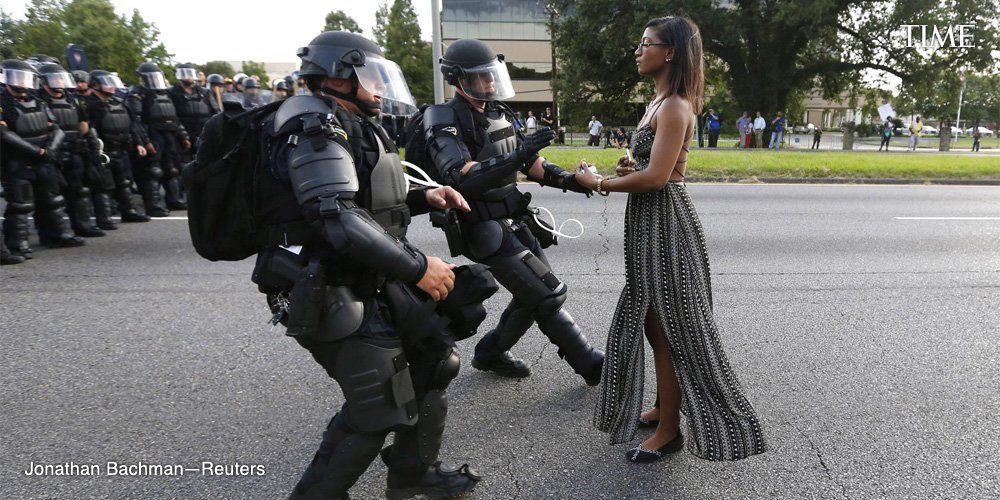
As the mother of an autistic child I can say, I don’t care who this police officer was aiming for, this was a terrible action.

So what am I supposed to do, pray?

What can others do for me and my son, pray for us?

Sermon:

Prayer is often used as a comforting action–but that is not its only purpose.

When you pray for someone, you are placing them in God’s hands. You are enacting love. You are opening yourself to be in relationship with them.

Whenever there is a harsh disagreement in the church congregation, session (board of leaders) or the Presbytery (our higher governing board). I will be the first to raise my hand and call for prayer.

And I’ll tell you what it is difficult to immediately stop and pray, the temptation is to continue arguing, the temptation is to prove that I am right, and that you should be listening to me!

This is exactly when prayer is needed, though, because you are trying to focus on God, to change your own individual perspective. Prayer is an act of Holy Imagination, where the world is viewed as the beginning of what God wants for us. God’s priorities and love are given voice and precedent over our own perspective. True prayer, opens oneself to actively love others, and that love is changing. That action is one in which we practice persistence to build a practice and discipline of prayer.

Time after time the most effective antidote to bigotry and prejudice is not education or knowledge. Its not about who is on the “right side of history.” Its having a relationship with someone who is different than you. Its knowing and loving a queer person or a person of color or one who is trans, female in leadership, or living in poverty.

Love is dangerous, because love changes your perspective.

Praying for someone is looking at them and loving them. Praying for another person an act of loving God, one where you recognize the other person as a child of God.

Just as Jesus looked at Martha, and then loved her, and then spoke to her last week.

So too are we called to love each other. Prayer is a discipline by which you practice seeing the world as God wants it to be, so we are more equipped and enabled to bring that world into being. Praying for one another is loving them through all the joys and hardships and struggling to find community with them, especially when we disagree.

Prayers are so much more than a comforting platitude, prayer is one of many disciplines by which we are able to get things done.
Lord teach us to pray….


Neighbor? Who?

My flippant answer is whoever is close enough to annoy you.

its been a crazy week. I’ve in essence heard the Good Samaritan story three times.

First time was with Alton Sterling, then Pilando Castile and finally with the Dallas police officers who were targeted. This in the wake of Orlando is wearying.

And then we hear the story of the Good Samaritan and the lawyer asks but…who…who exactly is my neighbor?

My flippant answer is whoever is close enough to annoy you. And as you know people can be pretty far away and still be close enough to annoy you.

My more serious answer is those you are close enough to hurt. This is an amazing thought because you can be very far away–all across the world or thd internet and still be able to hurt someone.

The counter to that is that if you are close enough to hurt someone then you are close enough to hurt someone then you are close enough to help them.

blm

the Good Samaritan story was so revolutionary because the Samaritans were so politically and religiously at odds with one another. They would desecrate each other’s temples, burn each other’s buildings and fight over the same land and water. When Jesus tells this story it angered people because it’s like telling about  Muslim and a Christian or an African American young man and a police officer. This was Jesus’s answer to Who is my neighbor.

The Belhar Confession, which is being adopted by the PCUSA was written by Africa about apartheid. We in the USA don’t seem to have apartheid until you look at the kind of violence that is going on and how it hurts African-Americans  until you look at the kind of violence that is going on and how it hurts police officers.

Belhar Confession is about unity being both a gift of God and our duty. I don’t know what to do about African-Anericans being stopped for minor violations and things escalating so quickly. I don’t know what to do about police officers being targeted for violence. Unity Both a gift and a duty because God says we belong to one another.

We belong to one another because we each of us are called to bind up the wounds of the cops and the African-Americans. We belong to one another because Jesus has loved us into being  showing us how love affirms our??? identity. Christians need to love like Jesus. There are no “buts” I this love, it’s not I love you but… It’s I love you and We belong to each other.

Real love is the kind that takes nothing away from you  it affirms and does nothing but add to your identity  it’s a live not based on your value or progress or perfection. God made us each unique and still belonging to one another. The word of God is not to believe in God and be the same, but love one another and affirm each identity so we add to each other.

Love is a language that doesn’t even compute in the financial, political and corporate world . That is the kind of love we are called to practice because we belong to one another God gives us to one another as a gift and it’s something to also work for. We belong to one another. Who is my neighbor? All those whom we are close enought to help.  This is the word of the Lord  thanks be to God!


#confession #Love and #Politics

Generous Jesus, we confess that you are the Son of God. You heal the sick, you comfort the stricken, you find the lost ones. Yet, we confess we find it easier to love you than our neighbor. We would rather love our politicians and celebrities than those who live right beside us. We continually make ourselves into groups, codifying who is us and who is them. We do this to show how we are better or how we are always right. Forgive us Jesus. Remind us to call any and all neighbor, especially those who are close enough to annoy us. Help us to give of ourselves through love and devotion like the widow. Teach us how to love we pray…

#Ruth #rejected SermonTitles Let’s talk about #hell (practical applications)

My very savvy 7 year old asked me today what Hell was.

Can I just say that a. I’m glad he asked me b. I’m glad he didn’t have a concept yet

Because, I’m a Pastor and I’m always a little afraid of what is seeping into my child’s brain theologically

I have no doubt this query was prompted by The Corpse Bride.

Halloween is great, and I mean it. Its a way to conceptionalize and deal with fears of death and Hell.

Deep Theology going on.

I have a working concept of Hell.

Its like a hypothesis–in theory this concept has withstood my theological understanding and it works for me to understand life, the universe and everything

Its like a practical application concept. (By the way that’s what theology is…its a working concept of how you apply your faith/beliefs)

The Bible is mostly unclear about what Hell is. When mentioned in the Bible it often carries with it whatever the local culture thinks is the underworld.

My working concept of Hell is that it is that deepest darkest place in existence that has no love.

Not a shred.

Because to me, that is the most horrific concept ever….

And though God promises to be with us, no matter where we are–When we descend to Sheol, God promises to be with us, this does not mean we are able to feel God’s presence/love while we are there. (Romans 8)

When Jesus Christ goes to Hell, when he cries out “My God, My God, Why have you forsaken Me” I believe that Jesus Christ experiences the lonely heart-wrenching existence of no love.

No God.

The hows and the whys of Jesus Christ not being with God and Love when His very self is God and Love escape me, but the definition works for me. Because we all have times in our lives when we feel unloved.

When we feel alone, unloved, unlovely and unable to love.

““Is this Naomi?” She said to them, “Call me no longer Naomi, call me Mara, for the Almighty has dealt bitterly with me. I went away full, but the Lord has brought me back empty; why call me Naomi when the Lord has dealt harshly with me, and the Almighty has brought calamity upon me?” ” Ruth 1:19-21

Naomi feels this, she says, call me Mara, bitter. I exist in a place with no love.

Even if we aren’t actually alone or unloved.

These places and times are Hell for us. A visit into what happens when God is completely ignored and unaccepted in our lives.

On the other hand, it means that those who love, have seen the face of God.

Those who love experience joy and pleasure and beauty and understanding.

In this way, I believe that whether Hell is a physical place or not, it exists.

(For me it was Jr. High, when I hadn’t really any friends was horribly socially awkward, and for a while a group of bullies told me to shut up every time I spoke or laughed)

Have you experienced Hell?

It makes sense then the contrast of Hell is Heaven, a place of love, a place of family, a place of hope.

How many times have poets compared love to Heaven?

Love exists too, and if we are bringing the Kingdom of God to Earth, then we will be like Ruth. Following Naomi, loving her even when she can’t accept that love.

There are times in our lives when we are loved, and we can’t feel it. The entire stage of teenage-hood comes to mind. Where we are loved, but we feel like no one cares.

The important thing about love, though, is that its different from “fixing someone.” Because fixing someone isn’t permanent, but love can go on and on.

Those of us who are married know that no one is perfect, and we can’t fix them forever, that doesn’t actually happen, but we can still love them. I would argue that loving someone is the opposite of fixing them. Its going where they go, experiencing what they experience, and keeping with them.

Too often at church we forget and try to fix people. Often we can’t fix someone, or the fix is temporary or we don’t know how to fix them. We can however, love them. We can experience life with them and build the family of God. We can make sure no one gets left behind, or forgotten, and call one another brother and sister.

That’s why we do this church thing, so we can be together in Christ.

Mark 3:33-35
And he replied, ‘Who are my mother and my brothers?’ And looking at those who sat around him, he said, ‘Here are my mother and my brothers! Whoever does the will of God is my brother and sister and mother.’

1063736548-f5afa884173e2dfe0e3282a0b4ac53cd

Thanks to Chuck Goodman for the Ohana Lilo and Stitch reference

#rejectedsermontitles #wrongquestionMoses

Moses Asks: Who am I to do all this

God says: I am with you, You are on Holy Ground.

Because God makes Holy Ground to be where God and humanity meet. That is what makes things Holy.

Moses: Who are you then?

God: I am who I am<–God the one and only, often imitated, never duplicated……the living God

Moses: You don’t have a name?

God: I am the God of all things, I don’t need one name, you can name me

Mark 12:26-27a
26And as for the dead being raised, have you not read in the book of Moses, in the story about the bush, how God said to him, “I am the God of Abraham, the God of Isaac, and the God of Jacob”? 27He is God not of the dead, but of the living; you are quite wrong.’

Exodus 1:8-14, 3:1-15
8 Now a new king arose over Egypt, who did not know Joseph. 9He said to his people, ‘Look, the Israelite people are more numerous and more powerful than we. 10Come, let us deal shrewdly with them, or they will increase and, in the event of war, join our enemies and fight against us and escape from the land.’ 11Therefore they set taskmasters over them to oppress them with forced labour. They built supply cities, Pithom and Rameses, for Pharaoh. 12But the more they were oppressed, the more they multiplied and spread, so that the Egyptians came to dread the Israelites. 13The Egyptians became ruthless in imposing tasks on the Israelites, 14and made their lives bitter with hard service in mortar and brick and in every kind of field labour. They were ruthless in all the tasks that they imposed on them.
3Moses was keeping the flock of his father-in-law Jethro, the priest of Midian; he led his flock beyond the wilderness, and came to Horeb, the mountain of God. 2There the angel of the Lord appeared to him in a flame of fire out of a bush; he looked, and the bush was blazing, yet it was not consumed. 3Then Moses said, ‘I must turn aside and look at this great sight, and see why the bush is not burned up.’ 4When the Lord saw that he had turned aside to see, God called to him out of the bush, ‘Moses, Moses!’ And he said, ‘Here I am.’ 5Then he said, ‘Come no closer! Remove the sandals from your feet, for the place on which you are standing is holy ground.’ 6He said further, ‘I am the God of your father, the God of Abraham, the God of Isaac, and the God of Jacob.’ And Moses hid his face, for he was afraid to look at God.
7 Then the Lord said, ‘I have observed the misery of my people who are in Egypt; I have heard their cry on account of their taskmasters. Indeed, I know their sufferings, 8and I have come down to deliver them from the Egyptians, and to bring them up out of that land to a good and broad land, a land flowing with milk and honey, to the country of the Canaanites, the Hittites, the Amorites, the Perizzites, the Hivites, and the Jebusites. 9The cry of the Israelites has now come to me; I have also seen how the Egyptians oppress them. 10So come, I will send you to Pharaoh to bring my people, the Israelites, out of Egypt.’ 11But Moses said to God, ‘Who am I that I should go to Pharaoh, and bring the Israelites out of Egypt?’ 12He said, ‘I will be with you; and this shall be the sign for you that it is I who sent you: when you have brought the people out of Egypt, you shall worship God on this mountain.’
13 But Moses said to God, ‘If I come to the Israelites and say to them, “The God of your ancestors has sent me to you”, and they ask me, “What is his name?” what shall I say to them?’ 14God said to Moses, ‘I am who I am.’* He said further, ‘Thus you shall say to the Israelites, “I am has sent me to you.” ’ 15God also said to Moses, ‘Thus you shall say to the Israelites, “The Lord,* the God of your ancestors, the God of Abraham, the God of Isaac, and the God of Jacob, has sent me to you”:

#rejectedsermontitles #Jacob admits he’s a jerk

Mark 14:32-36

32 They went to a place called Gethsemane; and he said to his disciples, ‘Sit here while I pray.’ 33He took with him Peter and James and John, and began to be distressed and agitated. 34And he said to them, ‘I am deeply grieved, even to death; remain here, and keep awake.’ 35And going a little farther, he threw himself on the ground and prayed that, if it were possible, the hour might pass from him. 36He said, ‘Abba,* Father, for you all things are possible; remove this cup from me; yet, not what I want, but what you want.’

Genesis 32:22-30
22 The same night he got up and took his two wives, his two maids, and his eleven children, and crossed the ford of the Jabbok. 23He took them and sent them across the stream, and likewise everything that he had. 24Jacob was left alone; and a man wrestled with him until daybreak. 25When the man saw that he did not prevail against Jacob, he struck him on the hip socket; and Jacob’s hip was put out of joint as he wrestled with him. 26Then he said, ‘Let me go, for the day is breaking.’ But Jacob said, ‘I will not let you go, unless you bless me.’ 27So he said to him, ‘What is your name?’ And he said, ‘Jacob.’ 28Then the man* said, ‘You shall no longer be called Jacob, but Israel,* for you have striven with God and with humans,* and have prevailed.’ 29Then Jacob asked him, ‘Please tell me your name.’ But he said, ‘Why is it that you ask my name?’ And there he blessed him. 30So Jacob called the place Peniel,* saying, ‘For I have seen God face to face, and yet my life is preserved.’ 31The sun rose upon him as he passed Penuel, limping because of his hip. 32Therefore to this day the Israelites do not eat the thigh muscle that is on the hip socket, because he struck Jacob on the hip socket at the thigh muscle.

Jacob is the ankle grabber, the loveable thief. The one who pulls himself up…by another’s bootstrap. Its Jacob, the man who got his inheritance by cheating his father and stealing his brother’s. This is Jacob, who despite that cheating, finds God. The man who, when he sees Jacob’s ladder says “I didn’t expect to see God here.”

Jacob sees God, and knows God, and wrestles with God. How this happens we don’t really know. One minute Jacob is traveling, the next he’s wrestling God.

And, Jacob is winning, when God asks Jacob’s name, and Jacob confesses. Confession is presenting your whole self, your good and bad to God. Its admitting who you are, naming yourself to God.

But the interesting thing about confession, is that you can’t confess yourself to God, without being changed by God. Its a Murphy’s Law kind of thing. God asks, Jacob’s name, and Jacob admits its cheater, not a name to be proud of. Jacob confesses himself, his name and then literally and figuratively breaks under the strain of it.

Then, it changes, God says “No, now your name is Israel: God prevails.” God prevails and Jacob is changed by his struggle with God.

What’s amazing is that this struggle happens many times in the Bible. In the time Jesus prays in the Garden it going on both with the disciples and Jesus himself.

Jesus struggles with God, asking if he could not do it. (Don’t ask me how, but Jesus is struggling with God).

The disciples too are struggling, struggling to stay awake while Jesus prays. They are struggling to be the friends and disciples that Jesus is calling them to be. Up all night, full of wine, the disciples struggle with God.

In the end, though, Jesus gives himself to full confession. Saying “your will be done.”

The gift of faith is just the beginning. Struggle and confession are a part of the practice of faith.

That is what we are doing when we confess ourselves to God. Claiming ourselves as children and belonging to God. We struggle with claiming who we are, confessing ourselves so that God’s will can be done, so we can be the people God envisions us to be.

In that way, God calls us into being, by our very names

#rejectedsermontitles humanity washed ashore #syria

This week we moved from Sympathy with Syrians to Empathy.

Brene Brown describes it well.

https://www.youtube.com/watch?v=1Evwgu369Jw#action=share

She explains that sympathy is disconnective–where you feel bad/sorry for someone else’s situation.

Whereas empathy is connective, where you sit where the other person is sitting, get in touch with whatever they are feeling and communicate about it.

Brene Brown says that empathetic responses to start with at least…Sympathy is saying: I’m sorry your kid is in trouble, at least the other one gets straight As. Its saying: I’m sorry you are too fragile to leave your house, at least your still alive

God is an empathetic God, sending Jesus to be with us and feel with  us, instead of just distantly feeling sorry for us (which is why the clockmaker version of God who sets everything up and never touches us again doesn’t work for me)

We recently went from feeling sad about Syria, to empathizing with parents who feel scared enough to put their toddlers on a boat with the chance of drowning. When, as some people put it, “humanity washed on shore.”

In Hebrews 11, God calls us to be in empathy with refugees, because we are all refugees sharing upon God’s earth. “” All these people were still living by faith when they died. They did not receive the things promised; they only saw them and welcomed them from a distance, admitting that they were foreigners and strangers on earth. people who say such things show that they are looking for a country of their own”

We are called to be in empathy from one another, in church, to share each other and be vulnerable with one another. (another good read on this is The Art of Asking by Amanda Palmer)

#rejectedsermontitles: Go Home #HolySpirit, your drunk

So…the thing about drunkenness is that its abundance, right?

Its too much…

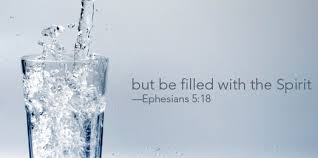
15 Be careful then how you live, not as unwise people but as wise, 16making the most of the time, because the days are evil. 17So do not be foolish, but understand what the will of the Lord is. 18Do not get drunk with wine, for that is debauchery; but be filled with the Spirit, 19as you sing psalms and hymns and spiritual songs among yourselves, singing and making melody to the Lord in your hearts, 20giving thanks to God the Father at all times and for everything in the name of our Lord Jesus Christ.–Eph 5:18 (for a little bit about how we want to fill ourselves with other things note This Everyday Holy discussion I participated in)

Holy Spirit
Holy Spirit

My congregation had a very Holy Spirit moment one yr at a Chicken BBQ, I can’t remember what number it was, but we ordered only about 200 chickens and they were gone, in like an hr flat. And there was much panic about how few were left at the end, and how were we going to keep track and how we were going to send ppl away.

And many, many ppl who wanted to get chicken went home sad.

And we were sad for them.

And I think this is how it feels to be filled with the Holy Spirit, when the good of the situation is COMPLETELY out of control. Like, you know, in Acts when all the disciples were speaking in tongues and suddenly everyone wanted to convert. I imagine Chicken and the Bible still resulted in CRAZY GOODNESS.

I am sensing this conflict rising now, its hard not to take on “too much” in the congregation. The question has changed from “What if we fail?” to “What if we succeed”

That’s right, we are literally afraid that we will be overwelmed, that we will have too much of a good thing.

I guess that trusting in God is trusting that there will be enough room for all the people who want to come to your Farmer’s Market/exercise class/back to school celebration thing that some people crazily wants to do. (that’s me, I’m definitely in the crazy corner).

I never thought of it before but there are too reasons not to do something, bc it might succeed, or it might fail.

But we take on too much, we are overflowing, thats when we grow.

Poor Holy Spirit, no one wants to drink of you, because when we do we change, it is by far the most bombastic member of the Trinity. The Holy Spirit is the one who makes you blurt out the truth in sticky situations, to cheer out loud whether its appropriate or not, to make you offer something of yourself that your weren’t planning/didn’t even know you had to offer.

But that’s what makes her so good.

Now imagine that we got drunk on that!

(Ps I recommend Mann’s Book The In-Between Church for congregations that are subconsciously  dealing with fears of growth)

#rejectedsermontitles: we are cannibles! #Jesus=bread of life

Many thanks to Mihee Kim-Kort who discussed the scripture with me for This Everyday Holy Blog which is at the base of this sermon

John 6

Eating as an act is interesting, it is something every human has to do to stay alive.

Ever have a really good meal. The kind where you sit around afterwards and dissect what it was you loved about it? Almost reliving the meal and sharing with one another.

If I were God I probably would have made all food the same, to fit our needs. Here humans is grass, eat it and be nourished. Boom! Done! You are full, but Jesus promises not to just fill us up with some kind of food, but to nourish us in a new way.

But our God instead creates a myriad of flavors for us to try. In fact there are so many that eating a meal with another person creates a special kind of fellowship.

So, we all eat together, and then afterwards we can dissect the meal together. Talking about what was good, and sharing in that experience. We are in essence eating one another’s experiences and sharing into it.

What fills me up, and what I need is probably different than what you need (for instance I am a vegetarian and have been since the womb, meat made my mother feel ill). My husband would state that meat is necessary to meet his needs. What Jesus offers us is not just sufficency, not just enough to feed the whole world, but the right kind of food for you and for me. The food is different, but the experience is uniting. This is why our God is the God of justice because She meets us where we are and leads us to where we need to go.

Jesus is a prime example of that in his ministry, meeting people wherever they are: being stoned, up a tree, by a well even on a cross (if you are a follower of my blog you may notice this as one of my themes). Jesus meets us where we are.

But if you think about it, meal time is the epitome of what it is to experience church. It is to experience the Holy Spirit moving, each in our own way, and then sharing that experience. Ideally, Worship would be like a GREAT meal, where each of us imbibe in worship and then sit down together and talk about which instance of experiencing God–reliving it for others and inviting them to consume that experience with us. We, in that instant, become the Body of Christ. Thus making us cannibles: Eating Christ and Each Other over and over again.

Only God could set up Worship so that shared experiences and differential understandings of scripture and worship could actually DEEPEN our understanding of God.

Let’s Eat!

#RejectedSermonTitles: Time is Wibbley-Wobbley

Time is nonsense.

Ecc 1:1-11; 3:1-7

Humans have created time, like lines in the sand, to help us to keep track of things. This makes sense because we are namers, our job is to name things, explore them and understand them.

We are human, we compartmentalize. Time is human lines in the sand, just like countries, they are human ways of dealing and understanding the world. Tools that are useful, but do not tell the entire story.

But have you ever tried to make time for something, or to spend time on just one thing? Its difficult to do.

If I were God, I would have made life easier, just one human being going from point A->B no complications. Or perhaps stick to 2 humans, Adam and Eve, only having to concentrate upon one relationship only.

But God is timeless. God has allowed us to have complex feelings and complex relationships. the eye is not satisfied with seeing, or the ear filled with hearing. We can be at different places and do different things. We are made into complex beings, because God can step back and free us from time, to be more complicated. We have many relationships at different stages with many different types of people, and we feel complex emotions about all of these relationship and our relationships effect our other relationships.

Timey Wimey Dr Who
Timey Wimey Dr Who

God allows time to be different. Nowhere in the Bible does it have the timeline or steps to being a Christian. Different people come in different ways. Because God frees us from time and cultures and checklists.

Church is one of the few places where you come, wherever you are to experience God.

Again, we may wish that you are baptized before you take communion, but the reality is sometimes you take communion to get baptized. God is timeless, God is beyond time. Working on all the relationships that influence our experience of God, digging deep into the emotions which are so often mixed. Never are we just sad, we are sad with a touch of anger, or depression that comes from feeling bereft. We are happy, but nervous. We are full of joy and yet miss those we love.

Church is where we gather to practice experiencing God together, and wherever we are, we meet together. What’s more, we open our congregation to invite anyone in…

we know that our own experience of God is enriched by the different places that we all come from

Church is not a social club, or a volunteer group or a corporation. Its not a checklist, its a practice of the experience of God together, its a place to find companionship on the spiritual journey. Church is unique.

Because, God is timeless. Experience of time is as mixed and nonsensical as Ecclesiastes says. God experiences happen throughout the week, in fact we practice God’s presence on Sunday to help to interweave worship throughout our time.

We are practicing it here, every week, God’s presence together. Not because time is a constant stream, but because God is timeless, entering into our lives in different and complex ways–supporting us as complex beings.