Nakedness

A synopsis of Sunday’s Sermon

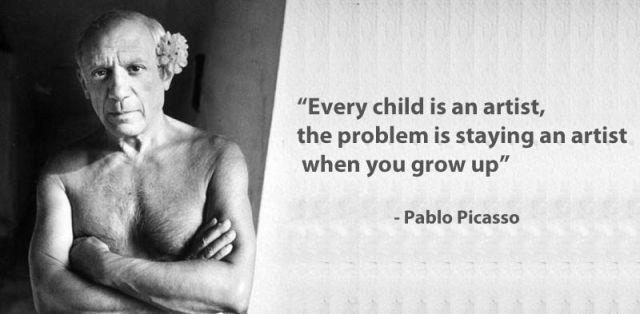
Naked Babies are beautiful–I’m pretty sure everyone can agree that naked babies are beautiful. Maybe this was why baptisms used to be done naked because (although a little dangerous) what is cuter than a naked baby?

God made us, as all good mothers, God made space for us and then formed us as a part of her lives…God made us naked babies, beautiful and perfect, and then Jesus offers us the spring of life.

God knows our own mother’s are not perfect, but there is great comfort in knowing that God fills in the gaps–God is the perfect parent, able to be both mother and father to us….

God thinks we’re beautiful…and invites us to baptism, to spirituality to swim fully in the glory of God.

And of course that means nakedness….

Removing all those loads and pieces of clothing that separate us from God. Fully claiming ourselves and our bodies in Christ (for more on this see my post on Skinny Dipping).

And when we get naked, we start to notice that our bodies are imperfect, there are scars, we have fat and wrinkles and everything doesn’t work right….so maybe we can only put our feet in, but whatever we can do to get some spirituality allows us to be loved. How can we participate in the River of Life.

I have a rule–every baby I see is the most beautiful baby in the world …And its true, every baby is a miracle, every baby is beautiful and so I know, for a fact that every baby is the most beautiful baby in the world.

We are God’s Babies. We are the most beautiful people in the universe, and that beauty comes from God! God’s glory and love is in us, and since Christ is in God we are in God’s glory (John 17). And God, as a good mother, doesn’t love us in spite of our faults, but including them. Seeing all our flaws, faults and cracks. God loves us, because we are the most beautiful children in the world–and we need to affirm that to one another. To look at one another and say–you are beautiful, just like naked babies are!

Ode to Cimorene

One of my favorit-ist series EVER

Lady Bee's avatarDisrupting Dinner Parties

***NOTE: this post will be a little bit of a spoiler for the book Dealing with Dragons by Patricia C. Wrede. The post will discuss the first two chapters. SO if you do not mind a very little spoilage, read on! ****

Throughout most of my youth and young adulthood, I was a reading fanatic. Any fantasy, sci-fi or fiction book I could get my hands on were devoured by my need to escape into another world and for a little bit of time, become a character on a space ship or a detective on the streets of London. My favorite books had female protagonists and authors such as Tamara Pierce, Robin McKinley, Diane Duane, Phillip Pullman, Holly Black, and many others, were the ones who introduced me to the basis of my feminist belief that women are as kickass, powerful, and moving as men. One particular book whose character…

View original post 968 more words

Embodied Spirituality: (w)holistic faith and what it means

Good Examples of Embodied Spirituality tend to be as follows

yoga

monks working

liturgical dance

and Mr. Rogers (because he’s the Presbyterian Superhero of faith 🙂

Here is the Spiritual but not religious issue in sum:

Christianity–more and more abstracted and spiritualized religion, emphasizing the moral lessons of the Bible, essentializing Jesus as love and pursuing faith. Like good Augustine-type-people we have more and more distanced ourselves from the body, turning communion into a remembering of Christ. Barb Hedges-Goettl concludes that we have moved away from the reality of the broken, embodied Divinity present in Jesus Christ. A particular example of this can be found in how communion is celebrated (more about this below/in the thesis)

Hence Christianity is about being “spiritual” and has almost nothing to do with our bodies

If anything we should deny our bodily needs, giving quick and easy solutions to issues of 1. addiction: denial, proof that worldly wants are addictive and evil 2. homosexuality: denial its just a bodily impulse and the body is evil 3. Health Issues: If you are truly pure your body will be healed, otherwise better luck in heaven. These are broad generalizations, but you get the idea.

Hence we have an entire generation of the spiritual not religious, because if Jesus is only love, and we should deny the body, why do we need to gather and/or embody Christ through the church? The church doesn’t embody Christ, in fact, it doesn’t even consider embodiment important, so bodies are–literally–gone from the church. Spiritual but not religious people can do all that from home. So that’s it, they’ll be Spiritual, they don’t need to be religious.

If what we eat, how we care for our bodies, where we are present and how we are active are spiritual activities, then spirituality very quickly turns religious….

Barb Hedges-Goettl suggests to us that a vital piece is missing, and that is the living body of Christ. My question is : If we say Christ’s body is both present in communion and embodied by the church, what does this do to our faith: God is NOT JUST present when we see love, God is calling us to presently embody love as a corporate (ie enfleshed/embodied/living-flesh-corpse) of Christ that is out in the community….I find this especially interesting in a digital world, where embodiment is finding new expression–and yet still nothing beats a face to face meeting (you can’t hug on skype)

“In my dissertation I wrote that faith is about meeting God and God acting upon us. God is the life-changing agent/subject, not the object of belief. The living resurrected Christ changes us; he is not just an example to emulate or the purveyor of an ethic or value”–Barb Hedges-Goettl Photo

Dr. Barb Hedges-Goettl ‘s thesis is : The Body is Missing: Eucharistic Theology of the Presbyterian Church (U.S.A.) in Conversation with Zwingli, Calvin, and Nevin” (10107), has been submitted to Garrett-Evangelical Theological Seminary in preparation for posting on ProQuest)

PS Shepherd is the best fictional clergy, EVER

Open Sourcing and Laziness

katyandtheword's avatarkatyandtheword

Image

Ok, so what if this open source movement which started with the music companies and the digital downloading (actually it started with the record button on VCRs but I’m too youngImage to remember that). Was a cultural shift today? If you look at communities sharing businesses, etc. this generation is into open source

Examples include Relayrides, carsharing, CSA, community gardens, couchsurfing, firefox, anything Wiki and of course probably the most famous and one of the first Linux

Opensource means sharing information freely so that the community benefits. Granted making money by sharing your car isn’t a direct example of open source, but the free sharing of when you use and don’t use your car helps to free it up so others can use it (see what I mean). It also can hint at laziness because your are using someone else’s work/resources to get information. You didn’t do the work yet…

View original post 503 more words

SkinnyDipping or When Clothes give Animosity

I was never popular in school–pretty, skinny and smart my clumsiness and social awkwardness made me too nerdy for friends during junior high and most of high school…I say this because my status was not defined by my looks but instead despite of them….I never shopped at A & F (or the Gap for that matter). For the full incendiary article click here (full disclosure I did not read this word for word, my husband read it to me out loud so I wouldn’t get too mad)

There is this great passage in the Bible that talks about clothing yourself with Christ–It stands in opposition to the wishes of the flesh (Romans 13:14).

Recently I went on an EMI (Early Ministry Institute) non-retreat where an amazing Commissioned Lay Pastor Katrina Hebb, discussed skinny dipping. Taking off all of the things that divide you from Christ, all of the burdens and things that divide you from God, gone. Letting the water of life wash over your body. Embracing and embodying Christ in our imperfect, scarred and silly bodies. Overcoming our fears, and becoming fully ourselves in Christ…

This weeks lectionary is Rev. 22 “The Spirit and the bride say, “Come.” And let everyone who hears say, “Come.” And let everyone who is thirsty come. Let anyone who wishes take the water of life as a gift.”

Waters of Life, Washing Clean, Clothing of Christ….I feel like this stands as a more fulfilling response to all those who thirst for life, hope and fulfillment.

It certainly does a hell of a lot better than Abercrombie and Fitch!

Sermons are Art

This is getting a lot of searches, so I’m re-posting Sermon’s are Art in response to the article Sermons are becoming Obsolete

katyandtheword's avatarkatyandtheword

Sermons are Art

Sermons are art, sometimes they rock, and sometimes they don’t. Its less of a quotient of how many hours you put in, and tends to be where you are emotionally, are you feeling creative, is your imagination engaged, can you connect to your audience, is it relevant and yet provoking.

I’ve always said, I wish every sermon was a masterpiece, but since its art, it doesn’t work that way. There are practices and disciplines that help you to be a better artist, but never any guarantees.

This brings me to Presbyterian Today their articles about arts in the church (Shout out to Katie Douglass who pursued arts even while she did her doctorate at PTS)

Arts and Church Art as worship and considering popular culture (ie arts) and religion (cough, cough Science Fiction/Fantasy and Religion anyone? Read about Faith and Dr Who & Star Trek here)

and  Whether Sermons are becoming…

View original post 66 more words

Book Review: “The Prince of Ill Luck” by Susan Dexter

Summary: The first in a series about Valadan a magic horse who finds the must interesting people to journey with. Today it is Leith (Lay-eth) the self-styled Prince of Ill-Luck wins the ring/princess/duchy, but he doesn’t want them! Instead he wants to get rid of his curse, and The Prince of Ill Luck (Warhorse of Esdragon, #1)the princess wants to find her mother the sorceress. So the story begins where most fairy tales ends following their adventure.

Reviews: I love this story, there’s something about the strong heroine and the ill luck prince which is fascinating. The story is told through both the characters eyes, and the reader gets a good idea of who they are, what they are doing, and how they grow. This book has been on my shelf for many year, read at many times, and its well worth the reread I just had. If you like The Hero and the Crown, The Enchanted Forest Series and The Seer and the Sword.

Patricia C. Wrede on Boston Marathon, here take on Actions speak louder than words

Here is a copy of Wrede’s words on her Blog that respond to Boston

“Boston

The first I heard about the Boston Marathon bombing was when my father called Monday evening to tell me my nephew was uninjured. My nephew goes to school in Boston, and had been watching the race, but not at the finish line. I’d been driving home from out of town, listening to CDs instead of the radio, so I hadn’t known a thing about it. Sometimes, having a weird schedule is useful.

The slight time lag in finding out about it didn’t make the event any easier to process. In fact, it brought up a whole lot of unpleasant memories of hearing about earlier disasters of one sort or another, from Sandy Hook and Columbine to 9/11, from the tsunamis in Japan and the Indian Ocean to Columbia and Challenger, all the way back to Kennedy’s assassination. Some of those horrors were man-made and deliberate; some were the result of terrible mistakes or accidents; some were just nature being nature.  Apart from the fact that people died every time, there’s no connection between them except for the personal one: I remember the same sinking feeling combined with shock as I heard about each of them.

There are a whole lot of known psychological reactions to unexpected tragedy, starting with shock, disbelief, and feeling helpless, but I think the psychologists miss something when they look only at the emotions people have. They miss what people do.

People didn’t panic (which could have caused a lot more injuries, given the crowd). Some of them ran towards the explosion, and not only the police and firefighters and medical personnel who were on the job. A lot of people who were there as spectators did, too, and worked to help the injured. Some of them we know about, and some we don’t.

People who live in Boston signed on to web sites to offer their spare rooms to strangers who were stranded, or who suddenly needed a place to stay while a friend or family member was in the hospital. Others turned up with bottles of juice, water, and sweaters for the bewildered slower runners who weren’t allowed to finish because of the explosions. People who don’t live in Boston coordinated “random acts of pizza,” sending food to the police, firefighters, EMTs, anyone who needed it.

And people talked about what happened, and their reactions to it.  Some of us aren’t in a place where we can do anything but talk…and watch the news, and hope that the death toll doesn’t rise and that they catch whoever planted the bombs. But even that little is doing something, of a sort.

And as far as I’m concerned, doing what one can is important, whether that’s running toward an explosion in order to help, walking calmly away from it so that the EMTs will be able to get in and do their job, or donating $10 worth of pizza to feed the people who are in the thick of things.” Patricia C. Wrede (original link above)