“Conversion doesn’t hap…

“Conversion doesn’t happen by forcing people to believe things the same way you do. I figure if Jesus meets us wherever we are (whether it be at a well, in the tree or on a cross), then we should do the same. Do you know what happens when you force someone to run when they can’t keep up? They fall. You don’t want to cause someone to fall by forcing them into a belief they don’t have. If someone has doubts or is an aetheist/agnostic you have to meet them there and let them reach the next step through loving them wherever they are. That’s what Jesus did.”–Pastor Katy Stenta

 A good ministry moment today. 

“Conversion doesn’t happen by forcing people to believe things the same way you do. I figure if Jesus meets us wherever we are (whether it be at a well, in the tree or on a cross), then we should do the same. Do you know what happens when you force someone to run when they can’t keep up? They fall. You don’t want to cause someone to fall by forcing them into a belief they don’t have. If someone has doubts or is an aetheist/agnostic you have to meet them there and let them reach the next step through loving them wherever they are. That’s what Jesus did.”–Pastor Katy Stenta

 A good ministry moment today. 

Me: “Who does Westley (m…

Me: “Who does Westley (my 2yr old) say hi to?”
Congregation: “Everybody”
Me: In fact he’s quite militant about it. If you say hi once, you are doomed to continue to say hi to him all day!

Best synopsis of my sermon about welcome today. Text: Mark 9:30-37

30They went on from there and passed through Galilee. He did not want anyone to know it; 31for he was teaching his disciples, saying to them, “The Son of Man is to be betrayed into human hands, and they will kill him, and three days after being killed, he will rise again.” 32But they did not understand what he was saying and were afraid to ask him.

33Then they came to Capernaum; and when he was in the house he asked them, “What were you arguing about on the way?” 34But they were silent, for on the way they had argued with one another who was the greatest. 35He sat down, called the twelve, and said to them, “Whoever wants to be first must be last of all and servant of all.” 36Then he took a little child and put it among them; and taking it in his arms, he said to them, 37“Whoever welcomes one such child in my name welcomes me, and whoever welcomes me welcomes not me but the one who sent me.”


Me: “Who does Westley (my 2yr old) say hi to?”
Congregation: “Everybody”
Me: In fact he’s quite militant about it. If you say hi once, you are doomed to continue to say hi to him all day!

Best synopsis of my sermon about welcome today. Text: Mark 9:30-37

30They went on from there and passed through Galilee. He did not want anyone to know it; 31for he was teaching his disciples, saying to them, “The Son of Man is to be betrayed into human hands, and they will kill him, and three days after being killed, he will rise again.” 32But they did not understand what he was saying and were afraid to ask him.

33Then they came to Capernaum; and when he was in the house he asked them, “What were you arguing about on the way?” 34But they were silent, for on the way they had argued with one another who was the greatest. 35He sat down, called the twelve, and said to them, “Whoever wants to be first must be last of all and servant of all.” 36Then he took a little child and put it among them; and taking it in his arms, he said to them, 37“Whoever welcomes one such child in my name welcomes me, and whoever welcomes me welcomes not me but the one who sent me.”


Peter Pan and the Economy

“We will never grow up” Sometimes I think that this is the theme song for my generation. Playing the day away–putting off being settled, trying to find a foothold on which to grasp. Here we are living at home, putting off marriage and  renting. .Image

“Today, some 29 percent of 25- to 34-year olds either never moved out of their parents’ home or say they returned home in recent years because of the economy, according to the Pew report. Among 18- to 24-year olds, that figure is even higher – 53 percent of young adults in that age group live at home”. That’s right half of the youngest adults have to live at home.

(for more read http://www.csmonitor.com/USA/Society/2012/0315/Three-in-10-young-adults-live-with-parents-highest-level-since-1950s)

Image

Personally, I know this to be true. My siblings and I have all been supported by my parents since college. Every person I know has had to live off/with their parents Luckily my family had my grandmother’s house so I was one of the few of my friends who didn’t have to move back in with the family after grad school–that’s right grad school with two kids and two cats in tow.

The Young Adult age keeps getting longer and longer. Young Adults are those who have the responsibilities of an adult but don’t yet feel settled (thanks Kenda Dean for that definition).  Young Adults used to be the generation that belongs in the YA section of the library–you know those between the ages of 15 and 18 or maybe even 20. Today “young” adults are all those under age 35.

Image

Because of the economy, us Boomerangs, or Millenials have put off marriage, housing and Children. “Nearly half say that in recent years they’ve taken a job they didn’t really want, to pay the bills. More than a third have gone back to school because of the poor economy. About a third have postponed either their plans to get married or have a child, and one in four say they have moved back in with their parents after living independently. And fewer than half of young people who are now employed say they have the education and training necessary to get ahead in their jobs”.

Maybe it isn’t “We won’t grow up” but we can’t grow up. Personnally I know that we will not be owning a house for a long time, the used bookstore we want to open has to wait, and we are lucky that we were able to have kids so soon.

So what does religion have to do with us? Can religion help those struggling with debt and self-worth as is described in http://articles.latimes.com/2012/feb/09/local/la-me-young-recession-20120209

Here a summary of the current situation. Most people consider themselves “Spiritual” but “not religious” “Katie Douglass a Phd student at Princeton, researched young adults “While they typical attendance/praying/Bible study questions continue to be dismal when it comes to young adult responses – when asked Have you become more or less religious in the last year? – and Are you interested in growing in your faith? -produces emphatic yeses.”

for the hr long interview about young spirituality see http://churchnext.tv/2012/09/12/katherine-douglass-young-adults-are-more-spiritually-aware-than-you-think/

So young people are looking for meaning, they are looking for purpose, but the connection has not been happening. Apparently most young people find anything relevant to them in the sermon. There is nothing. According to research done by Stephen Cady, young people do not find anything spiritual or connectional about a sermon (http://churchnext.tv/2012/08/20/stephen-cady-why-100-of-young-people-dread-the-sermon/)

If young people who are in high school find little meaning in worship, I expect the same is true of this generation of boomerang/millenial/Peter Pans. Plus, if we are feeling rootless and unfulfilled a rooted congregation might feel overwhelming, or apathetic about a generation that can’t be around for the long haul, can’t attend church every Sunday, and can’t commit the way other generations might have.

Here is a generation that was told “work hard and go to school and you will succeed” and here we are: Not Succeeding. Understanding that this must be somehow our fault. How might faith and Christ address this? How might the love of God and the purpose of our lives to build relationships and communities based on that love give purpose to these people’s lives. If Jesus met a college student, what would he have to say to them????

Would he had said “Peter Pan why won’t you grow up and get your butt to church, so that you can understand God (the way we do)”

or Would he have met him where he was “Peter Pan, Can I play with you?”

PS remember the Harry Potter/Fantasy generation is graduating next, what is their fascination with fantasy about? how does that fit into spirituality? How does that work in this economy? *”For young adults, bad times don’t trump optimism. Among those ages 18 to 34, nearly nine-in-ten (88%) say they either have or earn enough money now or expect they will in the future” see for full survey http://www.pewsocialtrends.org/2012/02/09/young-underemployed-and-optimistic/

(Just some light philosophical questions 🙂

Katy’s Rant Against Associate Pastors, and a proposed solution


II think Associate Pastors are totally stupid for the following reasons 1. Didn’t Protestants break away from Catholicism to avoid a hierarchical governance of the church, yet here we are reinstituting it.

2. Most associates are women and most head pastors are men

3. Associate Pastors have to work for too many bosses. Regular pastors already have two (sort of) between the congregation and God. The associate has the congregation, God and the Head Pastor

4. Finally, the most important reason why I hate associateships is that the ministries that are put under this heading “Pastoral Care” (translation: sick and old people), “Youth” (translation: those who we don’t get) and occaisionally “Mission (translation: those outsiders who need our help) are deemed LESS important than the “real” church (which apparently is made up of insiders who aren’t sick, over the age of twenty well off enough to not need help and not so old to be considered frail.

This

a. severely limits the church. We are essentially giving the more powerful pastor to those in power in the church. Basically rewarding those who we think can pull their own weight which is a broken theology, because no one has everything they need to be perfect, and we are putting our human limitations on who we think can serve the church

b. Severely limits the ministry itself, causing more red-tape, committees, paperwork and channels to get this “specialized” ministry done.

c. Finally, it severely limits the gifted associate pastors, all of whom have an important call to work, and may have specialized gifts in ministry that should be recognized. (Plus there’s that whole male/female discrepancy, I avoided Christian Ed and Associates like the plague figuring if I started there I’d never move out)

Image

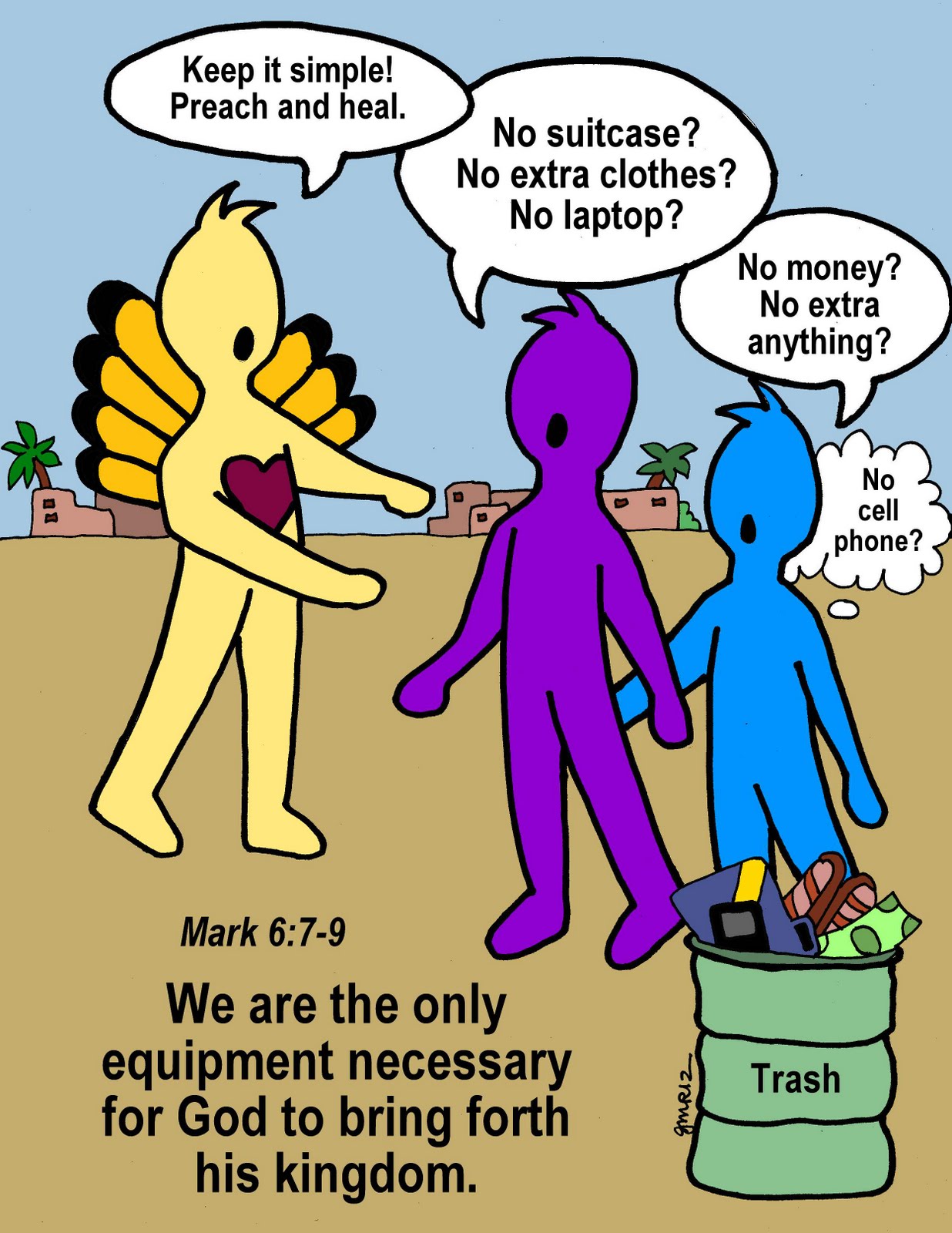
Finally, I am aware that most pastors are lonely and sad, and am aware that we have completely ignored the fact that Jesus sent everybody out in twos (Mark 6). What if we took this one step further and move more and more towards the copastorate being the regular form of ministry as opposed to the solo! This is especially true, since Christ says we don’t need anything but each other to do ministry!!!

Therefore, I propose we do away with all associate pastorships and move instead to co-pastorships. (This idea which I’ve been bouncing around forever dovetails well with Jack’s in  http://jackjenkins.wordpress.com/2012/04/30/hey-pcusa-i-have-an-idea/ to employ pastors. Could be the Holy Spirit is moving us one and one towards this new kind of employment).


Image

One co-pastor could be parttime and one could be fulltime or any combo thereof (how would two parttime pastors with full benefits work–wouldn’t that be AWESOME!!)

The way it tends to work is both pastors still get full vacation (particularly important if your a married couple). The pastors take turns moderating session, and probably a “pastor” would be available to answer pastoral needs (no guarentees which one, it would be worked out between the two pastors).

Down with Associateships! Up with Co-Pastorships

Vampires, Harry Potter and the Wonderfulness of Fantasy!!

Someday, when I am rich and famous

Or when my children are grown

Or when I plain old have the time, I’m going to write a great thesis about the evolution of Fantasy from mythology to Fairy Tale to Fantasy to Modern Day. (for a little on this read my post about Beauty and the Beast)

And when I do I will write many many important and amazing things about life.
But if you love fantasy, and are curious about Church, can I just say that nothing corresponds in describing the human condition (in my opinion) and the importance and significance of hope in the Bible …nothing except the fantasy

Nowhere else does good battle evil, amazing things happen, people live in completely different conditions with different abilities, and yet they still are stuck with struggling with the human condition. Those things that make life essential!

My professor Kenda Dean says that being a teenager is the human condition (the highs, the lose, the hopes, the inherent brokenness of it all) on crack; and that’s why she likes it.

Maybe that’s why most teens read fantasy, and many adults “outgrow” it.

While I have your attention two brief points about Fantasy that I hope to explore via ministry (with all ages, not just children or teens) at some point.

Image

Image

1. What is with Vampires today?

There seems to be a fascination with

a. Everlasting Love

b. Living Forever

c. Drinking the Essence of a Living being to do so….

Any thoughts about Religion and this fascination??Image

2. Harry Potter: Because it is awesome

At one point Harry Potter discusses that the right way to pursue eternal life is through Hallows, Not Horcruxes….

Image

Ponder that

What are the Hallowed things (Hallow means Holy by-the-bye)

What are the Crutches, the Horrible Crucibles in your life. How do they seem like they provide eternal life, but they are not….

Image

Ponder these, get back to me, and then tell me that this generation of Fantasy readers isn’t ripe for the Gospel!!!

PS recently there was a great post about telling the Gospel in 7 words or less in Christian Century

www.christiancentury.org/search/apachesolr_search/seven%20words and for a good blog read http://theblueroomblog.org/2012/08/30/the-gospel-in-seven-words/I

I’ve decided mine would be

Trying to be as gracious as God

or Hallows, not Horcruxes….Just saying 😉

Peace All!

Young People and Church

Young People and Church

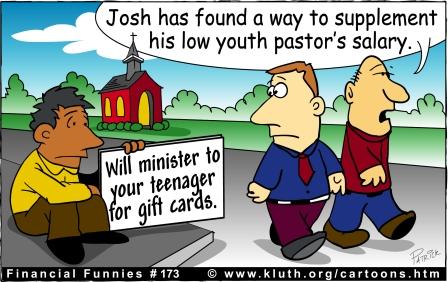
Take seriously youth Ministry?

Worried about why young people don’t go to church?

Teens want to know why does worship matter in their lives…

Teens want help understanding “What it means to be a person”


more reflections to follow

Young People and Church

Take seriously youth Ministry?

Worried about why young people don’t go to church?

Teens want to know why does worship matter in their lives…

Teens want help understanding “What it means to be a person”


more reflections to follow

Let’s Talk about Debt…

Debt is a big problem for us. Even if you don’t personally have debt (hooray) the United States as a country walks around with billions of dollars in debt every day.

What does this mean to be in debt? I’ve decided it means that you are empty–you have are literally worth less than nothing when you are in debt. And here we are in debt.

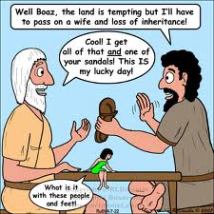
If you’ve ever studied the book of Ruth there is a weird legalistic part at the end. Instead of an immediate happily-ever-after between Ruth and Boaz (I love that fact that she proposes to him, talk about being ahead of the times!) It basically has to do with the fact that if you take on Elimelech’s indebted land, then you can make it fruitful again. However, if you have a son by Ruth you are then beholden to that inheritence instead of you own. I think thats it. Honestly, scholars disagree. They aren’t really sure what all was meant, and when Ruth was written down it was already ancient history because the whole sandal thing had to be explained.
Image

Anyway, what everyone agrees on is

A. Elimelech’s land had laid empty/fallow for many years and the debt on it had to be redeemed in order for it be planted again

B. Ruth was part of the deal, and Ruth was so obviously (at least as far as they knew in Biblical times) barren, because she didn’t have any previous children.

So here you go, empty land, empty family.

In many ways we the mainline church have the same problem with empty land–have you seen our crumbling-on-the-sale-block-only-six-people-attend-here churches? (the irony being that non-religious people are always sad to see churches close, what is that about anyway???)

Ok but without getting too tangential, we as a church are empty.

Then there’s me, well us, well my entire generation. I grew up during the boom years, I was told that as long as I work hard and do right things will work out for me. Yet here we are (and I speak from my personal experiences and those of my friends) struggling with debt, purpose and fulfillment.

Opportunities are so scarce for my generation, and many people have had to put off marriage, children, settling down or even being able to start their career due to the economy. Every single person I know has had to live off of their parents in some way, shape or form post college.

Married, single, graduate, post-graduate, post-baccelerate, even those with children have had to get help, move in with their parents or follow their spouse across the country only to work a menial job hopefully sort of in their field.

So what is it people want when they come to church?

They want somewhere, where they are no longer empty. They want somewhere where they can be fulfilled. And (more importantly) they don’t want to feel judged. Us Milleniumers, Boomerangers (because we return home), us zero-ers or whatever you want to call us feel the weight of our own emptiness.

All our hard work seems to be for naught, much of what we are characterized by is our selfishness our need to be special our consumerism etc.

I can say (in total biased opinion) that this is not true. We don’t all think we are special or well-deserved, we just hope we might be a little bit, and our experience of adulthood (do you know my second week of undergrad was 9/11/2001–my entire adulthood has been shaped by our post 9/11 world, whereas my entire childhood was pre-9/11).

Do you know what Young People think of when they think of church? Antigay (i.e. judgemental and bigotted). I cannot tell you how much this hurts me. No wonder people think church has nothing to offer, no wonder it seems nonsensical and out of date. People don’t associate church with love and service, but rather selfishness and closemindedness. Plus the church is trying to figure out how to bring people to the church, when instead we should be figuring out how to bring church to people.

So here we are, empty. What does it mean when we forgive our debts? What does it mean when God Fulfills God’s promises?

What does God offer us that is different from the regular activity?

Here is a need, plain and simple, for many “young people” and most people in general. A need to find fulfillment and worth outside of money, a way to struggle with debt and yet not to feel empty, and definition that exists outside the bounds of the day-to-day slog. So what is fulfillment, what is forgiveness. How does debt figure into all of this, and should the church heed this desperate call of the empty young professionals today, or do we continue to figure out how to survive without worrying about these problems!!!

I feel a VERY strong call here to do something about this, what if the church stood in the way of debt, what if we showed how God fulfills us, what would happen then?


A Post about being Post…well Post-Everything

I am a graduate of Oberlin (yay Oberlin), and I loved (almost) every minute of it. But one of the things Obies love to do is take things apart. (Any other Obies feel free to chime in about this). In fact, sometimes we would move to “deconstructing” things so fast that I would feel like I didn’t even know how the thing was constructed in the first place (as an English Major my high school was highly lacking in Shakespeare, and I wanted to round my education out with him, however the only classes offered were about deconstructing what we supposedly had learned in high school).

Now as I get into ministry I hear a lot of talk about what this post-culture is going to do? Author Ross Douthat wrote an article about Can Liberal Christianity be saved? (http://www.nytimes.com/2012/07/15/opinion/sunday/douthat-can-liberal-christianity-be-saved.html) His conclusion was that” Today, by contrast, the leaders of the Episcopal Church and similar bodies often don’t seem to be offering anything you can’t already get from a purely secular liberalism. Which suggests that perhaps they should pause, amid their frantic renovations, and consider not just what they would change about historic Christianity, but what they would defend and offer uncompromisingly to the world.Absent such a reconsideration, their fate is nearly certain: they will change, and change, and die. (PS for a good response to this read http://www.patheos.com/blogs/livingaholyadventure/2012/07/can-liberal-christianity-be-saved-a-response-to-ross-douthat/)

However as I look at this world, I see that we are trying to construct a Post-Religious world (i.e. Spiritual not religious viewpoint that is so oft referenced). So the question comes, what does a post-church, post-christian, post-denominational (I am told by a good friend this is a move that the Bible belt is especially making) world. How do we post about our Post-world? (http://en.wikipedia.org/wiki/Postchristianity)

Going forward I have to say that to me a post-religious world would look like the following

1) Where individuals ultimately choose to uphold each other as people, even when beliefs differ (perhaps what our Moderator and Vice Moderator were trying to model at GA before our Vice had to step down). Allowing Spiritual Practices to bring people together–>at least I think this is what some of the Spiritual people are trying to get at…

2) Where church isn’t made up of the “shoulds” of religion: church should have pews, church should include hymns, church should have Sunday School, but is instead moved by Holy Spirit to BE a faith community whenever and however that comes together….

3) Where the Faith of a group of people is ultimately used to empower those individuals who are powerless. What happens when powerless people come together? that’s right they become empowered If the church functions as a community builder grounded in the love of God, then we cannot help but support and empower each other to do new and wonderful things….

Places where this is overlooked today=basically everyone who is assigned an associate pastor (that is a rant yet to come)

The Young

Image

Recently, these interactive boards have moved from the back of the broken pews to the corner of the sanctuary that we designated as a toddler area. (from a fellow pastor http://theresaecho.com/2011/04/18/interactive-toddler-boards/)

The Elderly

Image

The College Age

Image

The Young Adult (i.e. those in there 20s and 30s)

ImageImage

(you know those with young families who need babysitting or those who are still single and constantly on the move to find a job in the tough economy)

Image

The Minorities: Racial, Ethnic and of course the poor

Thats right if your not a white middle class, middle aged American in many denominations your power is significantly less not only in society but in the church itself. Plus if you are not well-educated and don’t love words (say you learn by practice or are a visual learner) you probably won’t fit in well to the traditional Presbyterian service. (Does anyone else see something wrong with this?)

What would a service look like if it was regularly handed to these groups? What would faith look like if we went to where these people were?

You know what I think? I think that Ministry, True Ministry is to make FAITH ACCESSIBLE (that’s right, I put it in caps, that’s how serious I am). ImageHow do we make, not only our building, our worship and our activities accessible, How do we make our Faith Accessible. What does it mean that people identify Spirituality over religion or faith? I think its because Spirituality feels accessible. You can use what is comfortable to you, you can learn about it at your own pace, and your can connect with different people over different aspects of it even if you don’t agree completely with them (for the record I have both liberal and conservative friends).

So how can we do that for Faith?

I don’t know,

But let me remind you friends, that there is no resurrection without death!
Whether you consider this time the denominational pregnancy http://vimeo.com/25360983

or even if you think we are dying….http://treymorgan.net/17-signs-your-church-might-be-dying/

Either way, there is a rebirth a coming, the question is how will we access it?

(P.S. Giving Access is not the same as watering down faith, just so I’m clear on that!)

Farmers, Markets and God

Well,

2 weeks in, and our Farmer’s Market is going fairly well. It is also very time intensive! Here we are in the middle of summer, and our stats stand as follows


Grand Opening over 200

Rainy, Rainy 2nd week 65

Overall, I think that we are doing pretty well–however as we begin this ministry of farming and marketing, I am trying to tease out the theology behind the market.
Why are we selling vegetables? What space does it provide the community? Should I be doing more “religious” looking stuff? Are we touching people–doe we get the word out? How is our advertising anyway? Do we have enough farmers (a lot of our vendors sell things other than vegetables)? What is growing out of this seed that is being planted (get it)?

You can tell there are a lot of questions….and yet, its exciting. It’s exciting to do something new, to see the church pull together, to actually have people want to come into our humble parking lot (which is apparently a lot less scary than the church building itself)…
So we’ll see what develops, in the meantime, I’m enjoying the adventure…..